

 Locations
 Hours
Hours Call Us Now
 Book Appointment


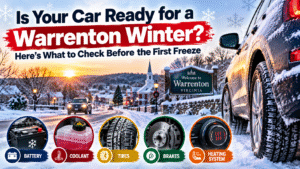
You are driving down Waterloo Road before sunrise on a January morning. The temperature dropped sharply overnight, frost covers the windshield, and when you turn the key, the engine hesitates longer than usual before finally starting.
For many drivers, that moment is the first sign that winter has begun to expose problems their vehicle had been hiding for months.
Most people assume winter weather affects every vehicle in Northern Virginia in roughly the same way. Cold is cold, after all.
But after more than 35 years working on vehicles throughout Northern Virginia, I have noticed something different. Drivers in Warrenton and surrounding Fauquier County communities often begin experiencing cold-weather vehicle problems earlier than drivers farther east in more heavily developed areas such as Fairfax.
I’m Donnie from Advanced Automotive, and every winter we see a familiar pattern. The first major cold snap arrives, and suddenly customers begin calling about weak batteries, no-start conditions, tire pressure warnings, coolant leaks, check engine lights, and heating problems.
The good news is that many of these winter problems can be identified before the first freeze arrives.
Why Cold Weather Is So Hard on Your Vehicle
Cold temperatures affect nearly every major system in your vehicle.
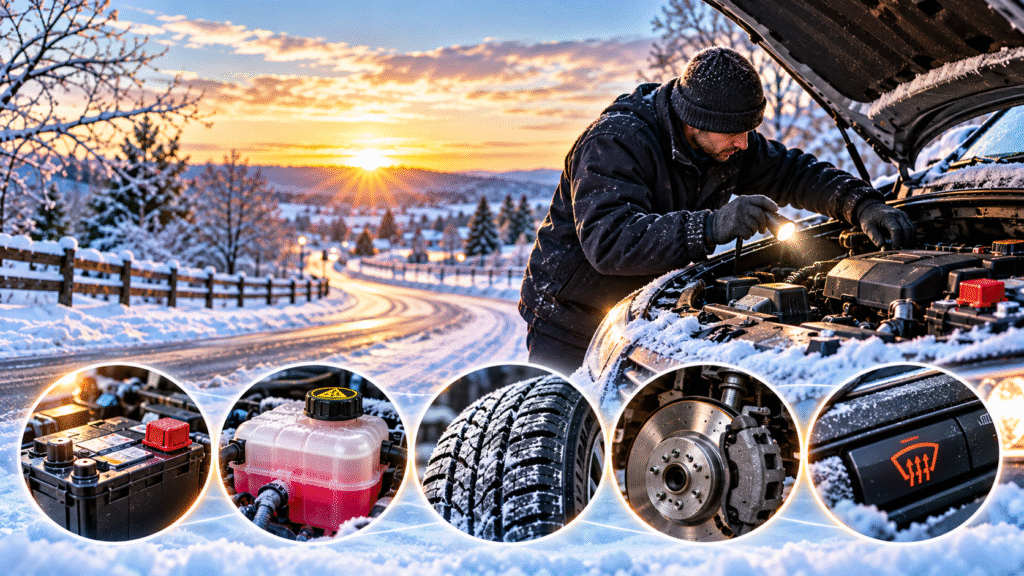
When temperatures fall, engine oil becomes thicker, batteries lose available cranking power, tire pressure drops, rubber components become less flexible, and small cooling-system problems can become much more noticeable.
A vehicle that starts perfectly in October may struggle in January even though nothing obvious seemed wrong a few weeks earlier.
That is because winter does not always create a new problem.
More often, it exposes a weakness that already existed.
A battery may have enough reserve capacity to start the engine in mild weather but struggle when the temperature drops sharply. A small coolant leak may go unnoticed during warmer months but become more serious when temperatures fluctuate. Aging belts and hoses can become less flexible and more vulnerable to failure.
That is why preparing a vehicle before winter is so important.
The goal is not to replace parts unnecessarily. The goal is to identify components that are already weak before cold weather pushes them past their limit.
Why Warrenton Drivers Face Different Winter Conditions
Warrenton and Fairfax may not seem very far apart, but local driving environments can be different.
Warrenton sits farther west and includes more rural and exposed roadways. Drivers traveling Waterloo Road, Meetze Road, Lee Highway, and other roads throughout Fauquier County may encounter colder overnight conditions, more frost, and changing road surfaces.
Vehicles parked outdoors in more open rural areas may also be exposed to colder overnight temperatures than vehicles parked near dense developments, garages, or large buildings.
That difference can matter when a battery is already beginning to weaken.
Commuting patterns also play a role.
Many Warrenton residents regularly drive toward Gainesville, Manassas, Centreville, or other parts of Northern Virginia. Longer commutes mean more mileage and greater exposure to temperature changes, traffic, and winter road conditions.
The result is a vehicle that may be dealing with cold starts in Warrenton, highway driving toward Gainesville, stop-and-go traffic farther east, and another cold soak overnight when it returns home.
Over time, those conditions can reveal weaknesses in batteries, tires, cooling systems, belts, and other components.
Battery Problems Often Appear First
Battery issues are among the most common winter problems we see.
Cold temperatures reduce a battery’s available starting power while the engine simultaneously requires more effort to turn over because fluids are thicker.
That combination can expose a battery that seemed completely normal during warmer weather.
One important thing drivers should understand is that voltage alone does not always tell the whole story.
A battery can show a reasonable voltage reading and still perform poorly under load.
That is why proper battery testing should evaluate how the battery performs under conditions that more closely resemble starting the vehicle.
If the engine begins cranking more slowly than usual, especially on cold mornings, do not ignore the warning.
That may be your vehicle giving you time to replace a weakening battery before it leaves you stranded.
Cooling System Problems Can Become Serious Quickly
Your cooling system plays an important role in winter as well as summer.
Coolant must protect the engine not only from overheating but also from freezing temperatures.
Over time, coolant can deteriorate and lose some of its protective properties. Small leaks may also develop around hoses, connections, the radiator, water pump, or other cooling-system components.
A sweet smell under the hood, coolant spots under the vehicle, or a heater that suddenly blows lukewarm air can all be signs that the cooling system deserves attention.
Before winter, it is a good idea to check coolant condition and freeze protection rather than simply assuming the fluid is fine because the vehicle has not overheated.
A small cooling-system issue discovered early is usually easier to manage than a major problem on a freezing morning.
Tire Pressure and Tread Matter More in Winter
Tire pressure naturally changes as temperatures fall.
A tire that was properly inflated during warmer weather may become underinflated after a significant temperature drop.
That can trigger the tire pressure warning light and may affect handling, tire wear, and fuel efficiency.
Tread condition is equally important.
Wet pavement, frost, freezing rain, and winter road surfaces require the tires to maintain consistent contact with the road.
Drivers should check both tread depth and tire pressure before cold weather becomes regular.
If a tire is already wearing unevenly, winter is not the best time to discover the problem.
Uneven wear can sometimes be related to alignment or suspension issues, so addressing those concerns early can also improve vehicle stability.
Belts, Hoses, Heating, and Defrost Systems Need Attention Too
Rubber components become less flexible in cold temperatures.
Belts and hoses that are already aging may begin squealing, cracking, leaking, or failing when temperatures drop.
A squealing belt on a cold morning may indicate wear or a tension problem.
Heating and defrost systems are also important for both comfort and visibility.
If the heater is not producing normal heat or the windshield takes unusually long to clear, the vehicle should be inspected before colder weather arrives.
Exterior lighting and windshield wipers should also be checked.
Winter mornings often mean driving in darkness, frost, rain, or low visibility. Good wipers and properly functioning lights are simple items that can make a significant difference.
How We Prepare Vehicles for Winter at Advanced Automotive
When customers bring a vehicle to Advanced Automotive for winter preparation, we focus on identifying problems before they become breakdowns.
We may begin with battery and charging-system testing, followed by an inspection of coolant condition, freeze protection, belts, hoses, tire tread, tire pressure, brakes, wipers, exterior lights, heating, and defrost systems.
We also look for leaks or wear that may become more noticeable once temperatures drop.
The goal is not to recommend unnecessary repairs.
It is to separate what is healthy from what may need attention before winter places additional stress on the vehicle.
Every repair we perform is backed by our 12-month / 12,000-mile warranty on parts and labor.
We also offer free towing with qualifying repairs and free pickup and delivery throughout the Warrenton and Gainesville service areas whenever applicable.
Warning Signs You Should Not Ignore Before the First Freeze
Winter problems often give early warning signs.
Slow engine cranking may indicate a weakening battery.
A tire pressure warning may simply reflect colder temperatures, but the pressures should still be checked.
A sweet smell or coolant spots under the vehicle may indicate a cooling-system leak.
Dim headlights at idle can sometimes point toward charging-system concerns.
Squealing belts, unusual braking behavior, weak cabin heat, or new warning lights should also be investigated.
None of these symptoms automatically means an expensive repair is required.
The important thing is to understand what is causing the change before cold weather turns a manageable issue into an emergency.
What Winter Preparation May Cost
Winter vehicle preparation costs depend on what the vehicle actually needs.
Some vehicles may only require an inspection, battery test, tire pressure adjustment, or basic maintenance.
Others may need a battery, coolant service, new tires, belts, or brake repairs.
For many drivers, winter preparation may range from approximately $50 to $250, although repairs can cost more if worn components need replacement.
The benefit of checking the vehicle early is that you have more time to plan.
Replacing a weak battery before it fails is generally much easier than dealing with a dead vehicle, towing, missed work, and emergency repairs on a freezing morning.
At Advanced Automotive, we explain what we find and provide a clear estimate before beginning repairs.
Prepare Before Winter Exposes the Problem
The biggest misconception about winter car care is that snow is the main threat.
In reality, many winter breakdowns happen on clear mornings after a major overnight temperature drop.
Cold weather exposes batteries that were already weak, cooling systems that already had small leaks, tires that were already underinflated, and rubber components that were already aging.
If you drive throughout Warrenton and Fauquier County, the best time to prepare is before those problems become emergencies.
If your vehicle has been cranking slowly, showing tire pressure warnings, leaking coolant, making belt noises, or behaving differently than usual, it is worth having it inspected before temperatures consistently fall below freezing.
Call Advanced Automotive at (703) 665-1818 or visit us at 13380 University Blvd, Gainesville, VA.
We serve drivers from Warrenton, Gainesville, Haymarket, Bristow, Manassas, and surrounding Northern Virginia communities.
Our goal is simple: find the small problems before winter turns them into big ones.
 Oil Change Gainesville
 Auto Brake Repair Gainesville, VA
  Towing Services Gainesville
  Fleet Services Gainesville
  Virginia Safety & Emissions Inspections
  Air Conditioning & Heating
  Wheel Alignment Warrenton
  Vehicle Diagnostic
  Auto Transmission Repair