

 Locations
 Hours
Hours Call Us Now
 Book Appointment


You’re heading down I-66 after work, traffic is finally moving, and your Honda has just crossed 180,000 miles. No warning lights. No strange noises. No smoke. It feels just like it did years ago.
That reliability is exactly why so many Honda, Toyota, and Subaru owners wait too long before bringing their vehicles into a repair shop. They assume that because nothing feels wrong, nothing needs attention.
I’ve watched this happen many times over the last 35 years.
I’m Donnie, owner of Advanced Automotive in Gainesville, and I love working on these vehicles because they can deliver years of dependable service. With proper maintenance, many reach 200,000 miles—and some exceed 300,000 miles.
But here’s something every owner should remember: reliable doesn’t mean maintenance-free.
Keeping a vehicle running for the long haul means following its maintenance schedule and addressing small problems before they become expensive ones. Here’s what your Honda, Toyota, or Subaru needs—and how professional inspections can help you avoid unnecessary repairs.
Why Reliable Cars Still Need Professional Maintenance
One of the biggest myths I hear is, “My Honda doesn’t need anything except oil changes.”
I wish it were that simple.
Think about your vehicle like a marathon runner. A runner might be healthier than most people, but their muscles and joints still experience wear after enough miles. Your vehicle works much the same way.
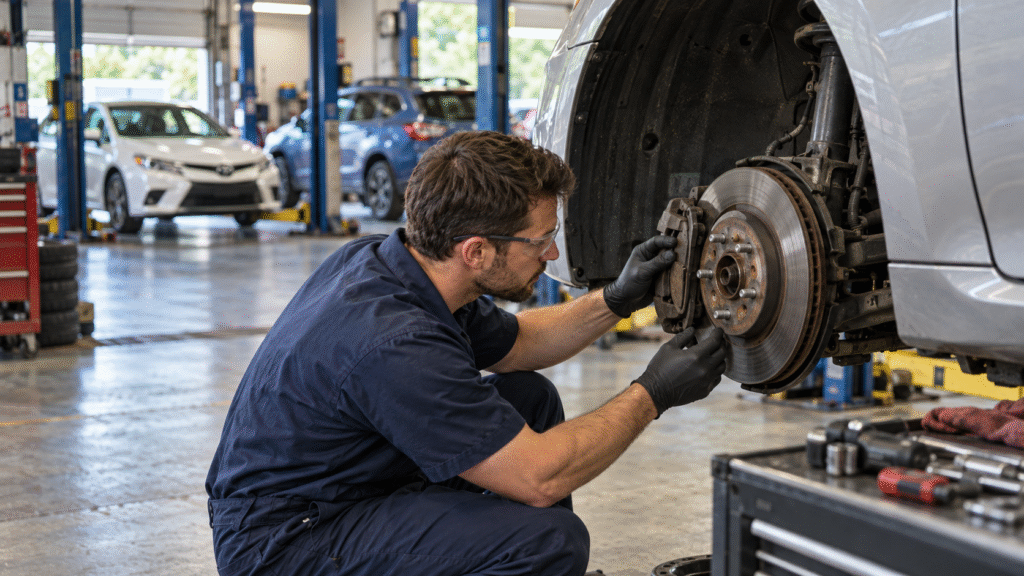
Honda, Toyota, and Subaru build dependable engines and drivetrains, but the components around them still need attention. Common maintenance and repair items include:
- Brake pads and rotors
- Suspension and steering components
- Wheel bearings
- Drive belts
- Water pumps
- Batteries and tires
- Shocks and struts
- Fluids, filters, and spark plugs
Replacing these items doesn’t automatically mean your vehicle is unreliable. Much of this work is part of normal ownership.
A healthy engine can still leave you stranded if a worn belt breaks, a battery fails, or the cooling system develops a leak. Delaying brake service can also allow a straightforward pad replacement to turn into a more expensive repair.
Maintenance cannot prevent every failure, but regular inspections can identify many developing problems before they disrupt your day.
Why Northern Virginia Driving Can Be Tough on Your Vehicle
Driving in Gainesville isn’t the same as cruising along an open rural road.
Merge onto I-66, crawl through afternoon traffic toward Centreville, or travel through stop-and-go traffic along Route 29, and your vehicle experiences repeated braking, acceleration, and idling. Repeat that commute every weekday, and the wear adds up.
Northern Virginia drivers also deal with:
- Heavy summer heat and freezing winter temperatures
- Potholes and construction debris
- Road salt exposure
- Frequent short trips
- Sudden braking and congested roads
These conditions can affect brakes, tires, suspension components, and batteries. Depending on your vehicle’s manufacturer guidance, your driving habits may also call for a more demanding maintenance schedule.
Subaru owners who head toward Shenandoah or explore gravel roads in Fauquier County may put additional stress on tires and suspension components. Rough surfaces can contribute to wear on bushings, wheel bearings, and shocks.
That’s why mileage alone never tells the full story. Driving conditions, vehicle age, and maintenance history matter too.
What We Check at Advanced Automotive
At Advanced Automotive, we look beyond the oil change. A visual inspection helps us spot developing issues and give you a clearer picture of your vehicle’s condition.
Our technicians check items such as:
- Brake pad thickness and rotor condition
- Brake fluid condition
- Suspension and steering wear
- Tire tread depth and wear patterns
- Battery health
- Cooling system components
- Belts and hoses
- Visible engine and transmission leaks
- CV boots
- Exhaust components
- Accessible filters
A visual inspection is a useful starting point. If we find a concern—or you report a symptom—we may recommend further testing to identify the cause.
Many customers are surprised when we tell them, “Everything looks good.” But that’s an important part of honest service.
If nothing needs repairing, we’ll tell you. If something is wearing, we’ll explain what we found, how urgent it is, and whether it can be monitored until a future visit.
Our repairs are backed by a 12-month/12,000-mile warranty on parts and labor. We also offer free towing with qualifying repairs and complimentary pickup and delivery throughout the Gainesville and Warrenton area when scheduling allows. AAA members may qualify for additional benefits.
Our goal is to build a long-term relationship with you and help you make informed decisions about your vehicle.
Warning Signs You Should Never Ignore
Even a dependable vehicle can develop problems between service visits. Pay attention to changes in how it starts, drives, sounds, or smells.
Brake squealing: This may indicate worn brake pads, although other conditions can also cause noise.
Steering vibration: Tire balance, tire damage, brake issues, or worn suspension components may be involved.
Uneven tire wear: Alignment, tire pressure, and suspension problems are possible causes.
Coolant leaks: Even a small leak deserves attention because coolant loss can lead to overheating.
Slow engine cranking: A weakening battery, poor connections, or a starting-system issue may be responsible.
Clicking during turns: This can indicate a worn CV joint.
Burning smells: These should be checked promptly, especially if accompanied by smoke or changes in vehicle operation.
Dashboard warning lights: A vehicle can feel normal while its monitoring systems detect a problem. Follow the owner’s manual guidance and arrange appropriate diagnosis.
If your vehicle overheats or displays an oil-pressure warning, pull over safely and shut off the engine. Continuing to drive can cause serious damage.
What Maintenance Usually Costs
Knowing what to expect makes planning easier. Routine maintenance often costs much less than repairing damage caused by a neglected problem.
Approximate service ranges include:
| Service | Estimated Cost |
|---|---|
| Oil service | $60–$130 |
| Brake service | $300–$800 per axle |
| Battery replacement | $180–$350 |
| Timing belt service, where applicable | $800–$1,500 |
| Suspension repairs | Varies by component and repair scope |
These figures are general estimates, not fixed quotes. The final cost depends on your vehicle model, the parts required, labor, existing wear, and the scope of the work.
Timing belt service applies only to vehicles equipped with a timing belt. Replacement intervals should follow the manufacturer’s guidance for your specific engine.
We provide a clear estimate before beginning repairs and explain the recommendations so you can decide what makes sense.
Follow the Maintenance Schedule for Your Vehicle
There isn’t one maintenance checklist that fits every Honda, Toyota, or Subaru.
Your owner’s manual is the starting point for oil changes, fluid services, spark plugs, timing belt replacement where applicable, and other scheduled work. Inspections help identify additional needs based on the vehicle’s condition.
For Subaru and other all-wheel-drive vehicles, proper tire matching is particularly important. Follow the manufacturer’s requirements for tire size, type, and allowable differences in tread wear.
The goal is to complete the work your vehicle needs at the right time. That means respecting the maintenance schedule while using inspection findings to guide repairs.
Keep Your Reliable Car Running Strong
Reliable vehicles deserve honest mechanics. That’s always been my philosophy.
If you drive a Honda, Toyota, or Subaru, I want to help you understand its condition and keep it dependable for as long as practical.
Regular maintenance and timely repairs can reduce the risk of breakdowns, limit avoidable damage, and help you get more useful miles from your vehicle.
If you’re unsure whether your car needs attention, bring it by. We’ll inspect it, explain what we find in plain English, and help you understand your options. No pressure just the straightforward advice we’ve been giving Northern Virginia drivers for more than 35 years.
Ready to bring your car in? Call Advanced Automotive at (703) 665-1818 or visit us at 13380 University Blvd, Gainesville, VA 20155.
We proudly serve Gainesville, Haymarket, Bristow, Manassas, Warrenton, and surrounding Northern Virginia communities. No appointment is needed for most services. Stop in, and we’ll explain what’s going on and give you a straight answer.
 Oil Change Gainesville
 Auto Brake Repair Gainesville, VA
  Towing Services Gainesville
  Fleet Services Gainesville
  Virginia Safety & Emissions Inspections
  Air Conditioning & Heating
  Wheel Alignment Warrenton
  Vehicle Diagnostic
  Auto Transmission Repair