

 Locations
 Hours
Hours Call Us Now
 Book Appointment


Your Ford F-150 plays an important role in everyday life, whether you use it for commuting, towing, hauling, or running a business. Around Warrenton and Northern Virginia, trucks regularly encounter busy highways, rural roads, construction sites, and changing weather. Keeping up with maintenance helps your vehicle remain dependable through those demands.
A maintenance plan considers more than the number on the odometer. Model year, engine, drivetrain, service history, and driving habits all matter. At Advanced Automotive, we help truck owners understand their vehicle’s condition and prioritize maintenance that supports reliable operation.
Understand Your Truck’s Maintenance Requirements
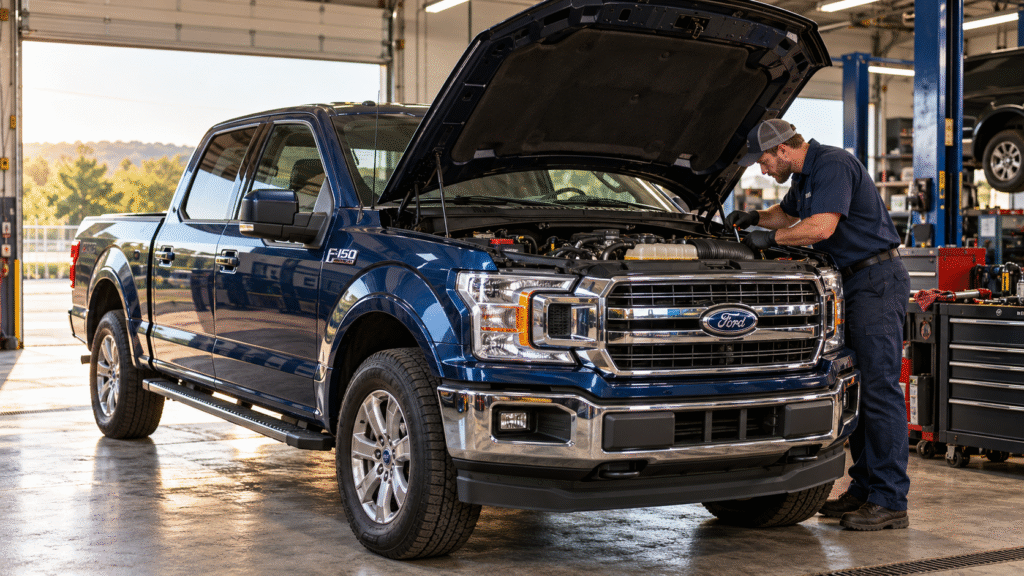
The starting point for Ford F-150 maintenance is the owner’s manual for your specific vehicle. Different generations, engines, and transmissions can require different fluids, inspection procedures, and replacement intervals. Applying the same schedule to every F-150 can overlook important differences.
Dashboard reminders are useful, particularly for tracking oil service, but they do not replace the complete maintenance schedule. Brakes, tires, filters, cooling components, and drivetrain systems need separate attention. Reviewing previous service records helps identify what has already been completed and what may be due, especially when you purchase a used truck.
Match Maintenance to Your Workload
How you use your F-150 influences the demands placed on its components. A truck driven mainly on open highways may have different maintenance needs from one that spends its days towing landscaping equipment or carrying construction materials.
Frequent towing, heavy hauling, extended idling, repeated short trips, and dusty-road driving should be discussed with your technician. Depending on your model, these conditions may require additional inspections or adjusted service intervals under Ford’s guidance.
Engine operating time also matters. A truck can accumulate substantial working hours while idling, even when its mileage appears relatively low. Sharing this information helps your technician recommend appropriate attention.
Consider Driving Conditions Around Warrenton
Warrenton-area truck owners experience a combination of rolling hills, commuter traffic, gravel roads, and seasonal temperature changes. These conditions can affect the way a vehicle wears over time.
Towing uphill increases demands on the engine, transmission, and cooling system. Traveling downhill with a loaded trailer requires careful braking. Rural roads can expose filters and undercarriage components to dust, mud, and debris.
If your driving habits change, review your maintenance plan. Buying a camper, starting commercial work, or increasing daily towing can alter your truck’s workload. A service conversation helps keep maintenance aligned with its current use.
Keep Engine Oil Service on Schedule
Engine oil lubricates moving parts and helps manage heat and contamination. Using the correct oil specification and replacing it at the applicable interval are central to protecting engine performance.
Synthetic oil does not automatically justify longer intervals under every operating condition. Follow the guidance for your truck, including any requirements associated with demanding use.
Check oil levels as directed in the owner’s manual between appointments. Unexpected oil consumption, visible leaks, warning lights, or unusual noises deserve investigation. Recording these changes can help your technician identify a concern more efficiently and determine whether it requires routine service or further diagnosis.
Maintain the Transmission and Drivetrain
Your transmission works hard when the truck accelerates, climbs hills, or pulls a trailer. Its maintenance requirements depend on the transmission fitted to your vehicle and the conditions in which it operates.
Avoid relying on a universal fluid-change interval. Use the applicable Ford schedule and discuss your towing history before deciding which service is appropriate.
Hard shifts, delayed engagement, slipping, or unusual sounds should be diagnosed promptly. Fluid replacement alone may not correct every transmission problem.
Differentials and four-wheel-drive transfer cases also require attention. Inspections can identify leaks, abnormal noise, and other concerns that affect dependable power delivery.
Make Brake Inspections a Priority
Brake condition is particularly important for trucks that carry heavy loads or tow trailers. A thorough inspection should assess pad thickness, rotor condition, caliper operation, hoses, and brake fluid according to the vehicle’s requirements.
Pay attention to grinding, vibration, pulling during braking, or changes in pedal feel. These symptoms can have several causes, so diagnosis should come before parts replacement.
Trailer braking equipment also needs maintenance when applicable. Using the correct towing setup and staying within the truck’s rated limits helps manage braking demands. Before a towing trip, address known brake concerns and confirm that the equipment functions correctly.
Protect Cooling-System Performance
The cooling system helps regulate engine temperature during everyday driving and demanding work. Hot weather, slow traffic, and towing make its condition especially relevant.
Maintenance should follow the specified coolant replacement schedule and include inspections for leakage, damaged hoses, and deteriorating connections. Replacement coolant must meet the requirements for your particular truck.
Report repeated coolant loss, visible leakage, or temperatures above the normal operating range. If an overheating warning appears, follow the owner’s manual instructions and arrange assistance when necessary. Continuing to drive an overheating vehicle can cause damage. Early investigation helps establish the cause before further demanding operation.
Check Tires, Steering, and Suspension
Tires, steering, and suspension work together to support handling, stability, and ride comfort. Their condition deserves regular attention, particularly when your F-150 encounters rough roads or heavy loads.
Check tire pressures against the vehicle’s recommended settings and follow appropriate rotation intervals. Uneven wear may indicate inflation concerns, alignment problems, or worn components.
Loose steering, clunking over bumps, and excessive bouncing should be assessed. Inspections may cover tie rods, ball joints, control arms, shocks, and related parts.
Correcting confirmed problems helps preserve predictable handling and avoid unnecessary tire wear. Mention when symptoms occur, including whether the truck is loaded or unloaded.
Include Filters, Belts, Hoses, and Battery Checks
Smaller maintenance items contribute to daily reliability. Engine air filters should be inspected, particularly when the truck regularly travels on dusty roads. Cabin filters also need attention to maintain airflow through the ventilation system.
Belts and hoses should be checked for damage, deterioration, and leakage. Replacement decisions should reflect their condition and the manufacturer’s guidance.
Battery and charging-system testing can help investigate slow starting or recurring electrical concerns. Seasonal temperature changes make battery condition worth reviewing before demanding travel. Together, these checks complement scheduled fluid services and provide opportunities to identify developing problems during routine maintenance visits.
Plan Maintenance With Clear Priorities
Maintenance costs depend on your truck’s configuration, condition, mileage, and required work. A written estimate should explain the proposed services and their purpose before you authorize them.
Ask which concerns need immediate attention, which services are scheduled, and which items can be monitored. This approach helps you budget while addressing important needs.
Keep invoices and inspection reports together. Clear records support future maintenance decisions and document the vehicle’s care for potential buyers.
At Advanced Automotive, we review service history, discuss workload, and explain findings so owners can make informed choices about their trucks.
Schedule Ford F-150 Service Near Warrenton
Consistent maintenance helps your F-150 stay ready for work, family travel, and everyday driving. Follow its correct schedule, report changes in performance, and review service needs whenever its workload changes.
Advanced Automotive serves truck owners in Warrenton, Gainesville, Haymarket, Bristow, Manassas, and surrounding Northern Virginia communities. Our team can review your vehicle’s condition and help plan appropriate maintenance.
Call (703) 665-1818 or visit 13380 University Blvd, Gainesville, VA 20155 to discuss your Ford F-150’s next service.
 Oil Change Gainesville
 Auto Brake Repair Gainesville, VA
  Towing Services Gainesville
  Fleet Services Gainesville
  Virginia Safety & Emissions Inspections
  Air Conditioning & Heating
  Wheel Alignment Warrenton
  Vehicle Diagnostic
  Auto Transmission Repair