

 Locations
 Hours
 Call Us Now
 Book Appointment


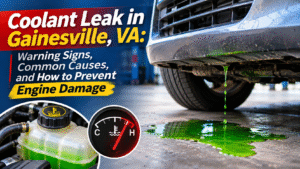
A small puddle beneath your parked vehicle may seem harmless, but it could be an early warning sign of a serious engine problem. While some fluid beneath a vehicle is simply condensation from the air conditioning system, other leaks may indicate that your engine is losing coolant.
Coolant plays an essential role in maintaining safe engine operating temperatures. Even a minor leak can gradually reduce cooling system efficiency, increasing the risk of overheating and expensive mechanical repairs.
For drivers in Gainesville, Virginia, frequent traffic congestion, seasonal temperature changes, and extended daily commutes can place additional demands on vehicle cooling systems. Identifying coolant leaks early is essential for protecting engine performance and avoiding unexpected roadside breakdowns.
At Advanced Automotive, we have more than 35 years of experience helping drivers throughout Gainesville and Northern Virginia diagnose and repair cooling system problems. Understanding the warning signs of a coolant leak can help you recognize when professional automotive service is necessary.
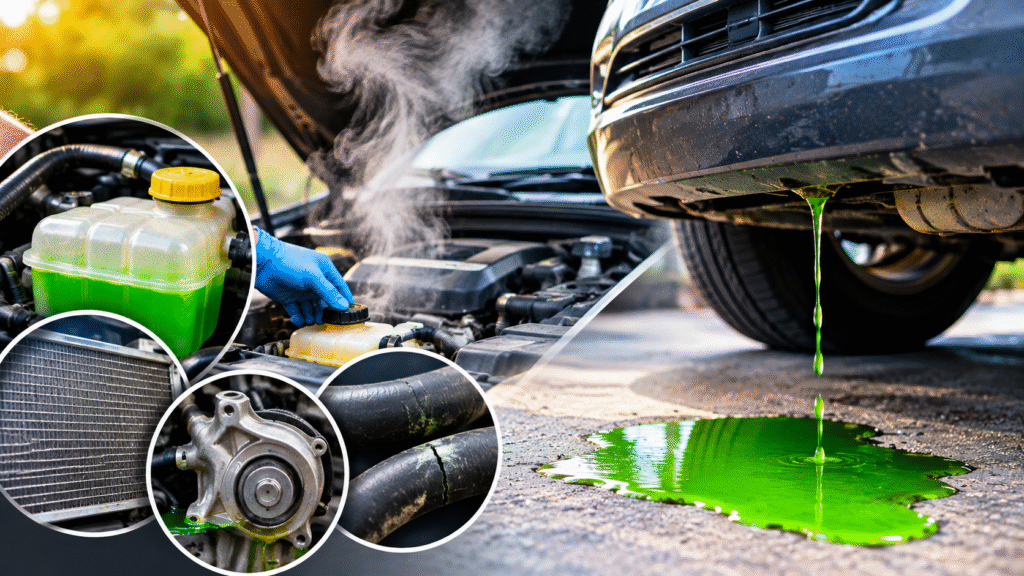
Understanding Coolant Leaks and Their Impact on Your Engine
Your vehicle’s cooling system regulates engine temperature by circulating coolant through the engine and radiator.
As the engine operates, combustion generates significant heat. Coolant absorbs this heat and transfers it to the radiator, where airflow helps release it before the coolant circulates through the engine again.
This continuous process prevents excessive engine temperatures and protects important mechanical components.
When a leak develops, the cooling system gradually loses fluid. Reduced coolant levels can interfere with heat transfer, potentially causing the engine to overheat.
Ignoring coolant loss may eventually damage cylinder heads, head gaskets, and other expensive engine components.
Although some leaks develop gradually, others can worsen unexpectedly, particularly during heavy traffic or demanding driving conditions.
Recognizing the source of coolant loss early can help prevent minor mechanical problems from becoming major engine repairs.
Common Causes of Coolant Leaks in Vehicles
Coolant leaks can develop in several areas of a vehicle’s cooling system. Understanding these potential sources can help drivers recognize why professional diagnosis is important.
Damaged Radiator Hoses
Radiator hoses transport coolant between the engine and radiator. Continuous exposure to heat, pressure, and vibration can gradually weaken these rubber components.
Over time, hoses may develop cracks, soft spots, or loose connections, allowing coolant to escape.
Radiator Damage and Cracks
The radiator plays a central role in releasing engine heat. Corrosion, physical damage, and aging plastic radiator tanks can cause leaks.
Even small radiator cracks may become more noticeable as cooling system pressure increases during operation.
Water Pump Failure
The water pump circulates coolant throughout the engine. When its seals or internal components deteriorate, coolant may begin leaking.
A failing water pump can also affect coolant circulation, increasing the risk of overheating.
Thermostat Housing and Reservoir Leaks
Thermostat housings and coolant reservoirs may develop cracks after years of exposure to changing temperatures.
Worn gaskets, damaged fittings, and loose hose clamps can also contribute to coolant loss.
Internal Engine Coolant Leaks
Not all coolant leaks produce visible puddles.
A damaged head gasket or another internal engine problem may allow coolant to enter the combustion chamber or mix with engine oil.
These conditions require prompt professional diagnosis because continued driving can lead to significant engine damage.
How to Identify a Coolant Leak Under Your Car
One of the most noticeable signs of a coolant leak is a puddle beneath the vehicle.
However, distinguishing coolant from other automotive fluids is important.
Coolant may appear green, orange, pink, yellow, or another manufacturer-specific color. It may also have a distinctive sweet smell.
By comparison, normal air conditioning condensation generally appears as clear, odorless water.
Other possible indicators of coolant loss include an illuminated coolant warning light, a frequently declining coolant level, or visible residue around cooling system connections.
Some vehicles may also develop reduced heater performance when coolant levels become excessively low.
Because different automotive fluids can appear similar, visual identification alone may not establish the source of a leak.
A professional inspection can determine whether the fluid is coolant, condensation, or another automotive fluid.
Why Gainesville Driving Conditions Can Affect Cooling Systems
Driving conditions throughout Gainesville and Northern Virginia can place significant demands on automotive cooling systems.
Traffic congestion along Interstate 66, Route 29, and University Boulevard often involves prolonged idling and frequent stop-and-go driving.
During these conditions, reduced airflow through the radiator can increase reliance on electric cooling fans.
Warm summer temperatures and continuous air conditioning use may further increase the cooling system’s workload.
Long-distance commuting and family road trips can also expose existing mechanical weaknesses.
Vehicles traveling through mountainous areas or carrying additional passengers and luggage may experience higher engine loads.
If cooling system components are already deteriorating, these conditions can make existing problems more noticeable.
Regular cooling system maintenance helps ensure that radiators, hoses, cooling fans, and related components remain prepared for varying driving conditions.
Professional Coolant Leak Diagnosis and Inspection
Accurately diagnosing a coolant leak involves more than replacing the first visibly damaged component.
A comprehensive inspection helps identify the actual source of coolant loss and determine whether other cooling system components require attention.
At Advanced Automotive, our technicians use professional diagnostic equipment to evaluate cooling system condition and performance.
Initial Fluid and Leak Inspection
The diagnostic process begins with identifying the leaking fluid and examining the affected area.
Technicians evaluate fluid appearance, leakage location, visible residue, and potential signs of contamination.
This assessment helps distinguish coolant leaks from normal air conditioning condensation or other fluid problems.
Cooling System Pressure Testing
Pressure testing is an effective method for detecting leaks that may not be visible during a standard inspection.
With the engine safely cooled, technicians use specialized equipment to apply controlled pressure according to manufacturer specifications.
This process can reveal radiator cracks, leaking hose connections, damaged seals, and other problems that may only become noticeable under pressure.
Complete Cooling System Evaluation
A thorough assessment may include inspecting the radiator, water pump, thermostat, coolant reservoir, hoses, cooling fans, and radiator cap.
Technicians may also evaluate coolant condition and check for damaged or deteriorating components.
When internal leakage is suspected, additional testing may be recommended to assess head gasket condition or potential coolant contamination.
Identifying the underlying problem helps ensure that repairs address the actual cause of coolant loss.
Warning Signs That Require Immediate Attention
Certain symptoms may indicate that a coolant leak has progressed into a serious cooling system problem.
An engine temperature gauge rising into the red zone is an important warning sign. Continuing to drive while the engine is overheating can cause severe damage.
Steam coming from beneath the hood may indicate escaping hot coolant and should never be ignored.
Other concerning symptoms include repeated low-coolant warnings, sudden heater failure, unusual sweet odors, or rough engine operation following an overheating event.
If your vehicle begins overheating, pull over safely, switch off the engine, and seek professional assistance.
Never attempt to open a radiator cap or pressurized cooling system while the engine is hot, as escaping coolant can cause severe burns.
When overheating or substantial coolant loss is suspected, arranging professional towing is generally safer than continuing to drive.
Taking immediate action can help protect the engine from additional damage.
How Much Does Coolant Leak Repair Cost in Gainesville, VA?
Coolant leak repair costs vary depending on the damaged component, vehicle specifications, labor requirements, and whether overheating has caused additional damage.
Minor radiator hose replacement may cost approximately $150–$350, while thermostat replacement commonly ranges from $250–$500.
Radiator replacement may cost around $500–$1,200 or more, depending on the vehicle and required components.
Water pump replacement can range from approximately $500–$1,500 or more, particularly when the repair requires extensive disassembly.
These figures are general estimates rather than fixed service prices.
Vehicle make, model, engine configuration, parts availability, and repair complexity all influence the final cost.
A professional diagnosis is necessary to determine the actual repair requirements.
At Advanced Automotive, customers receive a clear estimate before repair work begins, allowing them to understand the recommended services and associated expenses.
Preventing Coolant Leaks Through Regular Maintenance
Preventive maintenance is one of the most effective ways to reduce the risk of unexpected cooling system failures.
Regular vehicle inspections allow technicians to identify aging hoses, deteriorating seals, radiator damage, and other developing problems.
Coolant should be maintained according to the vehicle manufacturer’s recommended specifications and replacement intervals.
Drivers should also monitor coolant levels when the engine is completely cool and remain attentive to unusual temperature readings.
A recurring need to add coolant should never be considered normal.
Rather than repeatedly topping up the reservoir, arrange a professional inspection to determine why coolant is being lost.
Addressing problems early can help protect engine performance, maintain vehicle reliability, and potentially reduce long-term repair costs.
Choose Advanced Automotive for Cooling System Repair in Gainesville
When your vehicle develops a coolant leak, accurate diagnosis and dependable repair services are essential.
With more than 35 years of automotive repair experience, Advanced Automotive provides professional cooling system inspections, radiator repairs, water pump services, and other automotive maintenance solutions.
Our ASE-certified technicians use professional diagnostic equipment to identify cooling system problems and recommend appropriate repairs.
Qualifying repairs are backed by a 12-month/12,000-mile warranty on parts and labor, providing additional confidence in our workmanship.
We also offer free towing with qualifying repairs and complimentary local pickup and delivery for eligible customers in the Gainesville and Warrenton areas.
Our approach focuses on clear communication, accurate diagnosis, and recommendations based on the vehicle’s actual condition.
Final Thoughts
A coolant leak may begin as a small puddle beneath your vehicle, but ignoring it can lead to serious engine damage, unexpected breakdowns, and costly repairs.
Recognizing early warning signs, understanding common causes, and scheduling timely inspections are important steps toward maintaining a reliable vehicle.
Whether you notice visible coolant leakage, repeated low-coolant warnings, or unusual engine temperatures, professional diagnosis can help identify the problem before it becomes more severe.
For dependable coolant leak repair in Gainesville, VA, trust the experienced technicians at Advanced Automotive to inspect your cooling system and recommend the appropriate repair solution.
Contact: Advanced Automotive
Address: 13380 University Blvd, Gainesville, VA
Phone: (703) 665-1818
We proudly serve Gainesville, Warrenton, Haymarket, Bristow, Manassas, and surrounding Northern Virginia communities.
Schedule a professional cooling system inspection today and protect your engine from preventable damage.
 Oil Change Gainesville

 Auto Brake Repair Gainesville, VA
 Towing Services Gainesville
 Fleet Services Gainesville
 Virginia Safety & Emissions Inspections
 Air Conditioning & Heating
 Wheel Alignment Warrenton
 Vehicle Diagnostic
 Auto Transmission Repair