

 Locations
 Hours
 Call Us Now
 Book Appointment


Seeing the tire pressure warning light illuminate on your vehicle’s dashboard can be concerning, especially when you are commuting to work along Route 29 or driving through Warrenton, VA. While your vehicle may appear to be operating normally, the warning light indicates that your tires or Tire Pressure Monitoring System (TPMS) require attention.
A tire pressure warning light does not necessarily mean you have a flat tire or need an immediate tire replacement. Changes in outdoor temperatures, slow air leaks, damaged valve stems, and faulty TPMS sensors can all contribute to this issue.
At Advanced Automotive, we have been helping Northern Virginia drivers maintain safe and reliable vehicles for more than 35 years. Understanding what causes your tire pressure light to come on can help you prevent unexpected breakdowns, improve vehicle performance, and avoid unnecessary repair expenses.
What Does the Tire Pressure Warning Light Mean?
The Tire Pressure Monitoring System (TPMS) is a vehicle safety feature designed to alert drivers when tire pressure becomes significantly lower than the manufacturer’s recommended level.
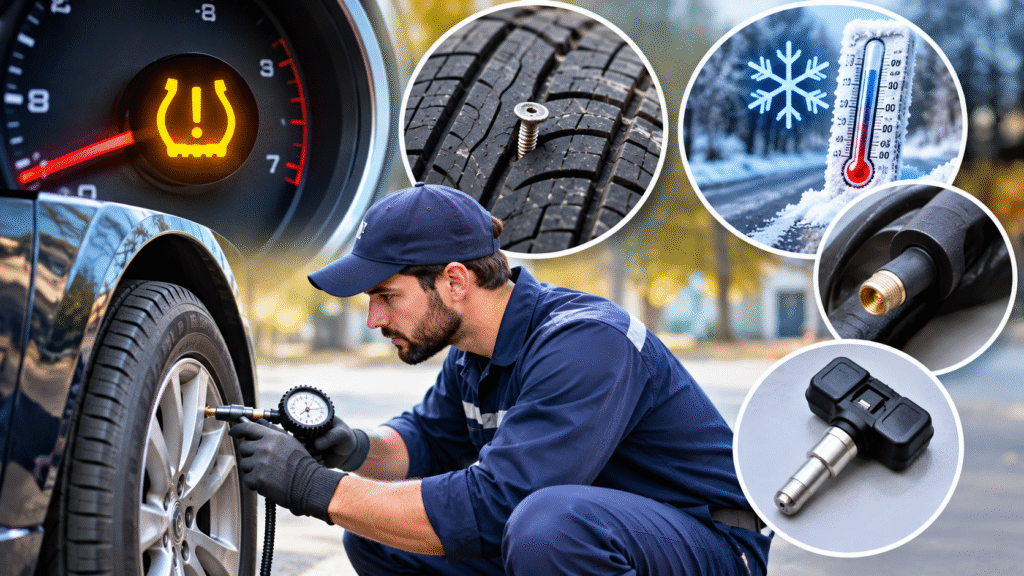
The warning light typically appears as a yellow horseshoe-shaped symbol with an exclamation mark in the center. In many vehicles, the system activates when tire pressure falls approximately 25% below the recommended level.
Common reasons for a tire pressure warning light include:
- Low tire pressure caused by cold weather
- Slow leaks from nails, screws, or road debris
- Damaged or leaking valve stems
- Air leaks around the tire bead
- Faulty TPMS sensors
- Damaged wheels or tires
Even if the warning light disappears after driving for several minutes, the underlying issue may still exist. Checking tire pressure and identifying the cause is essential for maintaining vehicle safety.
Common Causes of Low Tire Pressure in Warrenton, VA
1. Cold Weather and Temperature Changes
Seasonal temperature fluctuations in Warrenton and surrounding Northern Virginia communities can significantly affect tire pressure.
For approximately every 10°F decrease in outdoor temperature, tire pressure can drop by around one PSI. During colder mornings, this reduction may be enough to activate the TPMS warning light.
As temperatures rise throughout the day or the tires warm up during driving, tire pressure may increase, causing the warning light to disappear.
However, this does not necessarily mean the issue has been resolved. Checking tire pressure when the tires are cold and maintaining the manufacturer’s recommended PSI can help prevent recurring warnings.
2. Slow Tire Leaks and Punctures
Nails, screws, sharp objects, and road debris can create small punctures that allow air to escape gradually.
Drivers traveling throughout Warrenton, New Baltimore, and surrounding areas may encounter debris from road maintenance, construction projects, and everyday traffic.
Unlike a sudden flat tire, a slow leak may develop over several days or weeks. If you frequently need to add air to the same tire, a professional tire inspection can help identify the source of the leak.
3. Damaged Valve Stems and Tire Bead Leaks
Valve stems are responsible for maintaining an airtight seal while allowing air to enter the tire. Over time, exposure to moisture, road salt, dirt, and aging can cause valve stems to deteriorate.
Tire bead leaks can also develop where the tire meets the wheel. Corrosion, wheel damage, or improper installation may compromise this seal and result in gradual pressure loss.
4. Faulty TPMS Sensors
Many modern vehicles use electronic sensors to monitor tire pressure. These sensors contain batteries that generally last several years, often around 7 to 10 years.
When a sensor battery fails or the monitoring system develops a fault, the TPMS warning light may flash before remaining illuminated.
Professional TPMS diagnostics can determine whether the problem is related to actual tire pressure or a malfunctioning sensor.
Warning Signs of Tire Pressure Problems You Should Never Ignore
While some tire pressure issues can be corrected with a simple air pressure adjustment, others require immediate professional attention.
Common warning signs include:
- TPMS warning light that remains illuminated
- Warning light that flashes before becoming solid
- Frequent loss of tire pressure
- Vehicle pulling toward one side
- Reduced steering responsiveness
- Unusual vibrations while driving
- Visible tire damage or sidewall bulges
- Uneven or excessive tire tread wear
If a tire appears visibly flat, loses pressure rapidly, or affects vehicle handling, pull over safely and avoid continuing your journey. Driving on a severely underinflated tire can damage its internal structure and increase the risk of a tire blowout.
How Advanced Automotive Diagnoses Tire Pressure Problems
At Advanced Automotive, our approach goes beyond simply adding air to your tires. We focus on identifying the underlying cause of pressure loss and recommending appropriate repairs.
Our comprehensive tire inspection process typically includes:
- Checking air pressure in all four tires
- Inspecting tire tread for punctures and embedded objects
- Examining tire sidewalls for damage
- Checking wheel beads for air leaks
- Inspecting valve stems and seals
- Testing TPMS sensors
- Verifying manufacturer-recommended tire pressure
- Evaluating tire wear patterns
A thorough inspection helps determine whether your vehicle requires a minor adjustment, puncture repair, sensor replacement, or new tires.
Our goal is to provide reliable solutions that improve vehicle safety without recommending unnecessary repairs.
Tire Pressure Repair and Service Options in Warrenton, VA
The appropriate repair depends on the cause and severity of the tire pressure problem.
Tire Pressure Adjustment
If temperature changes are responsible for low tire pressure, adjusting the pressure to the manufacturer’s recommended specifications may resolve the issue.
Flat Tire and Puncture Repair
Small punctures within the repairable tread area can often be professionally repaired, provided the tire has not sustained internal or sidewall damage.
Valve Stem Replacement
Replacing a damaged or deteriorated valve stem can restore an airtight seal and prevent recurring air loss.
TPMS Sensor Replacement
When a TPMS sensor fails, replacing and programming the sensor may restore normal tire pressure monitoring without requiring tire replacement.
Tire Replacement
If a tire has significant sidewall damage, excessive tread wear, or an unsafe puncture, replacement may be necessary to maintain safe driving conditions.
At Advanced Automotive, qualifying repairs are backed by our 12-month or 12,000-mile parts and labor warranty.
How Proper Tire Pressure Improves Vehicle Performance
Maintaining the correct tire pressure provides several important benefits, including improved fuel efficiency, better braking performance, enhanced steering control, longer tire life, and improved driving comfort.
Underinflated tires create additional rolling resistance, which can increase fuel consumption and accelerate tire wear. They may also generate excessive heat during driving, increasing the risk of tire failure.
Regular tire maintenance is particularly important for drivers who frequently commute along Route 29, Route 17, and other major roads throughout Fauquier County.
How Much Does Tire Pressure Service Cost in Warrenton, VA?
The cost of tire pressure service depends on the underlying problem, the condition of the tire, and the type of repair required.
Simple pressure adjustments and repairable punctures generally cost less than TPMS sensor replacements or new tires.
A professional inspection can help identify the most cost-effective solution before minor tire problems develop into expensive repairs.
At Advanced Automotive, we prioritize transparent recommendations, clear estimates, and dependable automotive services.
Tips to Prevent Tire Pressure Problems
Regular preventive maintenance can help minimize unexpected TPMS warnings and extend tire life.
- Check tire pressure at least once a month.
- Inspect tires before long-distance journeys.
- Follow the recommended PSI listed on the driver’s door placard.
- Check tire pressure when the tires are cold.
- Inspect tire tread and sidewalls regularly.
- Schedule routine tire rotations and wheel alignment checks.
- Address recurring air leaks promptly.
- Never ignore a persistent TPMS warning light.
Final Thoughts
A tire pressure warning light should never be overlooked, even when your vehicle appears to be driving normally. Cold weather, slow leaks, damaged valve stems, and faulty TPMS sensors are common causes that can often be resolved through timely inspection and professional maintenance.
If you are searching for tire repair near me in Warrenton, VA, Advanced Automotive offers professional tire inspections, TPMS diagnostics, tire repairs, and preventive maintenance solutions to help keep your vehicle safe and reliable.
With more than 35 years of experience serving Northern Virginia drivers, our team is committed to honest recommendations, quality workmanship, and dependable automotive care.
Schedule an appointment with Advanced Automotive in Warrenton, VA, today and let our experienced technicians identify the cause of your tire pressure warning light before it develops into a more expensive problem.
Drive confidently with properly maintained tires and professional automotive care.
 Oil Change Gainesville

 Auto Brake Repair Gainesville, VA
 Towing Services Gainesville
 Fleet Services Gainesville
 Virginia Safety & Emissions Inspections
 Air Conditioning & Heating
 Wheel Alignment Warrenton
 Vehicle Diagnostic
 Auto Transmission Repair