

 Locations
 Hours
Hours Call Us Now
 Book Appointment


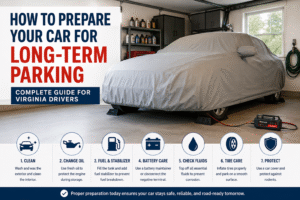
If you are planning to leave your vehicle parked for several weeks or even months, proper preparation is extremely important. Many vehicle owners assume that simply parking a car and leaving it unused will not cause any problems. However, long-term parking without proper care can lead to battery failure, tire damage, fuel system issues, brake corrosion, and expensive repairs.
Whether you are traveling for work, going abroad, storing a seasonal vehicle, leaving for college, or preparing for military deployment, taking preventive measures can help keep your vehicle in excellent condition while it sits unused.
This guide explains how to prepare your car for long-term parking and avoid common storage-related problems.
Why Long-Term Parking Can Damage Your Vehicle
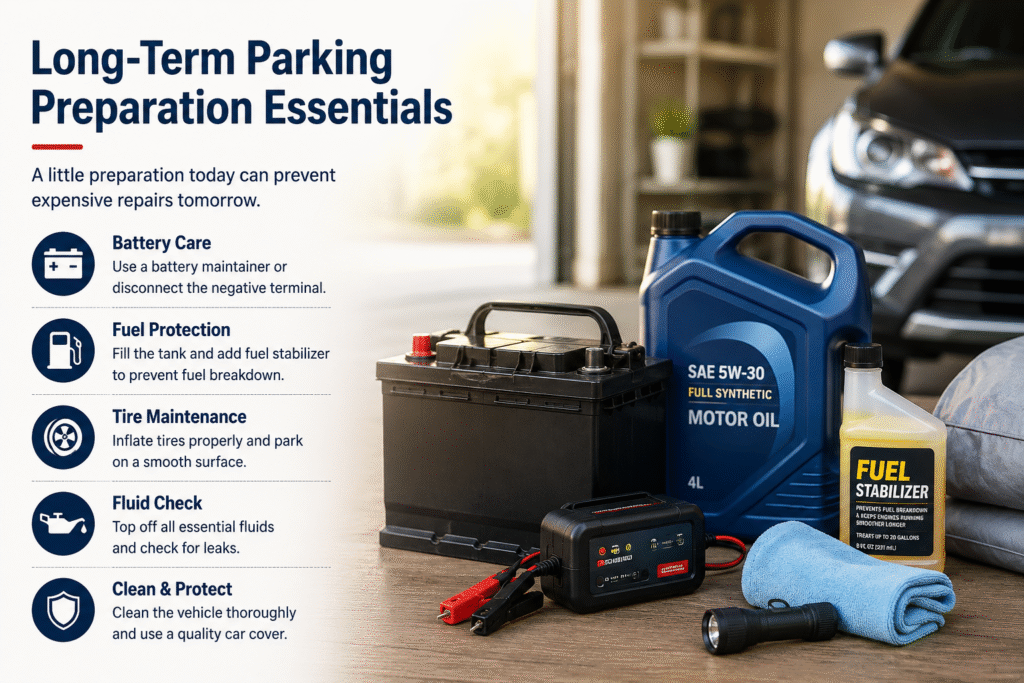
Vehicles are designed to be driven regularly. When a car remains parked for extended periods, several mechanical systems may begin to deteriorate.
Some of the most common issues caused by long-term parking include:
- Dead batteries
- Tire flat spots
- Fuel degradation
- Brake corrosion
- Moisture buildup
- Rust formation
- Rodent damage
- Dry seals and gaskets
Ignoring these issues can lead to expensive repairs once the vehicle is used again.
How Long Is Considered Long-Term Parking?
Vehicle storage periods are generally divided into three categories:
- 2–4 weeks: Short-term parking
- 1–3 months: Medium-term storage
- More than 3 months: Long-term storage
If your car will remain unused for more than 30 days, proper preparation becomes essential.
Clean Your Vehicle Thoroughly Before Storage
Cleaning the vehicle before parking it for a long time helps protect both the exterior and interior.
Dust, dirt, bird droppings, bug residue, and road salt can damage paint if left untreated for months. Food particles and moisture inside the cabin may also attract insects and rodents.
Exterior Cleaning
Before storing your vehicle:
- Wash the entire exterior
- Clean wheel wells
- Remove bug residue and stains
- Apply wax or paint protection
- Clean windows and mirrors
Waxing the vehicle adds an extra layer of protection against moisture and environmental damage.
Interior Cleaning
Inside the vehicle:
- Remove food and drinks
- Vacuum carpets and seats
- Clean upholstery
- Empty trash
- Remove items that may attract pests
A clean interior reduces odors, mold growth, and rodent activity.
Change the Engine Oil Before Long-Term Parking
Fresh engine oil is one of the most important steps before storing a vehicle.
Used oil contains contaminants, moisture, and acids that can sit inside the engine and potentially damage internal components during long periods of inactivity.
Changing the oil before storage helps:
- Protect engine components
- Reduce corrosion
- Prevent sludge buildup
- Improve engine longevity
If your vehicle is close to its oil service interval, changing the oil before storage is highly recommended.
Fill the Fuel Tank and Use Fuel Stabilizer
Leaving a fuel tank partially empty creates space for condensation. Moisture buildup inside the tank can lead to corrosion and fuel contamination.
To protect the fuel system:
- Fill the tank completely
- Add a high-quality fuel stabilizer
- Run the engine for several minutes
Fuel stabilizer helps prevent fuel breakdown and keeps the system cleaner during storage.
Protect the Battery from Draining
Battery failure is one of the most common problems after long-term parking.
Modern vehicles continue using small amounts of electricity even when turned off. Over time, this can completely drain the battery.
Use a Battery Maintainer
A battery maintainer keeps the battery properly charged without overcharging it. This is one of the best solutions for vehicles stored longer than a month.
Disconnect the Battery
If a maintainer is unavailable:
- Disconnect the negative battery terminal
- Store the vehicle safely
- Reconnect the battery before use
This helps reduce electrical drain while the vehicle remains parked.
Check and Top Off All Vehicle Fluids
All essential fluids should be checked before long-term storage.
Important fluids include:
- Engine oil
- Coolant
- Brake fluid
- Transmission fluid
- Power steering fluid
- Windshield washer fluid
Low or contaminated fluids may increase the risk of corrosion and mechanical damage during storage.
Checking fluid levels also helps identify possible leaks before they become more serious.
Inflate Tires Properly
Tires can lose pressure and develop flat spots when a vehicle sits in one position for too long.
To protect your tires:
- Inflate them to manufacturer-recommended pressure
- Park on a smooth surface
- Avoid parking on dirt or grass
- Move the vehicle occasionally if possible
For very long storage periods, tire cradles can help reduce stress on the tires.
Protect Your Vehicle from Rodents
Rodents can cause major damage to parked vehicles. Mice and squirrels often enter engine compartments and chew electrical wiring.
To reduce the risk of rodent damage:
- Remove food from the vehicle
- Keep the storage area clean
- Use rodent deterrents
- Seal nearby openings if possible
- Inspect the vehicle periodically
Electrical repairs caused by rodent damage can become extremely expensive.
Avoid Using the Parking Brake During Storage
Many drivers leave the parking brake engaged while storing a vehicle. However, keeping the parking brake activated for long periods may cause it to seize.
Instead:
- Park on a level surface
- Use wheel chocks if needed
- Leave automatic vehicles in Park
- Leave manual vehicles in gear
This reduces the risk of brake components sticking during storage.
Use a Proper Vehicle Cover
A vehicle cover helps protect against dust, moisture, sunlight, and debris.
Indoor Storage
For indoor parking:
- Use a breathable car cover
- Ensure proper ventilation
Outdoor Storage
For outdoor parking:
- Use a weather-resistant cover
- Avoid plastic tarps
- Choose covers designed for long-term outdoor protection
Proper covers help prevent paint damage and moisture buildup.
Schedule a Pre-Storage Vehicle Inspection
A professional inspection before long-term parking can help identify existing issues before they become worse.
A complete inspection may include:
- Battery testing
- Tire inspection
- Fluid checks
- Brake inspection
- Cooling system inspection
- Belt and hose evaluation
- Leak detection
Finding and fixing small problems early can help avoid major repairs later.
Common Problems After Long-Term Parking
Vehicles that are not properly prepared for storage often experience several issues.
Dead Batteries
Batteries commonly discharge after several weeks without driving.
Flat-Spotted Tires
Tires can become uneven when parked in one position for too long.
Fuel System Issues
Old fuel may clog injectors and affect engine performance.
Brake Corrosion
Brake rotors can develop rust during extended inactivity.
Rodent Damage
Chewed wires and damaged insulation can create serious electrical problems.
Most of these issues can be prevented with proper storage preparation.
Who Should Prepare Their Vehicle for Long-Term Storage?
Long-term vehicle preparation is especially important for:
- Military personnel
- College students
- Seasonal travelers
- Classic car owners
- RV owners
- Frequent travelers
- Fleet vehicle managers
- Snowbirds
Any vehicle sitting unused for more than a month should be properly prepared.
Final Thoughts
Preparing your car for long-term parking is one of the best ways to protect your investment and avoid unnecessary repair costs. Proper storage preparation helps maintain battery health, tire condition, fuel quality, and overall vehicle reliability.
Simple maintenance steps such as cleaning the vehicle, changing the oil, protecting the battery, checking fluids, and using a proper cover can make a major difference in how your vehicle performs after storage.
Taking preventive measures today can help ensure your vehicle remains safe, reliable, and road-ready when you need it again.
For professional vehicle inspections, oil changes, battery testing, and long-term storage preparation services, contact Advanced Automotive today.
📞 (703) 665-1818
📍 13380 University Blvd, Gainesville, VA
 Oil Change Gainesville
 Auto Brake Repair Gainesville, VA
  Towing Services Gainesville
  Fleet Services Gainesville
  Virginia Safety & Emissions Inspections
  Air Conditioning & Heating
  Wheel Alignment Warrenton
  Vehicle Diagnostic
  Auto Transmission Repair