

 Locations
 Hours
Hours Call Us Now
 Book Appointment


Keeping your vehicle in good condition is essential for safety, performance, and long-term savings. Many drivers in Virginia often wonder how frequently they should service their cars to avoid unexpected breakdowns and costly repairs. The answer depends on several factors, including the type of vehicle, driving habits, road conditions, and weather changes throughout the year.
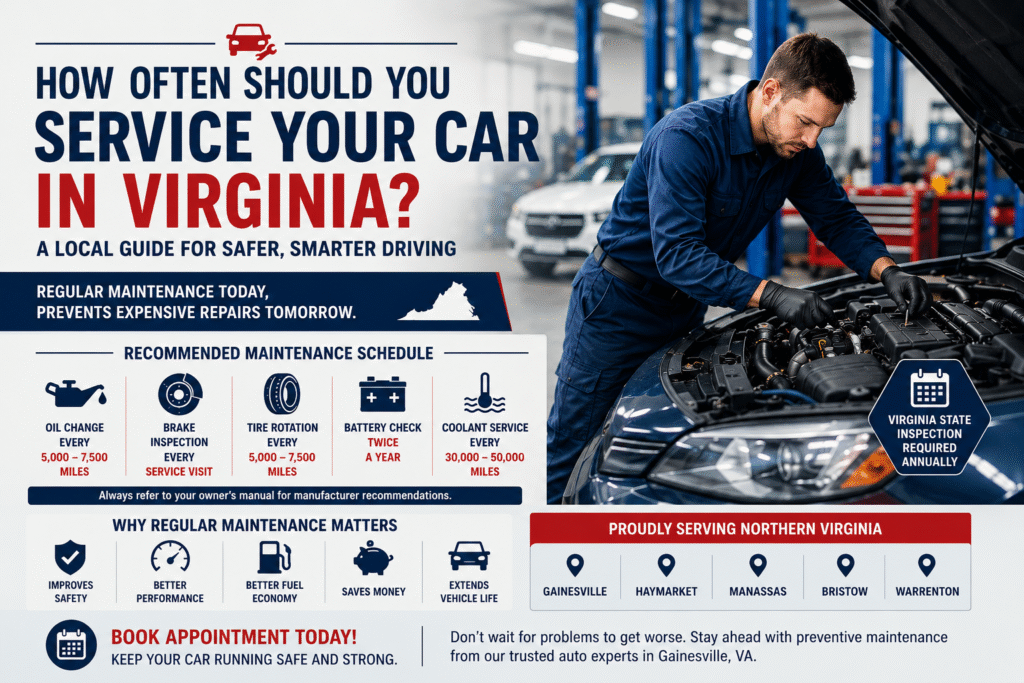
In general, most vehicles should receive professional maintenance every 5,000 to 7,500 miles. However, drivers who frequently travel through heavy traffic, drive long distances, or experience harsh weather conditions may require more frequent servicing. Regular maintenance helps extend vehicle lifespan, improves fuel efficiency, and reduces the risk of major mechanical problems.
Why Regular Vehicle Maintenance Is Important
Routine vehicle maintenance plays a major role in keeping your car safe and reliable. Ignoring small issues can eventually lead to expensive repairs that could have been prevented with timely servicing.
Benefits of regular vehicle maintenance include:
- Better fuel efficiency
- Improved engine performance
- Longer vehicle lifespan
- Enhanced road safety
- Reduced repair costs
- Improved resale value
- Lower chances of unexpected breakdowns
Recommended Car Service Schedule
Below is a general maintenance schedule recommended for most modern vehicles.
| Service | Recommended Interval |
|---|---|
| Oil Change | Every 5,000–7,500 miles |
| Tire Rotation | Every 5,000–7,500 miles |
| Brake Inspection | Every service visit |
| Wheel Alignment Check | Once a year |
| Engine Air Filter | Every 15,000–30,000 miles |
| Cabin Air Filter | Every 15,000–20,000 miles |
| Coolant Service | Every 30,000–50,000 miles |
| Transmission Service | Every 30,000–60,000 miles |
| Battery Inspection | Twice per year |
| Virginia State Inspection | Annually |
These intervals may vary depending on the manufacturer’s recommendations and driving conditions.
Virginia Driving Conditions Affect Vehicle Maintenance
Virginia drivers experience varying road and weather conditions throughout the year. These environmental factors directly impact vehicle performance and maintenance needs.
Hot Summers
High temperatures during summer can place additional stress on several vehicle systems, including:
- Batteries
- Cooling systems
- Tires
- Air conditioning systems
Heat can cause fluids to break down faster and increase tire wear.
Cold Winters
Winter weather can also affect vehicle performance. Common winter-related vehicle issues include:
- Reduced battery efficiency
- Low tire pressure
- Thickened engine fluids
- Worn belts and hoses
Cold temperatures make regular inspections especially important.
Heavy Traffic Conditions
Drivers traveling through busy roads and highways often experience stop-and-go traffic, which increases wear on:
- Brakes
- Engines
- Transmission systems
- Cooling systems
Vehicles driven in traffic-heavy conditions are often classified under “severe driving conditions,” requiring more frequent maintenance.
Essential Maintenance Every 5,000 to 7,500 Miles
Oil Change Service
Oil changes are one of the most important maintenance services for any vehicle. Engine oil lubricates moving parts, reduces friction, and prevents overheating.
Fresh engine oil helps:
- Protect engine components
- Improve fuel efficiency
- Reduce engine wear
- Remove contaminants
Signs your car may need an oil change include:
- Engine warning light
- Dirty or dark oil
- Increased engine noise
- Reduced mileage
Delaying oil changes can eventually lead to severe engine damage.
Tire Rotation
Tire rotation ensures even tire wear and improves overall handling and safety. Since front and rear tires wear differently, rotating them regularly helps extend tire life.
Benefits of tire rotation include:
- Better traction
- Improved fuel efficiency
- Longer tire lifespan
- Smoother driving experience
Skipping tire rotations can cause uneven tread wear and reduce tire performance.
Brake Inspection During Every Service Visit
The braking system is one of the most important safety components in a vehicle. Regular brake inspections help detect wear before serious problems develop.
Brake inspections typically include checking:
- Brake pads
- Rotors
- Brake fluid
- Brake calipers
- Brake lines
Common warning signs of brake issues include:
- Squeaking noises
- Grinding sounds
- Vibrations while braking
- Soft brake pedal
- Increased stopping distance
Addressing brake problems early improves safety and reduces repair costs.
Annual Virginia State Inspection
Virginia law requires vehicles to undergo an annual state safety inspection. During this inspection, several critical systems are evaluated to ensure the vehicle meets safety standards.
The inspection usually covers:
- Brakes
- Tires
- Suspension
- Steering
- Lights
- Windshield wipers
- Mirrors
- Exhaust system
- Horn
Although state inspections confirm road safety compliance, they do not replace regular vehicle maintenance.
Major Preventive Maintenance Every 30,000 Miles
Transmission Service
Transmission repairs can be extremely expensive if maintenance is neglected. Regular transmission servicing helps maintain smooth gear shifting and prevents overheating.
Benefits of transmission maintenance include:
- Reduced internal wear
- Better performance
- Extended transmission life
- Improved fuel economy
Many manufacturers recommend transmission service between 30,000 and 60,000 miles.
Coolant System Service
Coolant prevents the engine from overheating and protects internal components from corrosion.
Over time, coolant loses effectiveness and may become contaminated. Signs your vehicle may need coolant service include:
- Rising engine temperature
- Coolant leaks
- Sweet smell from the engine
- Frequent overheating
Ignoring coolant issues can lead to severe engine damage.
Filter Replacement
Vehicles rely on multiple filters to maintain performance and efficiency.
Important filters include:
- Engine air filter
- Cabin air filter
- Fuel filter
Replacing filters regularly helps improve:
- Engine performance
- Air quality inside the vehicle
- Fuel efficiency
Dirty filters can restrict airflow and reduce overall vehicle performance.
Warning Signs Your Vehicle Needs Immediate Service
Certain vehicle problems should never be ignored, even if your next scheduled maintenance is not due yet.
Check Engine Light
The check engine light may indicate problems related to:
- Sensors
- Fuel systems
- Ignition systems
- Emissions components
A diagnostic inspection should be performed as soon as possible.
Strange Noises
Unusual sounds often indicate developing mechanical problems.
Pay attention to noises such as:
- Grinding
- Knocking
- Squealing
- Clicking
These sounds may signal issues with brakes, suspension, or engine components.
Fluid Leaks
Fluid leaks can quickly lead to major repairs if ignored.
Common automotive fluids include:
- Engine oil
- Coolant
- Brake fluid
- Transmission fluid
- Power steering fluid
Any visible leak should be inspected immediately.
Vehicle Vibrations
Unexpected vibrations while driving may indicate:
- Tire imbalance
- Alignment issues
- Brake problems
- Suspension wear
Prompt inspections help prevent further damage.
How Preventive Maintenance Saves Money
Many drivers postpone vehicle maintenance to avoid spending money. However, delaying service often results in significantly higher repair costs later.
Examples include:
- Oil changes cost far less than engine replacements
- Brake pad replacement is cheaper than rotor replacement
- Tire rotation helps avoid premature tire replacement
- Coolant service prevents overheating damage
Routine maintenance protects your investment and reduces unexpected expenses.
Choosing a Reliable Auto Repair Shop
Selecting a trusted repair shop is important for maintaining your vehicle properly. A reliable automotive service center should offer:
- Experienced technicians
- Honest recommendations
- Quality parts
- Transparent pricing
- Preventive maintenance services
Professional technicians can help identify potential issues early and ensure your vehicle remains safe and dependable.
Conclusion
Regular vehicle maintenance is essential for keeping your car safe, reliable, and efficient. Following a proper service schedule helps prevent costly repairs, improves fuel economy, and extends the life of your vehicle. Virginia drivers face unique weather and traffic conditions that can place additional stress on vehicles, making routine inspections and preventive maintenance even more important.
Whether it is an oil change, brake inspection, tire rotation, transmission service, or annual vehicle inspection, staying consistent with maintenance ensures better performance and long-term savings. By servicing your vehicle at the recommended intervals and paying attention to warning signs, you can avoid unexpected breakdowns and keep your car running smoothly for years to come. If your vehicle is due for maintenance, now is the right time to book appointment with a trusted auto repair professional and keep your car in top condition.
 Oil Change Gainesville
 Auto Brake Repair Gainesville, VA
  Towing Services Gainesville
  Fleet Services Gainesville
  Virginia Safety & Emissions Inspections
  Air Conditioning & Heating
  Wheel Alignment Warrenton
  Vehicle Diagnostic
  Auto Transmission Repair