

 Locations
 Hours
 Call Us Now
 Book Appointment


When your vehicle starts making unusual noises, displays a warning light, or simply does not drive the way it should, finding a reliable auto repair shop becomes a priority. However, many drivers worry about being recommended expensive repairs that may not actually be necessary.
At Advanced Automotive in Gainesville, VA, we believe that professional auto repair begins with an accurate diagnosis, honest communication, and a clear understanding of your vehicle’s condition.
For more than 35 years, our approach has focused on identifying the root cause of automotive problems before recommending repairs. Whether you are experiencing engine trouble, brake concerns, electrical issues, or unusual vibrations, our goal is to provide dependable solutions without unnecessary services.
Why Accurate Vehicle Diagnostics Matter
Modern vehicles contain sophisticated mechanical, electrical, and computer-controlled systems. When something goes wrong, identifying the underlying cause requires more than simply connecting a diagnostic scanner or replacing a suspected component.
For example, an illuminated check engine light may indicate an issue involving the fuel system, oxygen sensors, ignition components, or emissions controls. While a diagnostic trouble code identifies an affected system, it does not always reveal which component has failed.
Replacing parts without proper testing can increase repair costs while leaving the original problem unresolved.
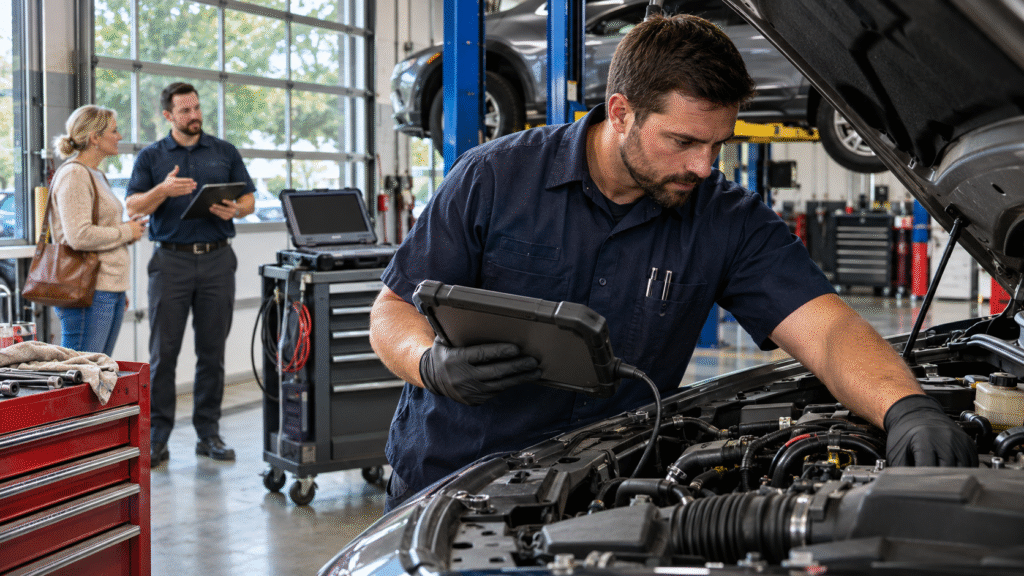
At Advanced Automotive, our diagnostic process focuses on understanding the symptoms, verifying the concern, and performing appropriate tests before recommending repairs.
This approach helps eliminate guesswork and allows customers to make informed decisions about their vehicles.
Step 1: Understanding Your Vehicle’s Symptoms
Every successful diagnosis begins with listening.
When customers visit our Gainesville auto repair shop, our technicians first gather information about the problems they are experiencing.
We may ask when the issue began, whether it occurs during acceleration or braking, and if it becomes more noticeable after the engine warms up.
Even small details can provide valuable diagnostic clues.
A vibration that occurs primarily at highway speeds may have a different cause than one experienced while braking. Similarly, an electrical problem that appears only during rainy weather may require a different inspection approach.
By understanding these conditions, our technicians can focus their testing on the most relevant systems.
This initial conversation is an essential part of providing efficient, accurate automotive service.
Step 2: Verifying the Problem Before Recommending Repairs
Not every automotive problem appears during a quick inspection.
Some issues are intermittent, meaning they occur only under certain driving conditions or at particular times.
For example, a vehicle may begin vibrating after approximately twenty minutes of driving, or its brakes may produce noise only during the first few stops in the morning.
When appropriate, our technicians may perform a road test, inspect relevant components, or review stored diagnostic information to reproduce the reported symptoms.
Verifying the problem helps distinguish between normal operating characteristics, developing maintenance concerns, and actual mechanical failures.
Rather than replacing components based on assumptions, we work toward understanding what is causing the issue.
This process is especially important when investigating electrical faults, engine performance concerns, and complicated drivability problems.
Step 3: Using Professional Diagnostic Equipment
Today’s vehicles rely heavily on electronic control systems that monitor engine performance, transmission operation, emissions, and numerous other functions.
Professional diagnostic equipment allows technicians to retrieve trouble codes, examine operating data, and identify potential system abnormalities.
However, computer diagnostics represent only one part of a complete inspection.
Consider a vehicle displaying a code related to an incorrect air-fuel mixture. Possible causes could include a vacuum leak, contaminated airflow sensor, intake system problem, or inadequate fuel pressure.
Simply replacing the component mentioned in a diagnostic description may not solve the problem.
Our technicians combine electronic diagnostic information with mechanical inspections, component testing, and practical experience to determine the most likely cause.
This careful approach reduces the risk of unnecessary parts replacement.
Why Testing Before Replacing Parts Saves Money
One of the most common misconceptions about automotive repair is that a diagnostic scanner can automatically identify exactly which part needs replacement.
In reality, diagnostic codes usually point toward a system requiring further investigation.
Consider a vehicle that repeatedly experiences a dead battery.
The immediate assumption might be that the alternator has failed. However, professional testing could reveal that the alternator and battery are functioning properly.
The actual issue might involve an interior light remaining illuminated, an incorrectly installed aftermarket accessory, or an electronic module drawing excessive power while the vehicle is parked.
Replacing the alternator would not address those problems.
Proper testing helps identify the actual failure, preventing customers from paying for repairs that do not resolve their concerns.
At Advanced Automotive, our philosophy is simple: diagnose first, explain the findings, and recommend repairs based on evidence.
How We Determine Which Repairs Are Necessary
Not every issue discovered during a vehicle inspection requires immediate attention.
Understanding the difference between urgent repairs, routine maintenance, and future service needs helps customers plan their vehicle expenses responsibly.
Safety-Related Repairs
Problems involving braking, steering, tires, and critical suspension components may require prompt attention because they can affect vehicle control.
Severely worn brake pads, leaking brake lines, damaged steering components, or unsafe tires should never be ignored.
When we identify a significant safety concern, we explain the findings and why corrective action is recommended.
Routine Maintenance
Maintenance services help protect vehicle performance and reduce the likelihood of preventable breakdowns.
These may include fluid services, air filter replacement, spark plug maintenance, belt inspections, and other services recommended by the vehicle manufacturer.
We consider the vehicle’s condition, service history, and manufacturer guidelines when discussing maintenance requirements.
Future Maintenance Considerations
Some components show normal wear but still have usable service life remaining.
For example, brake pads may have sufficient material for continued operation even though they should be monitored during future inspections.
Instead of automatically recommending replacement, we can explain the condition and advise when another inspection may be appropriate.
Our objective is to help customers prioritize repairs according to actual vehicle needs.
Transparent Communication Builds Customer Confidence
Automotive repairs can feel confusing when customers receive technical explanations without supporting information.
We believe vehicle owners deserve to understand why a repair is being recommended.
Whenever appropriate, our technicians may explain inspection findings using photographs, measurements, diagnostic results, and comparisons between worn and functional components.
For example, showing a customer brake pad thickness measurements can make a maintenance recommendation easier to understand.
Similarly, reviewing battery test results or identifying a visible fluid leak helps connect the recommended service to the vehicle’s actual condition.
Transparent communication gives customers the information they need to evaluate their repair options confidently.
It also encourages long-term relationships built on trust rather than pressure.
Understanding Local Driving Conditions in Gainesville, VA
Driving conditions in Northern Virginia can influence vehicle maintenance requirements.
Daily commuting along Interstate 66 and Route 29 exposes vehicles to a combination of highway mileage, changing traffic speeds, and frequent braking.
Stop-and-go traffic can accelerate brake wear, while potholes and uneven pavement may contribute to suspension and wheel alignment concerns.
Seasonal temperature changes can also affect battery performance, tire pressure, and other vehicle systems.
At Advanced Automotive, our experience serving drivers from Gainesville, Haymarket, Bristow, Manassas, Warrenton, and surrounding communities helps us understand the concerns local motorists commonly encounter.
Recognizing how driving conditions affect vehicle components allows us to provide more relevant inspection and maintenance recommendations.
When Should You Schedule a Vehicle Diagnostic Inspection?
Recognizing potential warning signs early may help prevent minor problems from becoming expensive repairs.
You should consider scheduling a professional inspection if your vehicle develops persistent warning lights, unusual engine noises, steering vibrations, grinding brakes, unexpected fluid leaks, or noticeable changes in transmission operation.
Changes in acceleration, fuel efficiency, or handling may also indicate a developing mechanical or electronic problem.
These symptoms do not automatically mean your vehicle requires a major repair.
However, identifying the cause early provides an opportunity to address concerns before they lead to additional damage.
If your vehicle experiences severe braking problems, significant overheating, or a flashing check engine light accompanied by poor engine performance, stop driving safely and arrange professional assistance.
What Determines the Cost of Vehicle Diagnostics?
The cost of professional vehicle diagnostics depends on the nature and complexity of the problem.
At our Gainesville location, many initial diagnostic inspections generally range from $100 to $200, although advanced electrical concerns or intermittent performance problems may require additional testing.
Factors affecting diagnostic costs include the vehicle’s make and model, the symptoms reported, the time required to reproduce the issue, and the specialized testing equipment involved.
Our approach emphasizes explaining the reason for additional diagnostic work and discussing expected costs before proceeding.
This helps customers understand the service they are receiving and make informed financial decisions.
Experience and Professional Service You Can Trust
With more than 35 years of automotive service experience, Advanced Automotive understands the importance of combining technical knowledge with personal customer care.
Our ASE-certified technicians use professional equipment and hands-on experience to inspect vehicles from a wide range of manufacturers.
Whether a customer arrives with an unfamiliar engine noise or an unexpected repair estimate from another shop, we focus on evaluating the actual problem.
Our priority is not to recommend the largest possible repair.
It is to provide a reliable diagnosis, explain available solutions, and help customers understand what their vehicles genuinely need.
Schedule Professional Auto Diagnostics in Gainesville, VA
When your vehicle begins behaving differently, identifying the cause is the first step toward restoring confidence on the road.
At Advanced Automotive, we are committed to providing accurate diagnostics, clear explanations, and practical repair recommendations.
From engine warning lights and electrical concerns to brake inspections and suspension issues, our experienced technicians are here to help you make informed decisions about vehicle maintenance.
Advanced Automotive
📍 13380 University Blvd, Gainesville, VA 20155
📞 (703) 665-1818
Proudly serving drivers throughout Gainesville, Warrenton, Haymarket, Bristow, Manassas, Centreville, and surrounding Northern Virginia communities.
Get a professional diagnosis before approving unnecessary repairs. Contact Advanced Automotive to discuss your vehicle concerns and schedule an inspection.
 Oil Change Gainesville

 Auto Brake Repair Gainesville, VA
 Towing Services Gainesville
 Fleet Services Gainesville
 Virginia Safety & Emissions Inspections
 Air Conditioning & Heating
 Wheel Alignment Warrenton
 Vehicle Diagnostic
 Auto Transmission Repair