

 Locations
 Hours
 Call Us Now
 Book Appointment


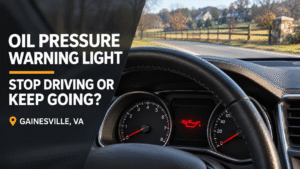
You’re driving east on I-66 after leaving Gainesville when a red oil-can symbol suddenly lights up on your dashboard. Your first thought might be, “I just changed my oil. What could be wrong?” Then comes the more urgent question: “Can I keep driving?”
If it’s the red oil pressure warning light, pull over somewhere safe and switch off the engine as soon as possible. Continuing to drive with low oil pressure can cause severe engine damage. The light usually warns about oil pressure, not simply how much oil is in the engine. Check your owner’s manual for the exact meaning of the symbol and instructions for your vehicle.
I’m Donnie, owner of Advanced Automotive in Gainesville. For more than 35 years, I’ve worked with drivers trying to understand what a dashboard warning means and what to do next. An oil pressure warning deserves immediate attention. In this guide, I’ll explain what the light can indicate, what steps to take, and how a mechanic can diagnose the problem before recommending repairs.
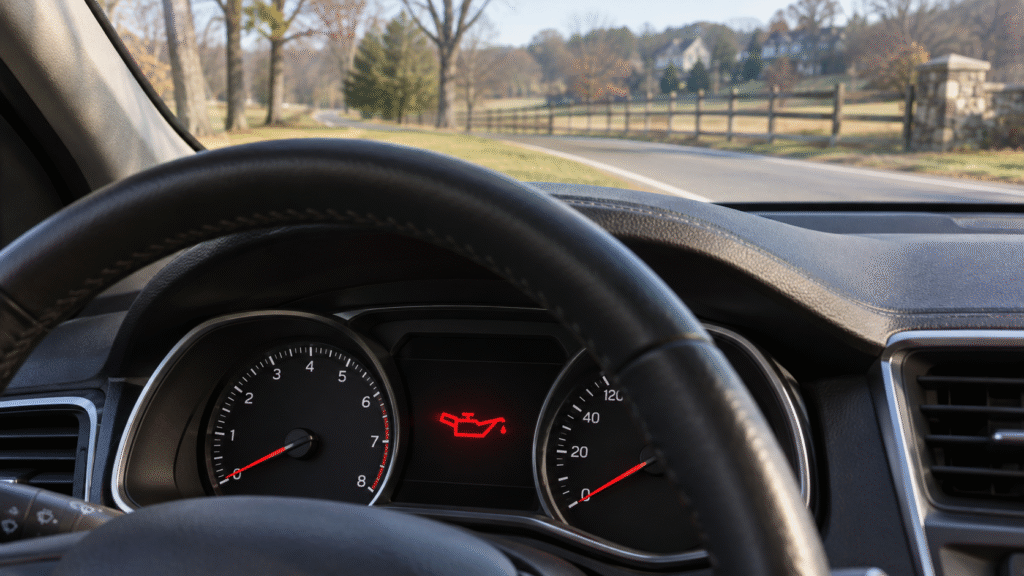
What the Oil Pressure Warning Light Means
Engine oil does more than keep the dipstick level looking good. The oil pump circulates it through narrow passages to lubricate moving parts such as crankshaft bearings, connecting rods, camshafts and timing components. Oil pressure helps the oil reach those parts while the engine is running.
If pressure drops too low, parts may not receive enough lubrication. Friction and heat can increase, and internal components may begin to wear. If the engine continues running under those conditions, damage can happen quickly. In a severe case, the engine can seize.
That is why a red oil pressure warning is different from a routine maintenance reminder. A reminder to change the oil usually means service is due. A pressure warning can mean the engine is not receiving the lubrication it needs at that moment. The color and meaning of dashboard lights can vary by vehicle, so consult your owner’s manual if you are unsure which warning you are seeing.
Low Oil Level and Low Oil Pressure Are Not the Same
Many drivers assume an oil pressure warning always means the engine is low on oil. Low oil is one possible reason, but it is not the only one. The warning generally relates to pressure, not the amount of oil in the engine.
That means an engine can show an adequate oil level on the dipstick and still have low oil pressure. A worn oil pump, a blocked pickup screen, internal engine wear, restricted oil passages, or a faulty sensor may cause the warning. A leak or oil consumption can also lower the oil level enough to affect pressure.
The distinction matters because each cause requires a different response. Adding oil may help if the level is low, but it will not fix a failing pump or an electrical fault. Replacing a sensor without checking actual pressure can also leave the real problem unresolved.
Common Causes of an Oil Pressure Warning
A mechanic may investigate several possible causes, including:
- Low oil from a leak or oil consumption
- A failing oil pump
- A clogged oil pickup screen or restricted oil passage
- Internal engine wear
- Oil that does not meet the vehicle manufacturer’s specifications
- A faulty oil pressure sensor or damaged wiring
- Sludge or contamination in the engine
The warning may appear continuously, briefly, or only when the engine is hot or idling. When it happens can help with diagnosis, but it does not identify the cause by itself. If you notice unusual engine noise, such as knocking or ticking, turn the engine off and tell the technician what you heard.
What Gainesville Driving Conditions Can Reveal
Drivers in Gainesville often deal with a mix of highway speeds, stop-and-go traffic and long periods of idling. A commute along I-66 or Route 29 can put a vehicle through repeated changes in speed and engine load. Hot weather can also affect how an engine operates.
These conditions do not automatically cause low oil pressure. However, an existing weakness may become more noticeable once the engine is fully warmed up or while it is idling. For example, a warning that appears at a stoplight after a long drive still needs attention, even if it disappears when you accelerate.
Regular maintenance helps keep the lubrication system in good condition. Follow the oil-change interval and oil specification in your owner’s manual, and ask the repair shop to note the oil and filter used. If the warning appears shortly after an oil change, tell the technician when the service was done and whether you noticed leaks or other changes afterward.
What to Do When the Warning Light Comes On
If the red oil pressure warning appears while driving, take these steps:
- Stay calm and find a safe place to stop. Use your turn signal and move out of traffic as soon as it is safe. Turn on your hazard lights if needed.
- Switch off the engine. Do not continue driving to see whether the warning goes away. Running the engine with low oil pressure can increase the risk of damage.
- Check your owner’s manual. It will explain what the symbol means for your specific vehicle and how to check the oil correctly.
- Check the oil level only when it is safe. Park on level ground and follow the manual’s instructions. If the level is low, add the specified oil carefully.
- Do not assume the problem is fixed. If the level is correct, or the warning remains on after adding oil, keep the engine off and arrange professional help. Towing is safer than driving the vehicle to a repair shop.
Some vehicles have model-specific instructions for checking the warning after stopping. Follow your manual, and if you are uncertain, contact a qualified technician rather than restarting the engine repeatedly.
How We Diagnose the Problem
At Advanced Automotive, diagnosis begins by confirming exactly which warning appeared and when it came on. A red oil pressure warning, a maintenance reminder and an oil-related check-engine code are different alerts.
A technician can inspect the oil level and condition, look for leaks, and check for signs of sludge or contamination. The vehicle’s computer may also store codes that help identify sensor or circuit problems. Those codes are useful, but they do not always confirm the mechanical condition of the engine.
When needed, a mechanic can connect a mechanical pressure gauge to measure actual oil pressure and compare it with the manufacturer’s specifications. If the reading is normal, the issue may involve the sensor or its wiring. If pressure is low, further inspection may be needed to find the cause, such as a pump problem, restriction or internal wear.
The goal is to test before recommending a repair. Once the cause is identified, the technician should explain what was checked, what the results mean and which repair options are available.
Final Thoughts
A red oil pressure warning light is not a reminder to schedule service later. It is a signal to stop safely, switch off the engine and find out what is wrong. Check the oil only as directed by your vehicle’s manual, and do not keep driving if the warning stays on.
If you’re in Gainesville or the surrounding area and your oil pressure warning light appears, contact Advanced Automotive for guidance and a proper diagnosis. Acting promptly may help prevent a manageable problem from becoming a much more expensive engine repair.
 Oil Change Gainesville

 Auto Brake Repair Gainesville, VA
 Towing Services Gainesville
 Fleet Services Gainesville
 Virginia Safety & Emissions Inspections
 Air Conditioning & Heating
 Wheel Alignment Warrenton
 Vehicle Diagnostic
 Auto Transmission Repair