

 Locations
 Hours
Hours Call Us Now
 Book Appointment


For businesses that depend on work trucks, service vans, and delivery vehicles, reliable transportation is essential to daily operations. Every vehicle supports a schedule, carries valuable equipment, and helps employees serve customers. When one vehicle breaks down, the consequences can extend across the business, affecting productivity, revenue, and customer relationships.
Fleet vehicle maintenance in Gainesville, VA, helps businesses reduce avoidable interruptions through regular inspections, timely servicing, and organized maintenance planning. For contractors, HVAC companies, plumbers, electricians, landscapers, and delivery businesses, a proactive approach to vehicle care supports consistent service and better control over operating expenses.
At Advanced Automotive, we understand that commercial vehicles are working assets. Keeping them dependable requires attention to both their mechanical condition and the demands placed on them.
Understanding the Business Impact of Vehicle Downtime
The cost of a breakdown goes beyond the repair invoice. An unavailable vehicle may leave employees waiting, delay appointments, or force another team member to cover additional work. Businesses may also need to arrange towing, rent a replacement vehicle, or pay overtime to complete postponed jobs.
These disruptions can affect customer confidence. A missed appointment may be manageable once, but repeated delays can make customers question a company’s reliability. For businesses working to maintain long-term service relationships, dependable vehicles help protect the reputation built through their employees’ work.
Planned maintenance gives owners more control over when vehicles leave service. Addressing a developing problem during a scheduled visit can be easier to manage than an unexpected failure during a busy working day.
Why Commercial Vehicles Need a Tailored Maintenance Plan
Commercial vehicles often operate differently from personal vehicles. They may carry heavy tools and materials, tow trailers, make frequent stops, or remain running at job sites. These conditions influence maintenance requirements, even when annual mileage appears moderate.
Businesses serving Gainesville and nearby communities frequently travel along I-66, Route 29, Route 28, and Linton Hall Road. Traffic, short service trips, and changing workloads can create operating patterns that deserve closer attention when planning vehicle care.
Manufacturer recommendations should guide each maintenance schedule. Where applicable, severe-service guidance may account for towing, repeated short trips, extended idling, or other demanding conditions. The right schedule depends on the vehicle, its equipment, and how it is used.
Preventive Maintenance Supports More Reliable Operations
Preventive maintenance focuses on identifying wear and addressing service needs before they cause an interruption. Oil and filter changes are part of that process, but dependable fleet care also includes tires, brakes, batteries, cooling systems, steering, and suspension.
A worn hose, weak battery, or developing leak may be discovered during an inspection while the vehicle is still operating normally. Early identification allows the business to plan the repair, review the estimate, and arrange vehicle availability.
Maintenance cannot prevent every mechanical failure. However, consistent servicing and inspections can reduce the likelihood that overlooked wear or overdue maintenance will lead to a breakdown. That makes preventive care a practical part of managing business risk.
What Comprehensive Fleet Inspections Should Cover
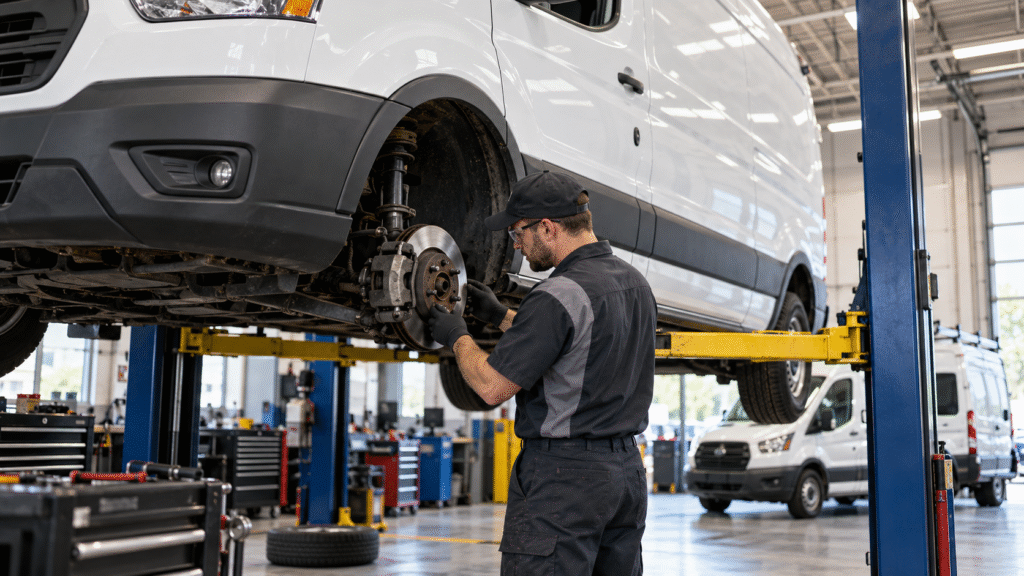
A thorough inspection evaluates the systems that affect vehicle safety, performance, and reliability. Brake components should be checked for wear, while tires require attention to pressure, tread condition, and uneven wear patterns.
Steering and suspension inspections can help identify concerns affecting handling or tire life. Battery and charging-system checks support starting reliability, while cooling-system inspections help technicians investigate leaks, worn hoses, and other developing issues.
Fluid conditions, belts, and visible leaks also deserve review. When warning lights or performance concerns are present, diagnostic testing helps determine the appropriate next step.
Documenting these findings gives business owners a clearer understanding of each vehicle’s condition. It also helps distinguish work requiring prompt attention from maintenance that can be scheduled for a later visit.
Drivers Play an Important Role in Fleet Care
Drivers often notice changes before a vehicle reaches the repair shop. Unusual noises, vibration, difficult starting, changes in braking, or dashboard warning lights should be reported promptly.
A straightforward reporting process helps businesses act on those observations. Drivers can record the symptom, when it happens, and whether it occurs during acceleration, braking, turning, or starting. These details can help technicians investigate the concern.
Business owners should also encourage basic checks appropriate to the vehicle and workplace procedures. Reporting visible leaks, tire damage, or other concerns early can prevent problems from being overlooked between scheduled service visits.
Maintenance Records Improve Planning and Accountability
Accurate records are essential to an organized fleet maintenance program. Each vehicle should have a service history documenting completed work, inspection findings, mileage, and upcoming maintenance needs.
These records help owners identify recurring repairs and understand which vehicles require increasing attention. They also support decisions about repair spending, replacement timing, and future fleet expansion.
Scheduling maintenance across the fleet helps preserve operational capacity. Staggering service visits allows businesses to keep vehicles available while addressing necessary work. As the fleet grows, a consistent tracking process becomes increasingly valuable for avoiding missed service intervals and unnecessary scheduling conflicts.
Evaluating the Total Cost of Fleet Maintenance
Fleet maintenance expenses vary according to vehicle age, mileage, engine type, workload, and service requirements. A lightly used van will have different needs from a truck regularly carrying heavy loads or towing equipment.
Evaluating total operating cost provides a more useful picture than reviewing repair invoices alone. Towing, replacement transportation, interrupted work, and repeated emergency repairs all affect the financial performance of a fleet.
Clear estimates help owners make informed decisions. Understanding the urgency and purpose of recommended work allows businesses to budget effectively while keeping essential maintenance on schedule.
Fleet Service at Advanced Automotive
Advanced Automotive provides maintenance and repair services for commercial vehicles serving Gainesville and surrounding Northern Virginia communities. Our ASE-certified technicians help businesses address routine service needs, diagnose concerns, and plan maintenance around vehicle use.
Services include brake repairs, tires, alignments, diagnostics, inspections, and routine maintenance. Same-day turnaround is prioritized whenever possible, depending on repair requirements and parts availability. Qualifying fleet accounts may receive free towing with repair and pickup and delivery services in the Gainesville and Warrenton areas.
To discuss your fleet’s maintenance needs, call (703) 665-1818 or visit Advanced Automotive, 13380 University Blvd, Gainesville, VA.
 Oil Change Gainesville
 Auto Brake Repair Gainesville, VA
  Towing Services Gainesville
  Fleet Services Gainesville
  Virginia Safety & Emissions Inspections
  Air Conditioning & Heating
  Wheel Alignment Warrenton
  Vehicle Diagnostic
  Auto Transmission Repair