

 Locations
 Hours
Hours Call Us Now
 Book Appointment


You glance at the sticker in the corner of your windshield while sitting at the light on Route 29 near Waterloo Road. Then your stomach drops.
You’re already 2,000 miles overdue for your oil change.
The last place you visited charged one price on the sign and a completely different price when the bill came. Now you’re searching online, trying to figure out what an oil change actually costs in Warrenton before you get surprised again.
I’ve seen this happen hundreds of times.
I’m Donnie from Advanced Automotive, and one of the biggest frustrations drivers tell me about isn’t the oil change itself it’s not knowing whether they’re getting a fair deal. Some shops advertise an oil change for one price and then add fees for upgraded oil, disposal, premium filters, or extra labor.
This guide explains what oil changes are typically costing in 2026, the difference between synthetic and conventional oil, why some vehicles cost more than others, and how to know whether you’re paying for something you actually need.
What’s Actually Happening When You Get an Oil Change?
Many people think an oil change is simply draining old oil and pouring in new oil.
A proper oil service is much more than that.
Think of engine oil like the blood in your body. It lubricates moving components, helps regulate temperature, prevents metal-to-metal contact, and carries contaminants toward the oil filter.
As modern engines become more advanced, oil has become more important than ever. Turbochargers, direct injection systems, variable valve timing, and tighter engine tolerances all rely on clean, properly rated oil.
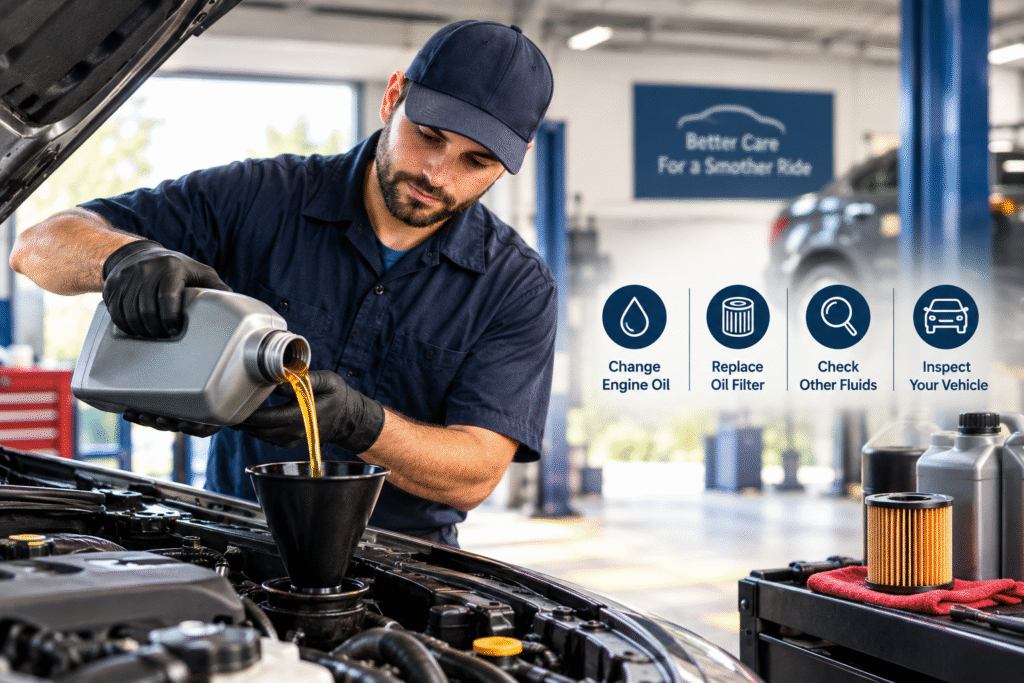
A quality oil service should include:
- Draining the old engine oil
- Replacing the oil filter
- Installing manufacturer-approved oil
- Checking fluid levels
- Inspecting belts and hoses
- Checking tire condition
- Looking for leaks
- Resetting maintenance reminders
The biggest misconception I hear is that all oil changes are basically the same.
They aren’t.
The difference between a cheap oil service and a thorough inspection can mean catching a small leak early instead of dealing with a much more expensive engine problem later.
Why Oil Change Costs Are Different for Warrenton Drivers
This is where local driving conditions matter.
Drivers around Warrenton put their vehicles through a different type of stress than drivers in many other parts of Virginia.
We see vehicles commuting daily from Warrenton to Gainesville, Manassas, Centreville, and even Washington, D.C. That means long periods of stop-and-go traffic on Route 29 and I-66.
Stop-and-go traffic is considered severe driving by most manufacturers and can affect maintenance intervals.
Then there are the rural roads around Fauquier County. Dust, gravel, elevation changes, and temperature swings can contribute to faster wear on fluids and filters.
One pattern we’ve noticed for years is that vehicles driven short distances around town often need more frequent oil changes than vehicles driven longer highway routes.
Why?
Because the engine may never fully reach operating temperature long enough to evaporate moisture and fuel contamination from the oil.
That’s something many oil change guides don’t mention.
It’s also one reason why two drivers with the same vehicle can have completely different maintenance needs.
The Advanced Automotive Oil Change Process
When a customer comes into our Warrenton or Gainesville location for an oil service, we don’t treat it like a race.
Our process includes:
- Confirming manufacturer oil specifications
- Verifying oil viscosity requirements
- Checking service history
- Inspecting for leaks
- Replacing the oil filter
- Installing quality oil that meets OEM requirements
- Inspecting tires, brakes, suspension, and steering components
- Checking battery condition
- Resetting maintenance systems
Many customers come in expecting only an oil change and leave having caught a coolant leak, worn brake pads, or a failing battery before it becomes an expensive roadside problem.
That’s one of the biggest values of routine maintenance.
An oil change provides an opportunity to look at the overall condition of your vehicle and identify problems while they are still manageable.
We also back repairs and services with our 12-month/12,000-mile warranty on parts and labor.
If your vehicle breaks down and requires repairs, we offer free towing with repair and free pickup and delivery in many local situations. AAA members can also receive additional benefits depending on service requirements.
Oil Change Warning Signs Most Drivers Ignore
An oil change isn’t always just routine maintenance.
Sometimes your vehicle is trying to tell you something.
Watch for these warning signs:
Oil Pressure Warning Light
An oil pressure warning light may indicate a lubrication or oil-pressure issue requiring immediate attention.
Burning Oil Smell
A burning oil smell may indicate an oil leak onto hot engine components.
Knocking or Ticking Noises
Unusual engine noises can potentially be associated with a low oil level or lubrication problem.
Dark Exhaust Smoke
Dark or unusual exhaust smoke may indicate that oil is entering the combustion chamber.
Oil Spots in the Driveway
Oil spots underneath your vehicle can indicate an active leak that should be inspected.
Rough Idle or Reduced Performance
These symptoms can sometimes be associated with oil contamination or maintenance neglect.
Excessive Oil Consumption
If you’re constantly adding oil between services, it may indicate a leak or developing internal engine wear.
One symptom by itself doesn’t automatically mean major repairs are needed. However, ignoring these signs can allow small problems to become much larger and more expensive.
The earlier we inspect a concern, the more options you typically have.
How Much Does an Oil Change Cost in Warrenton, VA in 2026?
This is the question everyone wants answered.
For most vehicles in 2026, typical oil service pricing falls into these ranges:
Conventional Oil Change: $45–$75
Conventional oil is generally the lower-cost option and may be suitable for vehicles that are designed to use it.
Synthetic Blend Oil Change: $65–$95
Synthetic blend oil combines conventional and synthetic oil and typically falls between conventional and full synthetic pricing.
Full Synthetic Oil Change: $80–$150+
Full synthetic oil is required or recommended for many modern vehicles and generally costs more than conventional or synthetic blend oil.
Luxury vehicles, European vehicles, diesel trucks, and vehicles requiring larger oil capacities may exceed these ranges.
Several factors can affect the final price, including:
- Oil type required
- Oil capacity
- Filter quality
- Vehicle make and model
- Manufacturer specifications
- Additional inspections included
For example, a BMW requiring specialized European-approved synthetic oil will naturally cost more than a compact sedan requiring standard oil.
The important thing isn’t finding the cheapest oil change.
It’s making sure the correct oil is installed.
Using the wrong oil specification can create long-term engine issues that cost far more than the difference in service price.
We always provide a clear estimate before performing work.
No surprises. No pressure. No hidden fees.
Synthetic vs Conventional Oil What Should You Choose?
The right oil depends on your vehicle’s manufacturer specifications.
Conventional oil may be appropriate for certain vehicles, while many newer engines are designed for full synthetic oil.
Synthetic oil generally provides better resistance to heat breakdown, improved performance across temperature changes, and may allow longer service intervals when permitted by the manufacturer.
Most modern vehicles should follow the oil type, viscosity, and service interval specified by the manufacturer.
If you’re unsure whether your vehicle should use conventional, synthetic blend, or full synthetic oil, checking the manufacturer’s recommendation is the best place to start.
At Advanced Automotive, we verify the manufacturer’s requirements before installing oil.
How Often Should You Get an Oil Change?
Most modern vehicles need oil changes somewhere around 5,000 to 10,000 miles, depending on manufacturer recommendations and driving habits.
However, mileage isn’t the only factor.
Drivers who spend a lot of time in stop-and-go traffic or frequently make short trips may need service sooner.
Your owner’s manual and manufacturer’s maintenance schedule should always be the primary guide for your vehicle’s oil change interval.
Closing Thoughts From Donnie
After more than 35 years working on vehicles throughout Northern Virginia, I’ve learned that people don’t mind paying for maintenance when they understand what they’re getting.
What frustrates drivers is uncertainty.
A good oil change isn’t just about replacing oil. It’s about protecting one of the most expensive components on your vehicle and catching small problems before they become major repairs.
If you’re due for service or simply want an honest opinion about your vehicle’s maintenance needs, stop by and talk with us.
We’ll explain what your vehicle needs, what it doesn’t need, and why.
Ready to bring your car in?
Call (703) 665-1818 or stop by 13380 University Blvd, Gainesville, VA.
We also serve Warrenton, Haymarket, Bristow, Manassas, and surrounding Northern Virginia communities.
No appointment is needed for most services just come in. We’ll tell you exactly what’s going on and give you a straight answer.
 Oil Change Gainesville
 Auto Brake Repair Gainesville, VA
  Towing Services Gainesville
  Fleet Services Gainesville
  Virginia Safety & Emissions Inspections
  Air Conditioning & Heating
  Wheel Alignment Warrenton
  Vehicle Diagnostic
  Auto Transmission Repair