

 Locations
 Hours
Hours Call Us Now
 Book Appointment


Driving in Northern Virginia means your vehicle has to handle constantly changing conditions throughout the year. One month, you may be dealing with freezing temperatures and road salt. A few months later, your vehicle could be sitting in 90-degree heat on Route 29 while traffic barely moves.
For drivers in Gainesville, Haymarket, Bristow, Manassas, and surrounding communities, seasonal vehicle maintenance is more than a recommendation. It can help prevent unexpected breakdowns, improve vehicle reliability, and potentially reduce the cost of major repairs.
I’m Donnie, owner of Advanced Automotive in Gainesville. After more than 35 years of working on vehicles in Northern Virginia, I’ve seen a clear pattern: drivers who stay ahead of maintenance generally have fewer unexpected problems than drivers who wait until something fails.
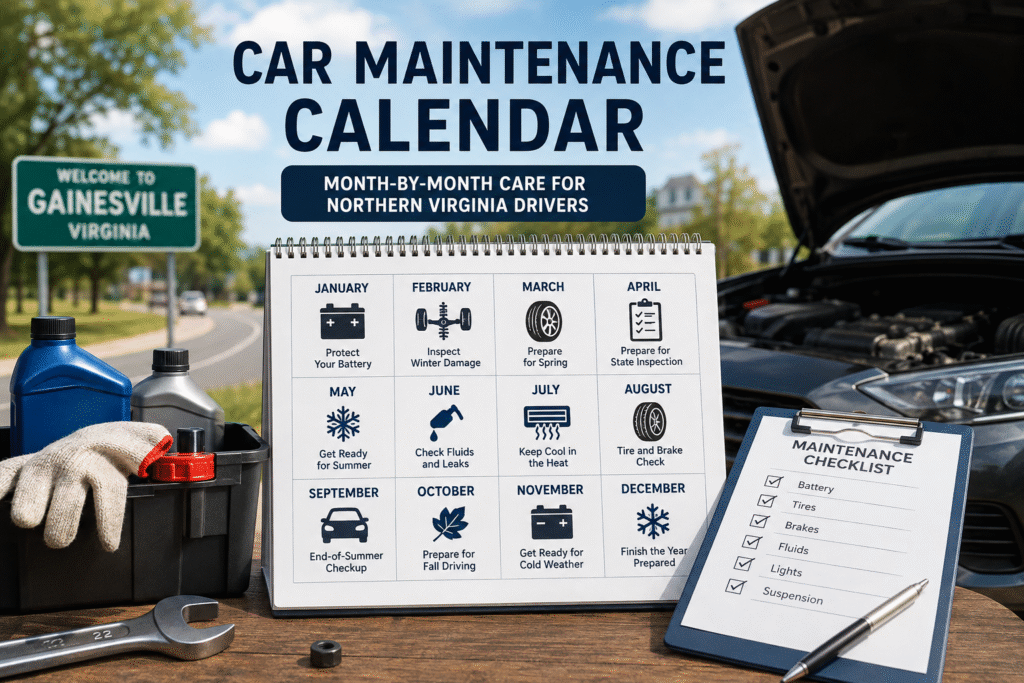
That’s why we created this month-by-month car maintenance calendar specifically for Gainesville-area drivers.
Why Northern Virginia Weather Is Hard on Cars
Northern Virginia gives vehicles a unique combination of challenges. Winter brings freezing temperatures, road salt, and potholes. Spring can expose suspension and alignment problems. Summer introduces extreme heat, heavy traffic, and increased demand on cooling and air-conditioning systems. Fall is the perfect time to prepare for another winter.
Your driving habits can make these conditions even harder on your vehicle.
Drivers who regularly commute on I-66, sit in stop-and-go traffic, make frequent short trips, or spend time idling may experience more wear than someone who primarily drives long distances on open roads.
Common sources of vehicle stress in the Gainesville area include:
- Heavy commuter traffic
- Frequent braking and acceleration
- Road salt and brine
- Potholes
- Construction zones
- Extreme temperature changes
- Short-distance driving
- Long periods of idling
- Summer heat
These conditions can affect batteries, brakes, tires, fluids, transmissions, cooling systems, suspension components, and other vehicle systems.
A seasonal maintenance plan allows you to address these areas before they become emergencies.
January: Protect Your Battery
January is one of the hardest months for vehicle batteries. Cold temperatures can reduce battery performance, especially when the battery is already aging.
Start the year with a battery test and inspect the charging system if necessary.
January maintenance should include:
- Battery testing
- Tire pressure check
- Windshield wiper inspection
- Washer fluid check
- Exterior light inspection
Cold weather can also reduce tire pressure, so checking your tires regularly is important.
If your vehicle struggles to start on cold mornings, don’t ignore it. A battery that barely starts today may leave you stranded tomorrow.
February: Inspect Winter Damage
By February, your vehicle may have experienced several weeks of cold weather, road salt, and potholes.
This makes February a good month for checking components underneath the vehicle.
Consider:
- Undercarriage inspection
- Brake inspection
- Suspension inspection
- Alignment check
- Tire inspection
- Road-salt corrosion inspection
If you recently hit a pothole and notice that your vehicle pulls to one side, vibrates, or has uneven tire wear, have it inspected.
Small alignment or suspension problems can contribute to premature tire wear.
March: Prepare for Spring
March marks the transition from winter to spring. It’s a good time to evaluate the damage or wear caused by winter driving.
A spring inspection can include:
- Tire rotation
- Tire tread inspection
- Suspension inspection
- Steering inspection
- Alignment evaluation
- Cabin air filter inspection
Your cabin air filter plays an important role in maintaining airflow and interior air quality. If it is dirty or clogged, replacing it can help restore proper airflow.
Spring is also a good time to check whether winter driving has affected your vehicle’s handling.
April: Prepare for Virginia State Inspection
April is an excellent month to make sure your vehicle is ready for its Virginia State Inspection.
Rather than waiting until the last moment, have common inspection-related items checked early.
Pay attention to:
- Exterior lights
- Tire tread
- Brake condition
- Windshield wipers
- Warning lights
- Suspension components
- Steering components
If your vehicle needs repairs before inspection, identifying them early gives you more time to address them.
For official information about vehicle inspections and requirements, drivers can check the Virginia Department of Motor Vehicles.
May: Get Your Vehicle Ready for Summer
As temperatures increase, your vehicle’s cooling and air-conditioning systems become increasingly important.
May is the perfect time to inspect the systems that help your vehicle handle summer heat.
Recommended checks include:
- Cooling system inspection
- Radiator hose inspection
- Coolant level and condition
- Air-conditioning performance
- Belts and hoses
- Coolant leak inspection
If your air conditioner is already blowing warmer than normal, don’t wait for the hottest day of the year to address it.
Likewise, any coolant leak should be investigated before summer temperatures put additional stress on the cooling system.
June: Prepare for Summer Travel
June is a popular month for road trips. Before taking your vehicle on a long journey, make sure basic maintenance is up to date.
Check:
- Engine oil and filter
- Brakes
- Tires
- Battery
- Fluids
- Lights
- Windshield wipers
A vehicle that performs normally during a short commute may reveal problems during extended highway driving.
A pre-trip inspection can help identify potential problems before you leave Gainesville.
July: Protect the Cooling System
July can be particularly demanding for vehicles.
High temperatures combined with traffic congestion and long periods of idling can place additional stress on engines and cooling systems.
During July, consider checking:
- Coolant condition
- Cooling system performance
- Air-conditioning system
- Radiator hoses
- Transmission fluid condition
- Engine temperature
Never ignore an overheating temperature gauge.
If your vehicle begins overheating, safely pull over and allow it to cool rather than continuing to drive and potentially causing severe engine damage.
August: Check Tires, Brakes, and Alignment
By August, your vehicle has already experienced several months of heat and summer driving.
Tires deserve particular attention because hot pavement, incorrect inflation, and alignment problems can contribute to uneven or accelerated wear.
Inspect:
- Tire pressure
- Tire tread
- Tire sidewalls
- Wheel alignment
- Brake wear
- Brake fluid
If you notice vibration at highway speeds, pulling while braking, uneven tire wear, or changes in braking performance, schedule an inspection.
September: Prepare for Cooler Weather
September is an ideal transition month. Summer isn’t completely over, but colder weather is approaching.
This is the time to start preparing your vehicle for winter.
Recommended checks include:
- Battery load test
- Belts and hoses
- Coolant protection
- Engine fluids
- Windshield washer fluid
- Tire condition
Finding a weak battery or cooling-system problem in September is much better than discovering it during a freezing January morning.
October: Complete Your Inspection and Safety Checks
October is a good time to make sure your vehicle is prepared for colder temperatures.
If your Virginia State Inspection is due, don’t wait until the final week.
Check:
- Tires
- Brakes
- Lights
- Wipers
- Suspension
- Steering
- Warning lights
If your tires are close to needing replacement, fall is also a good time to address the issue before winter weather arrives.
November: Prepare for Winter
November is your final preparation period before the coldest months arrive.
Focus on the systems that will become especially important during winter.
Check:
- Battery condition
- Heater performance
- Coolant protection
- Belts and hoses
- Tire pressure
- Windshield washer fluid
- Wiper condition
A functioning heater and defroster are important not only for comfort but also for maintaining visibility during cold and damp weather.
December: Get Ready for Holiday Travel
December often brings increased driving and longer trips.
Before holiday travel, consider a complete vehicle safety inspection.
Check:
- Tires
- Brakes
- Battery
- Engine oil
- Coolant
- Lights
- Wipers
- Tire pressure
- Emergency supplies
If you’re planning to travel outside the Gainesville area, don’t ignore a warning light or unusual noise simply because the vehicle still seems to be running normally.
Don’t Wait When Your Vehicle Shows Warning Signs
A maintenance calendar is useful, but warning signs should always take priority.
If you experience grinding brakes, a flashing Check Engine Light, overheating, transmission slipping, difficulty starting, highway-speed vibration, or coolant leaking underneath the vehicle, get the vehicle inspected as soon as possible.
Waiting until the next scheduled maintenance month can turn a relatively manageable problem into a much more expensive repair.
Preventive Maintenance Can Help Avoid Expensive Repairs
Vehicle maintenance isn’t about repairing things that don’t need repair. It’s about identifying legitimate wear and problems before they cause larger failures.
A small issue involving a battery, tire, brake component, fluid leak, hose, belt, or cooling-system component may be much easier to address than the major damage that can occur when the problem is ignored.
Regular maintenance can also help you understand your vehicle’s condition and plan for upcoming repairs rather than dealing with unexpected expenses.
At Advanced Automotive, recommendations should be based on the actual condition of your vehicle, its mileage, driving habits, and maintenance history.
Your Year-Round Gainesville Vehicle Maintenance Strategy
The most effective maintenance plan is simple: don’t treat vehicle maintenance as a once-a-year task.
Use each season as an opportunity to check the systems most affected by Northern Virginia’s weather.
Winter is the time to focus on batteries, tires, and visibility. Spring is ideal for checking suspension, alignment, and winter damage. Summer requires extra attention to cooling and air conditioning. Fall is the time to prepare for winter and address inspection or safety issues.
After more than 35 years serving Gainesville and surrounding Northern Virginia communities, we know that staying ahead of vehicle problems can make a significant difference in reliability.
If your vehicle needs maintenance, diagnostics, inspection, or repair, Advanced Automotive is located at 13380 University Blvd, Gainesville, VA.
Call (703) 665-1818 or stop by for service. We serve drivers throughout Gainesville, Haymarket, Bristow, Manassas, Warrenton, Nokesville, and surrounding Northern Virginia communities.
The goal isn’t simply to keep your vehicle running today. It’s to help keep it reliable through every season Northern Virginia has to offer.
 Oil Change Gainesville
 Auto Brake Repair Gainesville, VA
  Towing Services Gainesville
  Fleet Services Gainesville
  Virginia Safety & Emissions Inspections
  Air Conditioning & Heating
  Wheel Alignment Warrenton
  Vehicle Diagnostic
  Auto Transmission Repair