

 Locations
 Hours
Hours Call Us Now
 Book Appointment


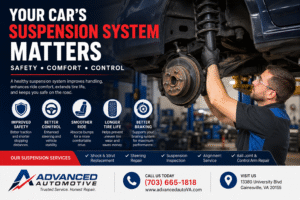
When it comes to vehicle maintenance, most drivers think about oil changes, brake service, tire rotations, or battery replacements. While these services are essential, one critical system often goes unnoticed until problems begin the suspension system.
Your vehicle’s suspension does much more than provide a comfortable ride. It plays a major role in steering, braking, handling, and overall road safety. A well-maintained suspension system keeps your tires firmly connected to the road, giving you better control of your vehicle in every driving condition.
Whether you’re commuting through Gainesville or traveling on the highways of Northern Virginia, understanding how your suspension works can help you prevent costly repairs and keep your vehicle performing at its best.
What Is a Vehicle Suspension System?
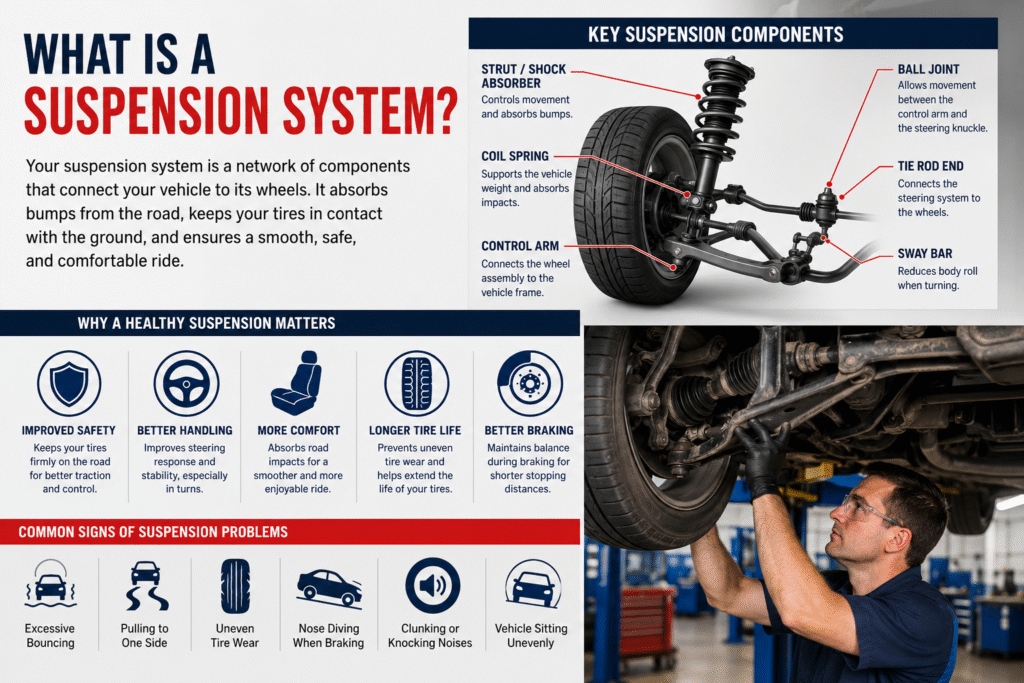
The suspension system is a combination of parts that connect your vehicle to its wheels while absorbing bumps and vibrations from the road. Its primary purpose is to maintain tire contact with the road surface while delivering a smooth, stable, and comfortable driving experience.
The suspension system includes several important components, such as:
- Shock absorbers
- Struts
- Coil or leaf springs
- Control arms
- Ball joints
- Tie rods
- Bushings
- Sway bars
These parts work together to absorb impacts from potholes, uneven pavement, speed bumps, and rough roads while improving steering response and vehicle stability.
Without a properly functioning suspension system, even a short drive can become uncomfortable and potentially unsafe.
Why Your Suspension System Is So Important
Many drivers don’t realize how much the suspension system influences everyday driving. From steering precision to braking efficiency, nearly every aspect of vehicle performance depends on healthy suspension components.
Improved Safety on the Road
Your tires need consistent contact with the road to maintain traction. Worn suspension parts reduce that contact, making it harder to steer, brake, and control the vehicle.
A damaged suspension system can lead to:
- Reduced traction
- Poor handling
- Longer stopping distances
- Increased risk during emergency maneuvers
Keeping your suspension in good condition helps improve safety during rain, snow, and other challenging driving conditions common throughout Virginia.
Better Steering Control
The suspension and steering systems work closely together. As suspension components begin to wear, steering becomes less responsive and more difficult to control.
Common steering-related symptoms include:
- Loose steering
- Vehicle drifting left or right
- Difficulty driving in a straight line
- Reduced stability while turning
If your vehicle doesn’t respond as smoothly as it once did, the suspension system could be the reason.
A More Comfortable Ride
One of the most noticeable benefits of a healthy suspension system is ride comfort.
Shock absorbers and struts are designed to minimize the impact of rough roads. When these components wear out, you’ll begin to feel every pothole, crack, and speed bump much more than usual.
A properly functioning suspension absorbs road imperfections, providing a smoother and quieter driving experience for everyone inside the vehicle.
Longer Tire Life
Suspension problems often cause uneven tire wear without drivers realizing it.
Worn suspension components can lead to:
- Uneven tread wear
- Feathering
- Tire cupping
- Bald spots
Replacing tires prematurely can be expensive. Maintaining your suspension system helps your tires wear evenly, extending their lifespan and saving money over time.
Improved Braking Performance
Your braking system relies on the suspension to keep the tires firmly planted during sudden stops.
When shocks, struts, or other suspension components fail, weight transfers unevenly during braking, which can result in:
- Longer stopping distances
- Reduced braking stability
- Increased brake wear
A healthy suspension allows your braking system to perform as intended, improving both safety and vehicle control.
Common Signs of Suspension Problems
Unlike some vehicle issues that appear suddenly, suspension problems often develop gradually. Because the changes happen over time, many drivers don’t notice them until the problem becomes severe.
Watch for these warning signs.
Excessive Bouncing
If your vehicle continues bouncing after driving over a bump, worn shocks or struts may no longer be controlling the movement of the springs effectively.
Vehicle Pulling to One Side
A vehicle that drifts left or right while driving may have worn suspension or steering components. Alignment issues can also contribute to this problem.
Uneven Tire Wear
Inspect your tires regularly.
Uneven tread patterns frequently indicate suspension or alignment problems that should be addressed before new tires are installed.
Nose Diving During Braking
If the front of your vehicle dips noticeably when braking, worn shocks or struts are often the cause.
Clunking or Knocking Noises
Strange noises when driving over bumps may indicate worn:
- Ball joints
- Control arm bushings
- Sway bar links
- Struts
Ignoring these sounds can lead to more expensive repairs later.
Vehicle Sitting Unevenly
If one side or corner of your vehicle appears lower than the others, damaged springs or other suspension components may require immediate attention.
How Suspension Problems Are Diagnosed
A thorough suspension inspection helps identify worn or damaged components before they become serious safety concerns.
A complete inspection typically includes:
Road Test
The technician evaluates:
- Ride quality
- Steering response
- Handling
- Suspension noises
Visual Inspection
Critical components inspected include:
- Shocks
- Struts
- Springs
- Ball joints
- Bushings
- Tie rods
- Control arms
Tire Inspection
Tire tread patterns often reveal suspension-related wear that may not be immediately visible.
Steering System Evaluation
The steering system is checked for excessive play, worn parts, and proper operation.
Wheel Alignment Assessment
Suspension issues frequently affect wheel alignment, which can accelerate tire wear and reduce handling performance.
When Should Suspension Parts Be Replaced?
There is no universal replacement schedule because suspension lifespan depends on driving habits, road conditions, and vehicle type.
However, general guidelines include:
| Component | Typical Lifespan |
|---|---|
| Shocks & Struts | 50,000–100,000 miles |
| Ball Joints | 70,000–150,000 miles |
| Control Arm Bushings | 80,000–120,000 miles |
| Tie Rod Ends | 70,000–150,000 miles |
Driving through construction zones, rough roads, and potholes can shorten the lifespan of these components.
Regular inspections are the best way to determine when replacement is necessary.
Is It Safe to Drive With Worn Suspension Components?
Although your vehicle may still be drivable, continuing to drive with worn suspension parts is not recommended.
Ignoring suspension issues can lead to:
- Reduced steering control
- Longer braking distances
- Increased tire wear
- Damage to steering components
- Higher repair costs
Addressing minor suspension problems early often prevents much larger repairs later.
How Suspension Maintenance Saves Money
Routine suspension maintenance is an investment that helps reduce long-term vehicle ownership costs.
Keeping your suspension in excellent condition can:
- Extend tire life
- Improve fuel efficiency
- Reduce brake wear
- Prevent steering system damage
- Increase resale value
Early inspections help detect worn components before they cause additional damage to your vehicle.
Why Drivers Choose Advanced Automotive
For more than 35 years, Advanced Automotive has been helping drivers throughout Gainesville and the surrounding Northern Virginia communities maintain safe and reliable vehicles.
Customers trust us because we provide:
- ASE-Certified Technicians
- Honest repair recommendations
- Family-owned customer service
- Modern diagnostic equipment
- Fast turnaround times
- Comfortable waiting area
- 12-Month / 12,000-Mile Warranty
Whether you drive daily through Gainesville, Haymarket, Bristow, Manassas, Warrenton, Centreville, Chantilly, Nokesville, South Riding, Aldie, Leesburg, Sterling, Fairfax, Marshall, Middleburg, The Plains, or Culpeper, our experienced team is ready to help keep your vehicle performing at its best.
Final Thoughts
Your vehicle’s suspension system plays a vital role in your safety, comfort, and overall driving experience. From maintaining proper tire contact with the road to improving steering, braking, and handling, a healthy suspension system helps keep your vehicle performing at its best. Ignoring early warning signs such as excessive bouncing, uneven tire wear, steering issues, or unusual noises can lead to more expensive repairs and compromise your safety on the road.
If you’ve noticed any of these symptoms, don’t wait until the problem gets worse. Let the experienced technicians at Advanced Automotive perform a thorough suspension inspection and recommend the right repairs to keep your vehicle safe and reliable.
Schedule Your Suspension Inspection Today
Whether you need suspension repair, steering service, shock and strut replacement, or a complete suspension inspection, our team is here to help.
📞 Call Us: (703) 665-1818
📍 Visit Us:
Advanced Automotive
13380 University Blvd
Gainesville, VA 20155
We proudly serve drivers in Gainesville, Haymarket, Bristow, Manassas, Warrenton, Centreville, Chantilly, Nokesville, South Riding, Aldie, Leesburg, Sterling, Fairfax, Marshall, Middleburg, The Plains, and Culpeper.
Schedule your appointment today and let Advanced Automotive help keep your suspension system and your entire vehicle operating safely, smoothly, and reliably for every mile ahead.
 Oil Change Gainesville
 Auto Brake Repair Gainesville, VA
  Towing Services Gainesville
  Fleet Services Gainesville
  Virginia Safety & Emissions Inspections
  Air Conditioning & Heating
  Wheel Alignment Warrenton
  Vehicle Diagnostic
  Auto Transmission Repair