

 Locations
 Hours
Hours Call Us Now
 Book Appointment


Weather conditions change throughout the year, and every season creates different challenges for your vehicle. From freezing winter mornings and heavy spring rains to extreme summer heat and dusty autumn roads, seasonal changes can affect your car’s engine, battery, tires, brakes, fuel efficiency, and overall performance. Understanding how weather impacts your vehicle helps prevent breakdowns, improves safety, and reduces expensive repair costs.
Regular seasonal vehicle maintenance plays a major role in keeping your car running smoothly throughout the year. Drivers who follow preventive maintenance schedules often experience better fuel economy, improved reliability, and a longer vehicle lifespan.
Why Seasonal Vehicle Maintenance Is Important
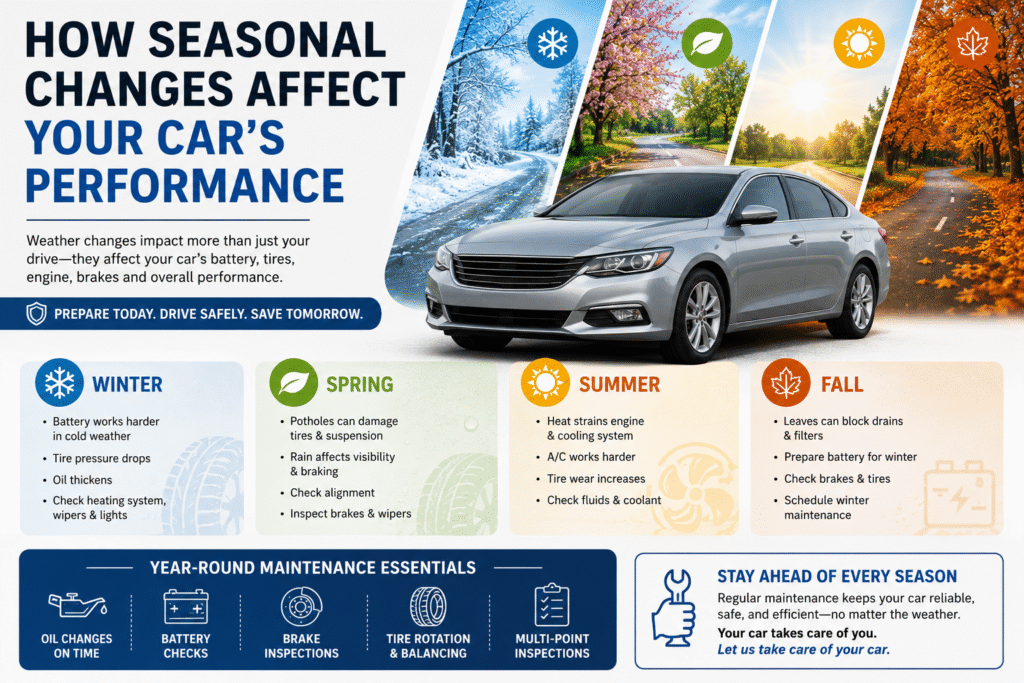
Vehicles are constantly exposed to changing temperatures, moisture, road debris, humidity, and environmental pollutants. These conditions affect different automotive systems in different ways.
Temperature fluctuations can:
- Reduce battery efficiency
- Change tire pressure
- Affect engine oil thickness
- Stress cooling systems
- Reduce braking performance
- Impact fuel economy
Seasonal maintenance helps:
- Prevent unexpected breakdowns
- Improve driving safety
- Increase engine performance
- Reduce long-term repair costs
- Extend the life of important vehicle components
Ignoring seasonal maintenance can eventually lead to serious mechanical failures that require expensive repairs.
How Winter Weather Affects Your Car
Winter is one of the toughest seasons for vehicles. Cold temperatures put extra stress on several important systems.
Battery Problems During Winter
Cold weather reduces a battery’s ability to produce power. At the same time, the engine requires more energy to start in freezing temperatures.
Common winter battery issues include:
- Slow engine starting
- Weak headlights
- Dead battery
- Electrical system failures
Older batteries are more likely to fail during winter months. Regular battery testing before winter begins can help avoid unexpected breakdowns.
Tire Pressure Drops in Cold Weather
As temperatures decrease, tire pressure naturally drops. Underinflated tires can negatively affect handling, braking, and fuel efficiency.
Low tire pressure may cause:
- Uneven tire wear
- Reduced traction
- Poor fuel economy
- Longer stopping distances
Checking tire pressure regularly during winter helps maintain vehicle stability and safety.
Engine Oil Thickens in Low Temperatures
Cold temperatures make engine oil thicker, reducing its ability to circulate properly during startup. Poor lubrication increases wear on internal engine components.
Using manufacturer-recommended oil and replacing it on time helps protect the engine during cold weather conditions.
How Spring Weather Affects Vehicle Performance
Spring brings warmer temperatures, but it also introduces potholes, heavy rain, and changing road conditions.
Potholes Can Damage Suspension Systems
Road damage caused by winter weather often leads to potholes during spring. Hitting potholes can damage several suspension and steering components.
Possible damage includes:
- Bent wheels
- Tire damage
- Alignment issues
- Damaged tie rods
- Worn ball joints
- Suspension problems
Signs of alignment issues include:
- Vehicle pulling to one side
- Crooked steering wheel
- Uneven tire wear
- Poor handling
Wheel alignment inspections during spring help maintain smooth driving and prevent tire damage.
Rainy Weather Reduces Traction
Spring rain can make roads slippery and dangerous. Wet roads increase stopping distances and reduce tire grip.
Important components to inspect during spring include:
- Brake pads
- Brake rotors
- Tires
- Windshield wipers
- Headlights
Proper brake maintenance is especially important during rainy seasons to ensure maximum stopping power.
How Summer Heat Impacts Your Vehicle
Extreme summer heat can place significant stress on engines, tires, and cooling systems.
Cooling System Problems in Summer
High temperatures force the cooling system to work harder to prevent overheating. A poorly maintained cooling system can quickly lead to major engine damage.
Common cooling system warning signs include:
- Rising temperature gauge
- Coolant leaks
- Steam from the engine
- Sweet smell from coolant
Regular coolant inspections and radiator maintenance help prevent overheating issues during hot weather.
Air Conditioning System Stress
Air conditioning systems work continuously during summer months. Weak AC performance may indicate:
- Refrigerant leaks
- Compressor issues
- Electrical faults
- Condenser problems
Routine AC inspections help maintain cabin comfort and prevent larger repair costs.
Tire Damage from Heat
Hot roads increase tire temperatures significantly. Excessive heat can weaken tire structure and increase the risk of blowouts.
Summer tire maintenance should include:
- Tire pressure checks
- Tire rotation
- Tread depth inspection
- Wheel alignment checks
- Visual inspection for cracks or wear
Proper tire maintenance improves both safety and fuel efficiency.
How Fall Weather Affects Your Car
Fall is one of the best times to prepare your vehicle for winter conditions.
Fall Maintenance Preparation
Autumn maintenance helps identify small issues before colder temperatures arrive.
Important fall inspections include:
- Battery testing
- Brake inspection
- Cooling system check
- Heater performance
- Tire condition
- Fluid levels
Preparing early helps reduce the chances of winter breakdowns.
Falling Leaves and Debris
Leaves and debris can block important drainage and ventilation systems.
Blocked areas may include:
- Cabin air filters
- Air intake vents
- Drain channels
- HVAC systems
These blockages may lead to moisture buildup, poor airflow, and electrical problems if ignored.
Seasonal Maintenance Checklist
Following a regular maintenance routine throughout the year helps keep your vehicle reliable and safe.
Monthly Maintenance
- Check tire pressure
- Inspect fluid levels
- Test lights
- Monitor battery condition
During Every Oil Change
- Brake inspection
- Tire inspection
- Fluid condition check
- Multi-point vehicle inspection
Seasonal Inspections
- Battery testing
- Cooling system inspection
- Wheel alignment
- Tire rotation
- HVAC system check
Routine inspections help detect small problems before they become expensive repairs.
Why Preventive Maintenance Saves Money
Many major vehicle repairs begin as small maintenance issues that were ignored for too long.
Examples include:
| Small Maintenance Issue | Potential Major Repair |
|---|---|
| Low coolant levels | Engine overheating |
| Poor wheel alignment | Tire replacement |
| Worn brake pads | Rotor damage |
| Weak battery | Complete breakdown |
| Dirty filters | Reduced engine performance |
Preventive maintenance reduces repair expenses and improves vehicle reliability.
Tips to Improve Vehicle Performance in Every Season
Drivers can improve overall vehicle performance by following a few simple habits:
- Follow regular service schedules
- Replace fluids on time
- Keep tires properly inflated
- Inspect brakes regularly
- Monitor warning lights immediately
- Rotate tires regularly
- Replace worn-out batteries proactively
Consistent maintenance helps avoid emergency repairs and improves driving comfort.
Conclusion
Seasonal weather changes can significantly affect your car’s performance, safety, and reliability. Winter cold, spring rain, summer heat, and autumn debris all place different types of stress on vehicle components. Ignoring seasonal maintenance can lead to breakdowns, reduced fuel efficiency, tire damage, overheating, and expensive repairs.
Regular inspections, oil changes, battery testing, tire maintenance, brake checks, and cooling system care help keep your vehicle operating smoothly throughout the year. Preventive maintenance not only improves performance and safety but also extends the lifespan of your vehicle and reduces long-term repair costs.
By preparing your vehicle for every season, you can enjoy safer driving, better fuel economy, and fewer unexpected mechanical problems all year long.
For professional vehicle inspection and seasonal maintenance services, contact Advanced Automotive today.
📞 Call Now: (703) 665-1818
📍 Address:
Advanced Automotive
13380 University Blvd
Gainesville, VA
 Oil Change Gainesville
 Auto Brake Repair Gainesville, VA
  Towing Services Gainesville
  Fleet Services Gainesville
  Virginia Safety & Emissions Inspections
  Air Conditioning & Heating
  Wheel Alignment Warrenton
  Vehicle Diagnostic
  Auto Transmission Repair