

 Locations
 Hours
Hours Call Us Now
 Book Appointment


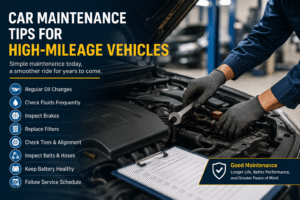
Modern vehicles are built to last longer than ever before. With proper care and regular maintenance, many cars today can easily cross 200,000 miles and continue delivering reliable performance. However, once a vehicle crosses the 100,000-mile mark, it requires more attention and preventative maintenance to avoid costly repairs and unexpected breakdowns.
In this blog, let’s explore the most important car maintenance tips for high-mileage vehicles and how you can extend the life of your car.
What Is Considered a High-Mileage Vehicle?
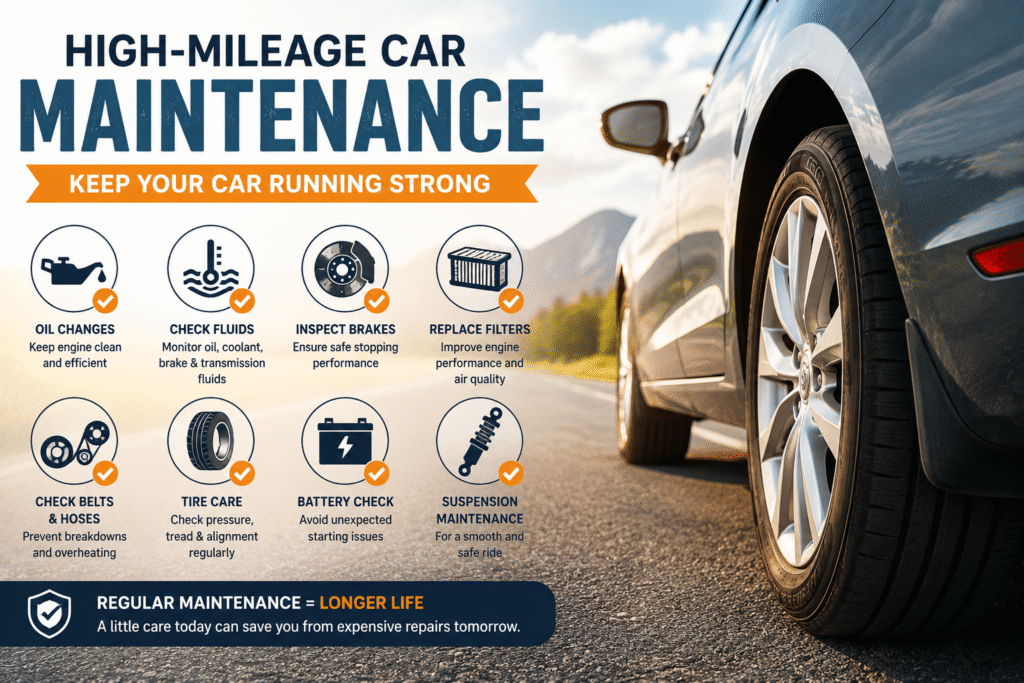
A vehicle is generally considered high mileage once it exceeds 100,000 miles.
This does not mean the vehicle is nearing the end of its life. In fact, many well-maintained vehicles continue running smoothly for years beyond this milestone.
The key is consistent maintenance and early detection of problems before they become major repairs.
Why High-Mileage Vehicle Maintenance Matters
As vehicles age, engine components, belts, hoses, suspension parts, and fluids naturally wear out over time. Ignoring regular maintenance can lead to expensive repairs and reduced performance.
Proper maintenance helps:
- Extend engine life
- Improve fuel efficiency
- Reduce repair costs
- Increase reliability
- Improve driving safety
- Prevent unexpected breakdowns
- Protect resale value
Preventative care is always more affordable than emergency repairs.
Stay Consistent With Oil Changes
Oil changes become even more important for high-mileage vehicles. Engine oil lubricates moving parts, reduces friction, and helps control engine temperature.
Important Oil Change Tips
- Follow manufacturer-recommended service intervals
- Use the correct oil viscosity
- Consider high-mileage motor oil if recommended
- Replace the oil filter during every oil change
- Check oil levels regularly
Ignoring oil changes is one of the fastest ways to shorten engine life.
Monitor Vehicle Fluids Regularly
Older vehicles are more likely to develop fluid leaks or fluid consumption issues. Regularly checking fluid levels can help prevent major mechanical problems.
Important Fluids to Check
- Engine oil
- Transmission fluid
- Coolant
- Brake fluid
- Power steering fluid
- Differential fluid
- Windshield washer fluid
Low fluid levels can lead to overheating, brake failure, transmission damage, and other expensive repairs.
Never Ignore Small Leaks
Many drivers ignore small leaks because the vehicle still seems to run normally. However, minor leaks often turn into major repairs if left untreated.
Common Vehicle Leaks
- Valve cover gasket leaks
- Oil pan gasket leaks
- Coolant leaks
- Transmission fluid leaks
- Power steering leaks
Fixing leaks early is usually much cheaper than repairing severe engine or transmission damage later.
Replace Filters on Time
Filters help protect your vehicle from dirt, dust, and contaminants. Replacing them regularly improves efficiency and performance.
Important Filters for High-Mileage Vehicles
Engine Air Filter
Helps maintain engine performance and fuel efficiency.
Cabin Air Filter
Improves air quality inside the vehicle.
Fuel Filter
Protects fuel injectors and the fuel system.
Oil Filter
Removes harmful contaminants from engine oil.
Clean filters reduce unnecessary stress on vehicle components.
Pay Attention to the Cooling System
The cooling system works continuously while the vehicle is running. Over time, hoses, clamps, radiators, and water pumps begin to wear out.
Warning Signs of Cooling System Problems
- Rising temperature gauge
- Coolant leaks
- Steam from under the hood
- Sweet smell from the engine bay
- Frequent coolant loss
An overheating engine can cause severe and expensive damage if ignored.
Transmission Maintenance Is Essential
Many people mistakenly believe transmission fluid never needs replacement. In reality, regular transmission maintenance can significantly extend transmission life.
Signs of Transmission Problems
- Delayed gear shifting
- Rough shifting
- Slipping gears
- Burning smell
- Transmission fluid leaks
Transmission repairs are extremely expensive, making preventative maintenance very important.
Inspect Belts and Hoses Frequently
Rubber components naturally deteriorate with age and heat exposure.
Signs of Wear
- Cracks
- Dry rot
- Bulges
- Fraying
- Soft spots
Replacing worn belts and hoses before they fail can prevent sudden breakdowns.
Maintain Suspension and Steering Components
High-mileage vehicles often experience wear in suspension and steering systems.
Commonly Worn Suspension Parts
- Ball joints
- Tie rods
- Control arm bushings
- Shocks
- Struts
Warning Signs
- Uneven tire wear
- Vehicle pulling to one side
- Excessive bouncing
- Clunking noises
- Loose steering feel
Suspension maintenance improves both ride comfort and safety.
Don’t Neglect Brake Maintenance
Your braking system is one of the most important safety features in your vehicle.
Brake Components to Inspect
- Brake pads
- Rotors
- Brake fluid
- Calipers
- Brake lines
Common Brake Warning Signs
- Grinding noises
- Squealing sounds
- Soft brake pedal
- Increased stopping distance
- Vehicle pulling while braking
Regular brake inspections help keep you and your passengers safe.
Replace Spark Plugs When Necessary
Spark plugs play a major role in engine performance and fuel efficiency.
Worn Spark Plug Symptoms
- Rough idling
- Poor fuel economy
- Hard starting
- Engine misfires
- Reduced acceleration
Even though many modern spark plugs last over 100,000 miles, periodic inspections are still important.
Keep Your Battery Healthy
Battery failures become more common as vehicles age.
Signs of a Weak Battery
- Slow engine cranking
- Dim headlights
- Electrical problems
- Frequent jump starts
Routine battery testing can help prevent getting stranded unexpectedly.
Tire Maintenance Is Extremely Important
Tires affect safety, braking, fuel efficiency, and ride quality.
Tire Maintenance Tips
- Check tire pressure monthly
- Rotate tires regularly
- Inspect tread depth
- Maintain proper wheel alignment
- Balance tires when needed
Proper tire care helps extend tire life and improves overall vehicle performance.
Listen to Your Vehicle
One of the best maintenance habits is simply paying attention to how your vehicle feels and sounds.
If you notice:
- Unusual noises
- Vibrations
- Fluid leaks
- Reduced performance
- Changes in handling
Have the vehicle inspected as soon as possible. Many major repairs start as small and easily fixable problems.
How Often Should High-Mileage Vehicles Be Inspected?
Vehicles with over 100,000 miles should ideally receive professional inspections at least twice a year.
Regular inspections help identify:
- Fluid leaks
- Brake wear
- Tire issues
- Suspension problems
- Cooling system concerns
- Battery condition
Preventative maintenance can save thousands of dollars in future repairs.
Conclusion
Owning a high-mileage vehicle is not a problem when proper maintenance is followed consistently. Regular oil changes, fluid inspections, brake maintenance, cooling system care, and timely repairs can help your vehicle remain reliable for many years.
The key to extending the life of any high-mileage vehicle is preventative maintenance. Paying attention to small warning signs and servicing your vehicle regularly can help avoid major breakdowns and expensive repairs in the future.
If your vehicle has crossed the 100,000-mile mark, schedule a professional inspection and maintenance service today to keep your car running safely and efficiently for years to come.
For expert vehicle maintenance and repair services, contact us today:
📞 Call Us: (703) 665-1818
📍 Address: 13380 University Blvd, Gainesville, VA
 Oil Change Gainesville
 Auto Brake Repair Gainesville, VA
  Towing Services Gainesville
  Fleet Services Gainesville
  Virginia Safety & Emissions Inspections
  Air Conditioning & Heating
  Wheel Alignment Warrenton
  Vehicle Diagnostic
  Auto Transmission Repair