

 Locations
 Hours
Hours Call Us Now
 Book Appointment


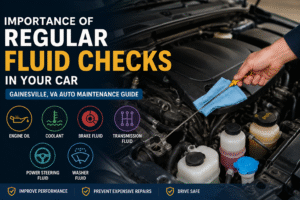
Regular vehicle maintenance is essential for keeping your car running smoothly, safely, and efficiently. Among all maintenance tasks, regular fluid checks play a major role in protecting your engine, transmission, brakes, and other important systems. Many costly automotive repairs begin with neglected or low fluids, making routine inspections one of the easiest ways to avoid major problems.
Drivers in Gainesville, VA, often rely on their vehicles for daily commuting, long-distance travel, and family transportation. Proper fluid maintenance helps improve performance, increase fuel efficiency, and extend the lifespan of the vehicle.
Why Regular Fluid Checks Matter

Modern vehicles depend on several important fluids to lubricate, cool, clean, and protect internal components. When fluid levels become low or contaminated, your vehicle may experience serious mechanical issues.
Routine fluid inspections help prevent:
- Engine overheating
- Transmission damage
- Brake failure
- Steering problems
- Poor fuel efficiency
- Increased engine wear
- Unexpected breakdowns
Preventative maintenance not only improves safety but also reduces expensive repair costs in the future.
Engine Oil Maintenance
Engine oil is responsible for lubricating moving engine parts and reducing friction. It also helps control engine temperature and remove dirt buildup inside the engine.
Ignoring engine oil maintenance can lead to:
- Excessive engine wear
- Poor fuel economy
- Reduced engine performance
- Engine overheating
- Severe engine damage
Regular oil checks and timely oil changes help maintain smooth engine operation and improve overall vehicle reliability.
Coolant Inspection
Coolant, also known as antifreeze, helps regulate engine temperature during hot summers and cold winters. Without proper coolant levels, the engine can quickly overheat and suffer major damage.
Signs of coolant problems include:
- Rising temperature gauge
- Coolant leaks
- Steam from the hood
- Sweet smell near the engine
Routine coolant inspections help protect the engine from overheating and costly repairs.
Brake Fluid Checks
Brake fluid is essential for safe braking performance. It transfers pressure through the braking system, allowing the vehicle to stop effectively.
Low or contaminated brake fluid may cause:
- Soft brake pedal
- Reduced braking response
- Brake warning light activation
- Increased stopping distance
Since braking directly affects driver safety, regular brake fluid inspections are extremely important.
Transmission Fluid Service
Transmission fluid lubricates and cools internal transmission components. Neglecting transmission fluid maintenance can result in severe transmission damage.
Common transmission fluid problems include:
- Rough shifting
- Delayed acceleration
- Transmission overheating
- Premature transmission wear
Regular transmission inspections help improve shifting performance and reduce repair costs.
Power Steering Fluid Maintenance
Power steering fluid allows smooth and responsive steering. When fluid levels become low, drivers may notice difficulty turning the steering wheel or unusual noises.
Symptoms of low steering fluid include:
- Hard steering
- Steering wheel vibration
- Whining sounds while turning
Ignoring these warning signs may eventually damage the steering system.
Windshield Washer Fluid
Washer fluid improves visibility and driving safety by helping keep the windshield clean during rain, dust, and highway driving conditions.
Although simple, maintaining washer fluid levels is important for safe driving in changing weather conditions.
Problems Caused by Neglected Fluids
Many vehicle owners delay maintenance because their car appears to be running normally. Unfortunately, fluid-related issues often develop slowly before becoming major mechanical failures.
Engine Damage
Dirty or insufficient engine oil increases friction between moving components, leading to overheating and internal damage.
Transmission Failure
Old transmission fluid loses its protective ability, causing premature wear inside the transmission system.
Overheating Issues
Low coolant levels can lead to overheating, blown head gaskets, and severe engine damage.
Brake System Problems
Contaminated brake fluid may reduce braking efficiency and compromise vehicle safety.
Routine maintenance helps identify these issues early before repairs become expensive.
How Often Should Vehicle Fluids Be Checked?
Most automotive professionals recommend checking important vehicle fluids at least once a month and during every scheduled service visit.
General inspection recommendations include:
| Fluid Type | Recommended Inspection Frequency |
|---|---|
| Engine Oil | Monthly |
| Coolant | Monthly |
| Brake Fluid | Every Service Visit |
| Transmission Fluid | Manufacturer Recommendation |
| Power Steering Fluid | Every Service Visit |
| Washer Fluid | Monthly |
Following the manufacturer’s maintenance schedule helps keep the vehicle operating efficiently.
Warning Signs Your Vehicle Needs a Fluid Inspection
Drivers should never ignore warning signs related to fluid problems. Common indicators include:
- Dashboard warning lights
- Fluid leaks under the vehicle
- Burning smells
- Grinding noises
- Hard steering
- Rough shifting
- Reduced braking performance
- Engine overheating
Early inspections can prevent small issues from becoming serious mechanical failures.
Benefits of Preventative Vehicle Maintenance
Preventative maintenance provides several long-term advantages, including:
- Improved vehicle performance
- Better fuel efficiency
- Increased vehicle lifespan
- Lower repair costs
- Enhanced driving safety
Simple services like oil changes and fluid inspections cost far less than major repairs such as engine or transmission replacement.
Conclusion
Regular fluid checks are one of the most important parts of vehicle maintenance. Proper fluid care helps protect the engine, transmission, brakes, and steering system while improving overall vehicle performance, reliability, and safety.
Ignoring routine inspections can lead to overheating, transmission damage, brake problems, steering issues, and costly repairs. By maintaining proper fluid levels and scheduling regular inspections, drivers can keep their vehicles running smoothly and efficiently for years to come.
Whether it is engine oil, coolant, brake fluid, transmission fluid, or power steering fluid, every automotive fluid plays a critical role in keeping your vehicle in top condition.
If your vehicle is due for maintenance or a professional fluid inspection, contact Advanced Automotive today for trusted and reliable auto care.
📞 Call: (703) 665-1818 📍 Advanced Automotive, 13380 University Blvd, Gainesville, VA 20155
 Oil Change Gainesville
 Auto Brake Repair Gainesville, VA
  Towing Services Gainesville
  Fleet Services Gainesville
  Virginia Safety & Emissions Inspections
  Air Conditioning & Heating
  Wheel Alignment Warrenton
  Vehicle Diagnostic
  Auto Transmission Repair