

 Locations
 Hours
Hours Call Us Now
 Book Appointment


As electric and hybrid vehicles (EVs) are becoming more popular throughout Virginia there are many drivers seeking answers to the following issue: Do hybrid and electric cars need maintenance just like gasoline vehicles?
The simple answer is yes however the method of maintenance differs.
We are at Advanced Automotive, we help drivers from Gainesville, Warrenton, Bristow and the Northern Virginia areas understand how to maintain their electric or hybrid vehicle to ensure its long-term performance security, efficiency, and safety.
In this article we’ll go over the information that owners of hybrids and electric vehicles should be aware of.
Understanding the difference between hybrid and Electric
Before we discuss maintenance, it’s essential to be aware of how these cars differ
Hybrid Vehicles
Hybrid cars make use of both:
- A gasoline engine
- An electric motor
- A high-voltage battery
They alternate between gas and electric power (or mix both) to boost fuel efficiency.
Electric vehicles (EVs)
Electric vehicles that are fully electric run on:
- A huge battery pack.
- An electric motor, or a number of them.
They don’t use gasoline and have less moving components of engines.
Due to these variations The requirements for maintenance change drastically.
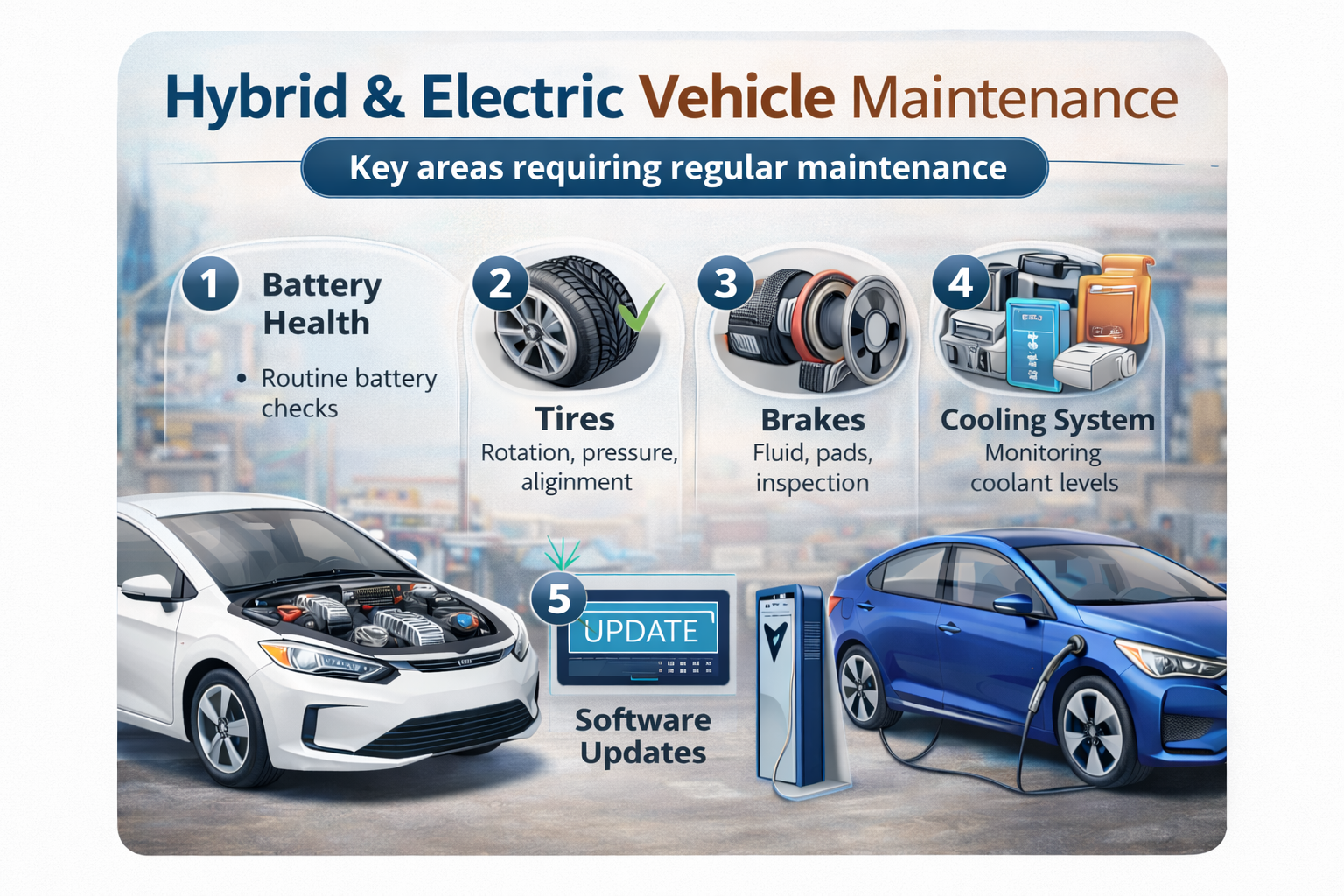
1. Battery Health Is Critical
High-voltage batteries are at the central component of any hybrid vehicle or EV.
Things You Need to Be Educated About:
- Hybrid batteries usually last between 8 and 15 years.
- The battery of EV can last longer with proper maintenance.
- Extreme cold or heat can impact the performance.
- Cooling systems for batteries must be checked regularly.
Routine inspections ensure:
Function of the cooling system is correct.
There are no warning signs for batteries
Software updates are up to date
We are at Advanced Automotive, we perform battery system tests to make sure your vehicle runs effectively and safely.
2. Fewer Oil Changes (But Not Always Zero)
To be used in hybrid vehicles:
Hybrids are still powered by gasoline So:
- It is necessary to change the oil in your vehicle
- They are, however, more rare than traditional vehicles.
Because the engine doesn’t operate continuously, oil could be degraded more slowly, however, it’s still important to monitor.
For fully electric vehicles:
- No engine oil is needed.
- There are no traditional oil changes
This can reduce maintenance costs dramatically.
3. Maintaining the Brake System is Important
Electric and hybrid vehicles employ Regenerative brakes that:
- Converts the energy of braking into battery power
- Reduces wear on brake pads.
The brake pads will last longer than other vehicles.
However:
- Brake fluid is still in need of replacement
- Brake components need to be checked
- Rust can develop if brakes aren’t utilized aggressively
Regular inspections of the brakes are essential to ensure your security.
4. The importance of maintaining your tires is greater than You Think
Electric and hybrid vehicles are typically heavier due to the battery packs. This could result in:
- Tire wear is faster
- More strain on suspension components
To prevent uneven wear:
Make sure to rotate tires frequently
Keep the proper tension on the tire
Make sure the wheel is aligned properly.
A properly maintained tire also increases the range of electric vehicles.
5. Cooling Systems Require Attention
Most drivers aren’t aware that hybrid and electric vehicles come with sophisticated cooling systems.
These systems control:
- Temperature of the high-voltage battery
- The temperature of the motor in an electric circuit
- Inverter systems
The level of coolant should be monitored and replaced in accordance with the specifications of the manufacturer.
Inattention to coolant maintenance can result in overheating and costly repairs.
6. Software Updates are Important
Modern hybrid and electric vehicles depend heavily on computer programs.
Manufacturers release periodic updates that include:
- Enhance the battery’s efficiency
- Improve performance
- Fix minor system bugs
Professionally trained service centers can make sure that your system is kept up to the minute and operating well.
7. Tests of the Drivetrain and Transmission
Hybrid cars can make use of:
- CVT transmissions
- Specialized hybrid drivetrains
Electric vehicles are powered by:
- Single-speed transmissions
Even though EVs contain fewer moving components however, inspections of the drivetrain are advised to avoid premature wear.
8. Cabin Air Filter and HVAC System
Electric and hybrid cars typically depend more heavily upon climate controls.
Regular maintenance comprises:
- Cabin air filter replacement
- HVAC system inspection
- AC system servicing
A well-functioning climate system can improve battery performance.
9. Cost Comparison: Hybrids & electric vehicles vs gas vehicles
Many motorists switch to electric or hybrid vehicles to lower the cost of maintenance over time.
Lower Maintenance Costs
- Spark plugs are not required (for electric vehicles)
- There are no exhausts (for electric vehicles)
- Less moving parts for engines
- Lower wear on brakes
Still Required:
- Tires
- Suspension
- Systems for cooling
- Monitoring battery
- Brake fluid
Regular inspections are vital to ensure that there are no sudden breakdowns.
10. Why Professional Hybrid and EV Service is Important
Electric and hybrid vehicles run on high-voltage technology. They require:
- Specialized diagnostic equipment
- Safety procedures that are properly implemented
- Techs who have been trained
There are many repair shops that are not well-equipped to deal with hybrid or EV maintenance in a proper manner.
We are Advanced Automotive, we stay updated with new developments in automotive technology and offer reliable maintenance services for electric and hybrid automobiles across Northern Virginia.
How often should you service the Hybrid or EV?
General guidelines:
- Inspect every 6 months, or 5,000-7500 miles
- Tire rotation every 5,000 – 7,000 miles
- Annually, brake inspection
- Coolant service is recommended by the manufacturer
Always refer to the owner’s manual, and also contact a reputable service provider.
Final Thoughts
Electric and hybrid vehicles are created to be eco-friendly, efficient, green, and affordable However, they require regular maintenance.
With the right care the vehicles will offer:
Lifetime battery
Great fuel savings
The battery is very smooth and performs well.
Long-term repairs are less expenses
If you have a hybrid or electric vehicle that is located in Gainesville, Warrenton, Bristow or the close Virginia communities, periodic inspections can safeguard your investment and ensure that you are safe all year round.
Book Your Hybrid or Electric Service Today!
If you require brake diagnostics, battery diagnostics or tire rotation, or even a complete vehicle inspection Advanced Automotive can help. Advanced Automotive is here to assist.
Contact us today to set up your electric or hybrid maintenance appointment for your vehicle and ensure your vehicle runs at its peak performance.
 Oil Change Gainesville
 Auto Brake Repair Gainesville, VA
  Towing Services Gainesville
  Fleet Services Gainesville
  Virginia Safety & Emissions Inspections
  Air Conditioning & Heating
  Wheel Alignment Warrenton
  Vehicle Diagnostic
  Auto Transmission Repair