

 Locations
 Hours
 Call Us Now
 Book Appointment


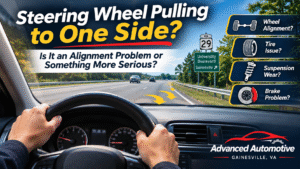
Driving should feel smooth, stable, and predictable. But when your vehicle starts pulling to the left or right, even on a straight road, it can quickly become frustrating and potentially dangerous.
Imagine driving along Route 29 near University Boulevard in Gainesville, Virginia. You notice that your car keeps drifting toward one side, forcing you to constantly correct the steering wheel. Your first thought might be that the vehicle simply needs a wheel alignment.
While improper wheel alignment is a common cause of steering problems, it is not the only possibility. Uneven tire pressure, worn suspension components, brake issues, and damaged steering parts can all cause a vehicle to pull to one side.
At Advanced Automotive, with more than 35 years of experience serving local drivers, we understand the importance of identifying the actual cause before recommending repairs. Knowing what causes steering problems can help you protect your vehicle, avoid unnecessary expenses, and maintain safe driving conditions.
Why Does Your Car Pull to One Side While Driving?
A properly functioning vehicle should maintain a relatively straight path on a level road with minimal steering correction. When the steering, suspension, tires, and wheel alignment are working correctly, your car should respond smoothly to steering inputs.
If one or more components are worn, damaged, or improperly adjusted, the vehicle may begin drifting in one direction.
Several mechanical issues can contribute to this problem.
1. Incorrect Wheel Alignment
Wheel misalignment is one of the most common reasons a vehicle pulls to one side.
Your vehicle’s wheels are positioned at specific angles to ensure proper handling, even tire wear, and stability. These angles include camber, caster, and toe.
Over time, potholes, curb impacts, and normal suspension wear can affect these settings.
Common signs of incorrect wheel alignment include a crooked steering wheel, uneven tire wear, and a vehicle that consistently drifts left or right.
A professional wheel alignment can correct improper wheel angles, provided the steering and suspension components are in good condition.
2. Uneven Tire Pressure or Tire Damage
Tire problems can sometimes produce symptoms similar to wheel misalignment.
When one tire has significantly lower pressure than another, the difference in rolling resistance may cause the vehicle to pull toward one side.
Other tire-related causes include uneven tread wear, internal belt separation, sidewall damage, and tire construction differences.
A tire may appear normal from the outside while having internal damage that affects vehicle handling.
Checking tire pressure and inspecting tire condition are important first steps when diagnosing a steering pull.
3. Worn Steering and Suspension Components
Your steering and suspension systems work together to keep your vehicle stable and responsive.
Components such as tie rods, ball joints, control arms, bushings, and wheel bearings help maintain proper wheel positioning.
When these parts become worn or loose, the wheels may no longer maintain their intended alignment during driving.
You might also notice unusual noises, vibration, excessive steering movement, or reduced handling precision.
An alignment alone cannot correct damaged mechanical components. The underlying problem must be repaired before accurate alignment adjustments can be made.
4. Sticking Brake Calipers
Brake problems are another possible reason a vehicle pulls to one side.
A sticking brake caliper may continue applying pressure to the brake rotor even after you release the brake pedal.
This creates additional resistance at one wheel and may cause the vehicle to drift toward the affected side.
Some drivers notice the pulling mainly while braking, while others experience it during normal driving.
Brake drag can also cause excessive heat, premature brake wear, and reduced braking performance.
Because braking issues directly affect vehicle safety, they should be inspected promptly.
How Gainesville Road Conditions Affect Wheel Alignment
Road conditions can have a significant impact on steering and suspension performance.
Drivers traveling through Gainesville and surrounding Northern Virginia communities frequently use Route 29, I-66, Route 55, Linton Hall Road, and Route 28.
Potholes, construction areas, uneven pavement, and repeated impacts can place additional stress on suspension components.
Even a single hard impact with a pothole or curb may affect wheel alignment or damage steering and suspension parts.
Repeated smaller impacts can also contribute to wear over time.
If your vehicle begins pulling after driving over a pothole or encountering rough pavement, a professional inspection can help determine whether the problem involves alignment or mechanical damage.
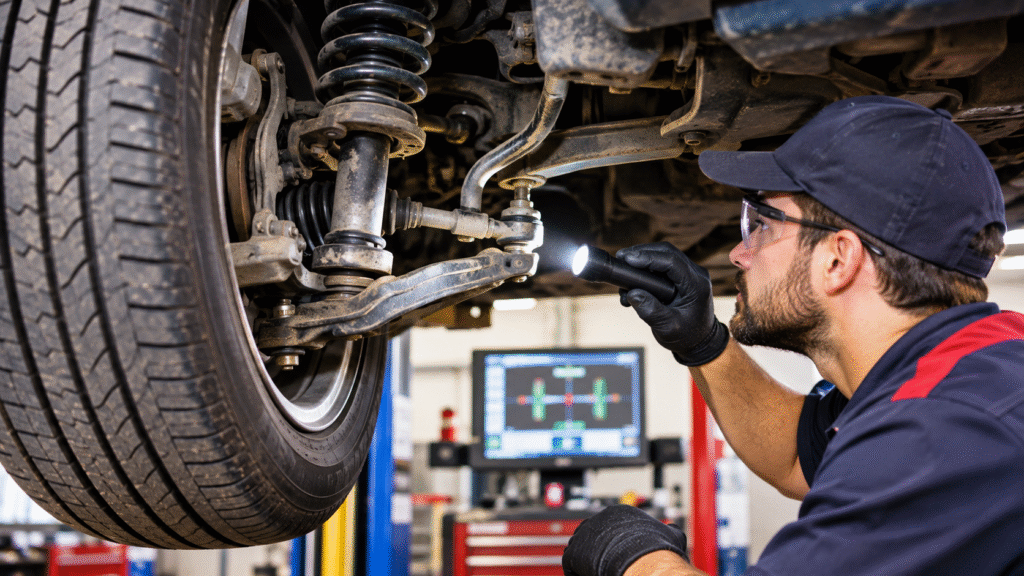
How Professional Technicians Diagnose Steering Problems
Correctly diagnosing a steering pull involves more than connecting a vehicle to an alignment machine.
At Advanced Automotive, the diagnostic approach focuses on identifying the underlying problem before determining which repairs are necessary.
Tire Inspection
Technicians begin by examining tire pressure, tread condition, uneven wear patterns, visible damage, and possible internal tire defects.
This helps identify tire-related problems that may not require wheel alignment or suspension replacement.
Steering and Suspension Inspection
The next step involves checking important steering and suspension components for excessive movement, wear, and physical damage.
Tie rods, ball joints, control arms, bushings, struts, shocks, and wheel bearings may all require inspection.
Damaged or excessively worn components must be addressed before performing precise alignment adjustments.
Brake System Inspection
The braking system is checked for uneven resistance, sticking calipers, and other conditions that could cause the vehicle to pull.
This is particularly important when the pulling becomes more noticeable during braking.
Computerized Wheel Alignment
Once the vehicle’s mechanical components are confirmed to be in suitable condition, computerized alignment equipment can be used to measure and adjust wheel angles according to manufacturer specifications.
A proper alignment helps restore predictable handling, reduce abnormal tire wear, and support overall driving stability.
Warning Signs That Your Steering Problem Needs Attention
A vehicle pulling slightly to one side may seem like a minor inconvenience, but additional symptoms can indicate a more serious issue.
Pay attention if your vehicle develops the following problems:
- Crooked steering wheel: The steering wheel remains off-center even when the vehicle is moving straight.
- Pulling while braking: The car moves noticeably left or right when the brakes are applied.
- Uneven tire wear: One tire or one side of a tire wears significantly faster than the others.
- Steering wheel vibration: You experience shaking or vibration at certain speeds.
- Clunking noises: Unusual sounds occur while turning or driving over bumps.
- Sudden steering changes: The vehicle begins pulling immediately after striking a pothole or curb.
- Loose steering response: The steering feels unstable or requires frequent corrections.
These symptoms should not be ignored. If the vehicle pulls severely, steering control feels compromised, or unusual noises suggest mechanical failure, stop driving when it is safe and arrange a professional inspection or towing.
How Much Does It Cost to Fix a Car That Pulls to One Side?
Repair costs depend on the underlying cause, vehicle model, replacement parts, and labor requirements.
For a basic wheel alignment, a typical estimated price range is approximately $100 to $170, although actual pricing may vary.
If the issue involves a damaged tire, worn tie rods, defective ball joints, control arm problems, or a sticking brake caliper, the cost will depend on the repairs required.
Some vehicles may only need tire pressure correction or an alignment. Others may require mechanical repairs before the alignment can be completed.
A professional inspection and written estimate help drivers understand their options before authorizing work.
Why Early Steering and Suspension Repairs Matter
Ignoring a steering pull can lead to additional problems over time.
Incorrect wheel alignment may accelerate tire wear, potentially requiring tire replacement sooner than expected.
Worn steering and suspension components can also reduce handling precision and affect vehicle control.
Brake drag may produce excessive heat and damage related braking components.
Addressing these problems early can help prevent unnecessary tire replacement, reduce the risk of additional mechanical damage, and improve overall driving safety.
Routine tire inspections, maintaining recommended tire pressure, and having steering concerns checked promptly are practical ways to protect your vehicle.
Professional Wheel Alignment and Steering Repair in Gainesville, VA
When your vehicle pulls to one side, choosing the correct repair is more important than simply adjusting the wheel angles.
At Advanced Automotive, our experienced technicians evaluate the condition of your tires, brakes, steering, and suspension to help identify the source of the problem.
With more than 35 years of automotive service experience, ASE-certified technicians, and a commitment to transparent repair recommendations, we aim to help drivers make informed decisions about vehicle maintenance.
Qualifying repairs are backed by a 12-month/12,000-mile parts and labor warranty. Additional customer conveniences include free towing with qualifying repairs and local pickup and delivery services.
We proudly serve drivers in Gainesville, Haymarket, Bristow, Manassas, Nokesville, Warrenton, and nearby Northern Virginia communities.
Final Thoughts
A steering wheel pulling to one side is not always a simple alignment issue. Tire problems, worn suspension components, steering system damage, and brake malfunctions can all produce similar symptoms.
Identifying the cause early is essential for maintaining vehicle safety, reducing unnecessary repair expenses, and protecting tire life.
If your car continues pulling left or right, scheduling a professional inspection is the best way to determine what needs attention.
For dependable wheel alignment, steering inspection, and suspension repair in Gainesville, VA, contact Advanced Automotive.
Address: 13380 University Blvd, Gainesville, VA 20155
Phone: (703) 665-1818
Keep your vehicle driving straight, handling confidently, and performing safely with professional automotive care.
 Oil Change Gainesville

 Auto Brake Repair Gainesville, VA
 Towing Services Gainesville
 Fleet Services Gainesville
 Virginia Safety & Emissions Inspections
 Air Conditioning & Heating
 Wheel Alignment Warrenton
 Vehicle Diagnostic
 Auto Transmission Repair