

 Locations
 Hours
Hours Call Us Now
 Book Appointment


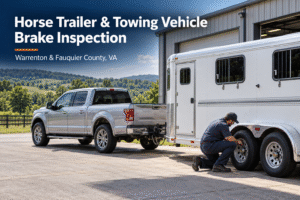
Hauling horses requires confidence in every part of your towing setup, especially the brakes. When traffic slows on Route 17 outside Warrenton, your truck and trailer need to respond together. If the trailer pushes against the truck or stopping takes longer than expected, the braking system deserves attention.
These changes can develop gradually. The truck’s brakes may feel normal even when the trailer contributes less stopping power than it should. Worn components, damaged wiring, and incorrect brake controller settings can remain unnoticed until a demanding stop exposes the problem.
At Advanced Automotive, we approach horse trailer and towing vehicle brake inspections as a complete system evaluation. The goal is to identify problems early and help drivers transport their horses with greater confidence.
How Horse Trailer Brakes Work
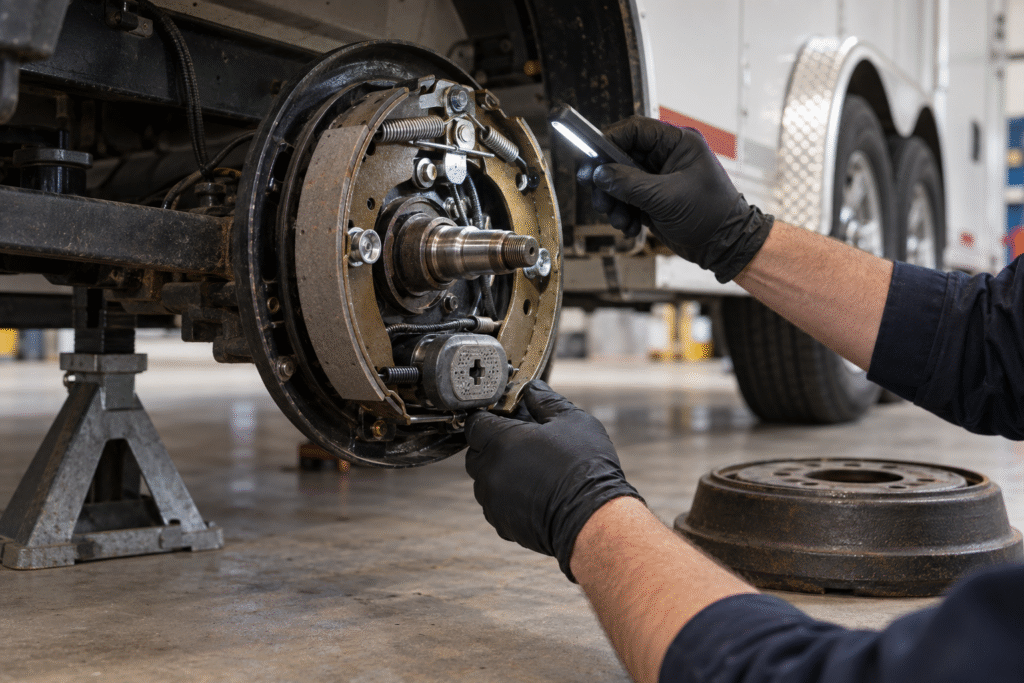
Many horse trailers use electric drum brakes. When the driver presses the truck’s brake pedal, a brake controller sends electrical power to the trailer’s brake assemblies. Electromagnets activate components that press the brake shoes against the drums, creating braking force.
For effective stopping, the controller, wiring, electrical connections, and mechanical components must work correctly. A problem anywhere in this chain can reduce the trailer’s braking contribution.
Brake shoes wear over time, magnets can deteriorate, and connectors may develop corrosion. Loose grounds or damaged wiring can interrupt power to individual wheels. A controller that appears operational does not confirm that every trailer brake is functioning properly.
Inspecting both the electrical and mechanical components helps reveal problems that a dashboard display alone cannot identify.
Why Fauquier County Towing Conditions Matter
Horse owners throughout Warrenton, The Plains, Marshall, and Remington regularly travel between farms, training facilities, and events. These journeys can involve rolling hills, narrow roads, changing traffic conditions, and repeated stops.
Routes such as Route 17, Route 29, and Route 15 place varying demands on a loaded towing setup. Descending a hill requires controlled braking, while approaching a busy intersection may require the truck and trailer to slow quickly together.
Storage conditions also affect maintenance needs. Trailers parked outdoors face moisture, mud, and temperature changes that can contribute to corrosion around connectors, grounds, and exposed wiring.
Before returning a trailer to regular use after extended storage, checking its brakes and electrical connections is a practical step toward safer hauling.
Warning Signs That Deserve Attention
Changes in braking performance should be investigated promptly. Common warning signs include:
- The trailer pushing against the truck during braking.
- Longer stopping distances than usual.
- Jerking or inconsistent brake engagement.
- Brake controller warnings or intermittent connection errors.
- Grinding or scraping noises near the trailer wheels.
- A burning smell or unusual heat around a hub.
These symptoms can have different causes. For example, excessive heat may indicate a dragging brake or a bearing problem. Uneven tire wear may involve alignment, suspension, inflation, or other issues.
A professional inspection helps identify the cause instead of relying on repeated controller adjustments to compensate. If braking performance changes noticeably, arrange an evaluation before continuing to haul horses.
What a Tow Vehicle Brake Inspection Includes
The towing vehicle needs adequate braking performance for the work it performs. Our inspection considers the condition of the truck’s brakes and related components.
Brake pads are measured for remaining material, while rotors are examined for wear and damage. Hydraulic components and accessible brake lines are checked for leaks, deterioration, and other concerns. Brake fluid condition is evaluated, and warning lights or reported symptoms may call for additional diagnostics checks.
Tire condition and load suitability also deserve attention because braking depends on tire grip.
An inspection cannot correct an overloaded combination. Drivers should confirm that the truck, trailer, hitch, and tires are suitable for the intended load and remain within their applicable ratings.
What a Horse Trailer Brake Inspection Includes
Trailer brake inspection begins with the components carrying electrical power from the truck. The connector, wiring, grounds, and junction points are checked for damage, corrosion, and loose connections.
Brake operation is then evaluated at the wheels. Depending on the trailer’s design and inspection scope, this may include examining brake magnets, shoes, drums, adjustment mechanisms, hubs, and bearings.
The breakaway system also requires attention. Its switch, wiring, and battery condition should be checked according to the equipment manufacturer’s instructions.
Looking at the trailer as a complete system helps identify whether reduced performance comes from an electrical fault, mechanical wear, incorrect adjustment, or a combination of problems. Findings guide the recommended repairs and further testing.
Checking the Truck and Trailer Together
Healthy components still need to function correctly as a connected combination. Brake controller output, trailer response, and electrical communication must be evaluated together.
Controller settings should suit the trailer, its load, and the manufacturer’s guidance. Too little output can leave the truck doing excessive braking work. Too much can cause harsh engagement or wheel lockup.
After necessary repairs or adjustments, appropriate operational testing helps confirm that the system responds consistently. Testing should be performed under controlled conditions suitable for the equipment.
This combined approach matters because inspecting the truck alone may leave trailer faults unresolved, while inspecting only the trailer may overlook tow vehicle problems.
Inspection Costs and Preparation
Inspection costs depend on axle count, brake design, component accessibility, and the depth of the evaluation. Removing hubs or investigating an intermittent electrical fault can require additional time.
Before your visit, explain any symptoms and mention when they occur. Bring information about the trailer, controller, maintenance history, and typical hauling load when available. Confirm access requirements with the shop beforehand, and arrange to bring the trailer without horses.
Advanced Automotive provides an estimate for the agreed inspection scope and explains recommended repairs before proceeding. Addressing worn components or connection problems early can help prevent further damage and avoid inconvenient breakdowns.
Schedule Your Brake Inspection
Protecting horses involves more than checking trailer floors, doors, and tires. Reliable braking is essential whenever your towing setup needs to slow or stop.
Advanced Automotive helps drivers serving Warrenton, Fauquier County, and surrounding Northern Virginia communities evaluate their towing equipment.
Call (703) 665-1818 or visit 13380 University Blvd, Gainesville, VA, to discuss your horse trailer and tow vehicle inspection. Confirm service availability and scheduling before bringing your rig.
 Oil Change Gainesville
 Auto Brake Repair Gainesville, VA
  Towing Services Gainesville
  Fleet Services Gainesville
  Virginia Safety & Emissions Inspections
  Air Conditioning & Heating
  Wheel Alignment Warrenton
  Vehicle Diagnostic
  Auto Transmission Repair