

 Locations
 Hours
Hours Call Us Now
 Book Appointment


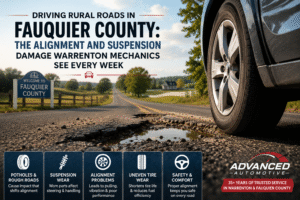
If you drive regularly through Warrenton and Fauquier County, you already know that local roads can be demanding on your vehicle. Potholes, uneven pavement, drainage dips, rough shoulders, construction zones, and seasonal weather changes can all place stress on your vehicle’s suspension and steering system.
You may hit a pothole on Waterloo Road and notice that your steering wheel is slightly off-center. At first, it may seem like a minor inconvenience. A few weeks later, your vehicle may start pulling toward one side. Eventually, you may notice uneven tire wear and realize that a simple road impact has turned into a larger repair.
I’m Donnie, owner of Advanced Automotive. After more than 35 years of serving drivers throughout Warrenton and Fauquier County, I’ve seen this pattern hundreds of times. One thing I’ve learned is that rural roads can create different challenges for vehicles than smooth interstate driving.
In this guide, I’ll explain why local roads can contribute to alignment and suspension problems, what warning signs to watch for, how we diagnose these issues, and why addressing them early can save you from unnecessary tire and repair costs.
Why Rural Roads Cause Alignment and Suspension Problems
Many drivers believe a wheel alignment only needs attention after a serious accident. That’s not necessarily true.
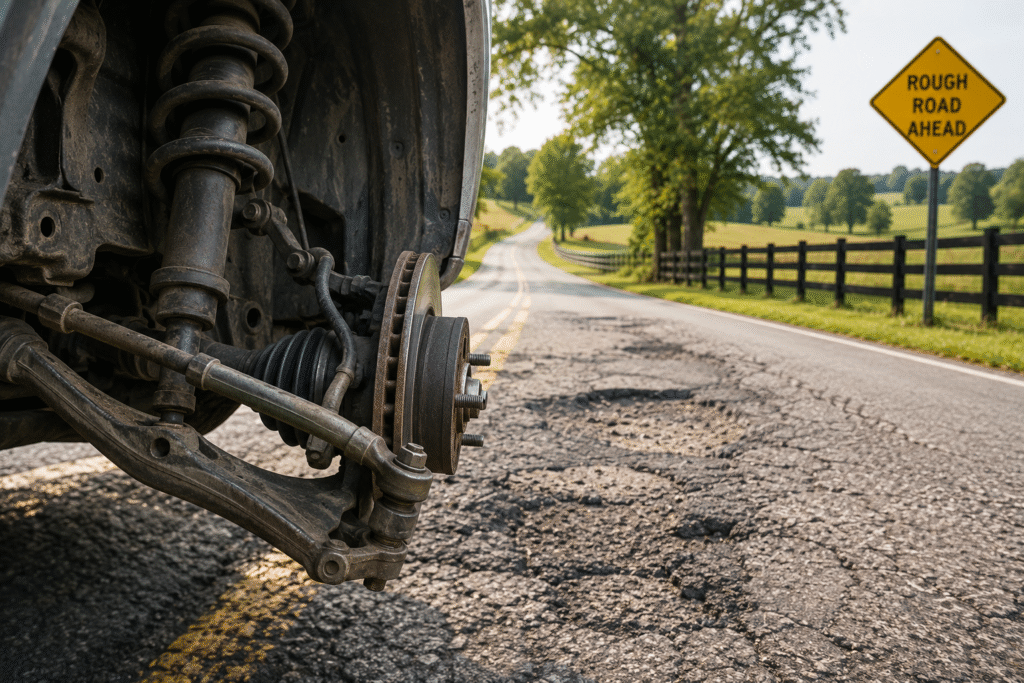
Your vehicle’s suspension system contains numerous components that work together to keep the wheels positioned correctly and help provide a smooth ride. These include control arms, ball joints, tie rods, shocks, struts, bushings, springs, and other steering components.
Every time you drive over a pothole, uneven surface, drainage dip, gravel shoulder, or damaged section of pavement, these components absorb an impact.
Over time, repeated impacts can contribute to component wear or change the precise positioning of the wheels.
An alignment itself isn’t a physical part. It refers to specific angles that determine how your tires contact the road. When suspension or steering components become worn, loose, or damaged, those angles can change.
The change may be small enough that you don’t immediately notice it. However, even a minor alignment problem can affect tire wear, handling, fuel efficiency, and overall driving comfort.
That’s why a vehicle doesn’t necessarily need to be involved in an accident to develop an alignment problem.
Why Warrenton and Fauquier County Roads Can Be Hard on Vehicles
Warrenton drivers regularly travel roads such as Waterloo Road, Meetze Road, Route 17, Route 211, Lee Highway, and other rural roads throughout Fauquier County.
These roads can expose vehicles to conditions that are different from typical city or highway driving.
Local driving can involve heavy agricultural traffic, seasonal freeze-thaw cycles, deteriorating road edges, drainage-related pavement movement, construction traffic, elevation changes, and uneven surfaces.
Winter weather can make the situation worse. When temperatures fluctuate, water can enter cracks in the pavement, freeze, expand, and contribute to pothole formation. Once warmer temperatures arrive, those damaged areas can become even more noticeable.
We often see vehicles come into the shop after drivers notice new steering or tire problems following periods of rough weather.
Drivers from Haymarket, Nokesville, Gainesville, and surrounding rural communities can also experience premature tire wear because of the amount of time they spend driving on uneven roads.
The important thing is not to assume that unusual tire wear or steering behavior is simply part of driving on rural roads. It may be a sign that your vehicle needs an inspection.
How Alignment and Suspension Problems Develop
Suspension and alignment problems don’t always happen suddenly.
Sometimes a vehicle experiences one significant pothole impact. In other cases, the problem develops gradually as suspension components become worn.
For example, a worn bushing may allow a suspension component to move more than it should. A damaged tie rod can affect steering movement. Worn shocks can reduce the vehicle’s ability to control movement after bumps.
As these components wear, the alignment may no longer remain within the manufacturer’s specifications.
This can create a cycle of problems.
A suspension component wears out. The wheel position changes. The tire begins contacting the road differently. Uneven tire wear develops. The driver notices handling changes. By the time the vehicle is inspected, multiple components may need attention.
That is why early diagnosis matters.
How We Diagnose Alignment and Suspension Problems
At Advanced Automotive, we don’t believe in simply performing an alignment without understanding why the alignment changed.
When a customer comes in with complaints such as pulling, vibration, uneven tire wear, steering problems, or unusual noises, we begin with an inspection.
Our process typically includes:
- Road-testing the vehicle
- Inspecting the tires for unusual wear patterns
- Checking steering components
- Inspecting ball joints and tie rods
- Examining shocks and struts
- Checking bushings and suspension mounting points
- Measuring alignment angles using computerized equipment
The alignment measurement is important, but it isn’t always the first thing that should be addressed.
If a worn suspension component is causing the wheel to move, simply adjusting the alignment may not provide a lasting solution. The underlying problem needs to be repaired first.
Our goal is to identify the root cause rather than simply correct the numbers on an alignment machine.
Once necessary repairs are completed, we perform the alignment and verify that the vehicle is within factory specifications.
Qualifying repairs are backed by our 12-month/12,000-mile warranty on parts and labor. We also offer free towing with repair and free local pickup and delivery throughout the Warrenton and Gainesville area when available.
Warning Signs You Shouldn’t Ignore
Your vehicle can give you several warning signs when the suspension, steering, or alignment needs attention.
One of the most common is a crooked steering wheel. If you’re driving straight but the steering wheel sits noticeably to one side, your alignment may need to be checked.
Another warning sign is pulling left or right. If your vehicle consistently drifts toward one side of the road, there may be an alignment, tire, steering, or suspension issue.
Uneven tire wear is another important indicator. If one tire is wearing significantly faster than another, or the inside or outside edge is wearing excessively, the vehicle should be inspected.
You should also pay attention to clunking or knocking noises over bumps. These sounds can indicate worn suspension components.
If your vehicle bounces excessively after hitting a bump, your shocks or struts may be worn.
A loose steering feel can indicate wear in steering or suspension components, while highway-speed vibration may be related to tires, wheel balance, alignment, or suspension problems.
Finally, if one corner of your vehicle appears lower than the others, there could be an issue with a spring or another suspension component.
None of these symptoms should automatically be assumed to have one specific cause. A proper inspection is necessary to determine what is actually happening.
What Alignment and Suspension Repairs Typically Cost
One of the first questions drivers ask is how much the repair will cost.
The honest answer is that it depends on the problem.
A routine computerized wheel alignment is generally one of the more affordable automotive services. Suspension repair can vary significantly because every vehicle uses different components and may require a different level of repair.
Factors that can affect the cost include the vehicle’s make and model, the number of worn components, parts availability, the severity of suspension damage, and whether tires also need replacement.
Many Warrenton drivers spend approximately $100 to $250 for alignment-related services, while larger suspension repairs involving multiple components can cost significantly more.
At Advanced Automotive, we provide a clear estimate before performing repairs. We want you to understand what we’re recommending and why before any work is approved.
Protecting Your Vehicle on Fauquier County Roads
You can’t control every pothole or damaged section of road, but you can reduce the chances of a small problem becoming a major repair.
Pay attention to changes in steering and handling. Check your tire pressure regularly and inspect your tires for unusual wear. After a significant pothole impact, pay attention to whether the vehicle begins pulling, vibrating, or behaving differently.
Regular inspections can also help identify worn suspension components before they cause additional problems.
Most importantly, don’t ignore changes simply because the vehicle is still drivable. A car can remain functional while developing suspension or alignment problems that are gradually damaging its tires.
Final Thoughts From Donnie
After more than 35 years of repairing vehicles in Warrenton and Fauquier County, I’ve learned that small suspension problems rarely stay small when they’re ignored.
If your steering feels different, your vehicle drifts, your steering wheel isn’t centered, or your tires are wearing unevenly, it’s worth having the vehicle inspected.
Finding the problem early can help prevent premature tire replacement and more expensive steering, suspension, or front-end repairs.
If you’re looking for alignment and suspension repair in Warrenton, VA, Advanced Automotive is ready to help. Call us at (703) 665-1818 or visit us at 13380 University Blvd, Gainesville, VA.
We serve drivers throughout Warrenton, Gainesville, Haymarket, Bristow, Manassas, and surrounding Northern Virginia communities.
No appointment is needed for most services. Stop by and let us take a look. We’ll explain what we’re finding, provide a clear estimate, and help you understand what your vehicle needs to get back on the road safely and smoothly.
 Oil Change Gainesville
 Auto Brake Repair Gainesville, VA
  Towing Services Gainesville
  Fleet Services Gainesville
  Virginia Safety & Emissions Inspections
  Air Conditioning & Heating
  Wheel Alignment Warrenton
  Vehicle Diagnostic
  Auto Transmission Repair