

 Locations
 Hours
Hours Call Us Now
 Book Appointment


A Virginia State Inspection can feel like a simple routine task until your vehicle fails. Many Gainesville drivers assume that a vehicle must have a serious engine or transmission problem to fail inspection. However, that’s not always the case. Small issues involving brakes, tires, lights, windshield damage, suspension, or safety equipment can also cause an inspection failure.
At Advanced Automotive in Gainesville, we have helped Northern Virginia drivers understand Virginia State Inspection requirements for more than 35 years. Our goal is to make the inspection process straightforward by explaining what is being checked, why a vehicle may fail, and what drivers can do to prevent unexpected repairs.
What Causes Most Virginia State Inspection Failures?
A vehicle can drive normally and still fail a Virginia State Inspection. Modern vehicles often hide early signs of wear, which means drivers may not realize that certain components are approaching the end of their service life.
Common inspection failure issues include worn brake pads, damaged rotors, burned-out bulbs, cracked windshields, tires with insufficient tread, worn suspension components, steering problems, faulty wiper blades, and safety equipment issues. A check engine light can also indicate a potential emissions-related concern.
For example, your engine and transmission may be working perfectly, but a broken marker light or excessively worn tire could still result in an inspection failure. This is why checking your vehicle before the inspection deadline can help you avoid last-minute surprises.
Why Gainesville Driving Conditions Can Affect Your Vehicle
Local driving conditions can have a major impact on vehicle wear. Gainesville and surrounding Northern Virginia communities experience heavy traffic, frequent stop-and-go driving, construction zones, potholes, and seasonal weather changes.
Regular driving on I-66 can place additional demands on the braking system. Stop-and-go traffic around Linton Hall Road can also cause brake components to wear faster than they might during consistent highway driving.
Construction zones and uneven pavement around Route 29 can contribute to suspension, tire, and steering wear. Potholes and road debris may cause damage that isn’t immediately obvious to the driver.
Northern Virginia’s winter temperature changes can also expose issues with batteries, tire pressure, and lighting systems. Drivers who commute between Gainesville, Manassas, Centreville, and Fairfax can accumulate significant mileage throughout the year, increasing normal wear on vehicle components.
Understanding these local conditions can help Gainesville drivers stay proactive about maintenance and inspection preparation.
What Is Checked During a Virginia State Inspection?
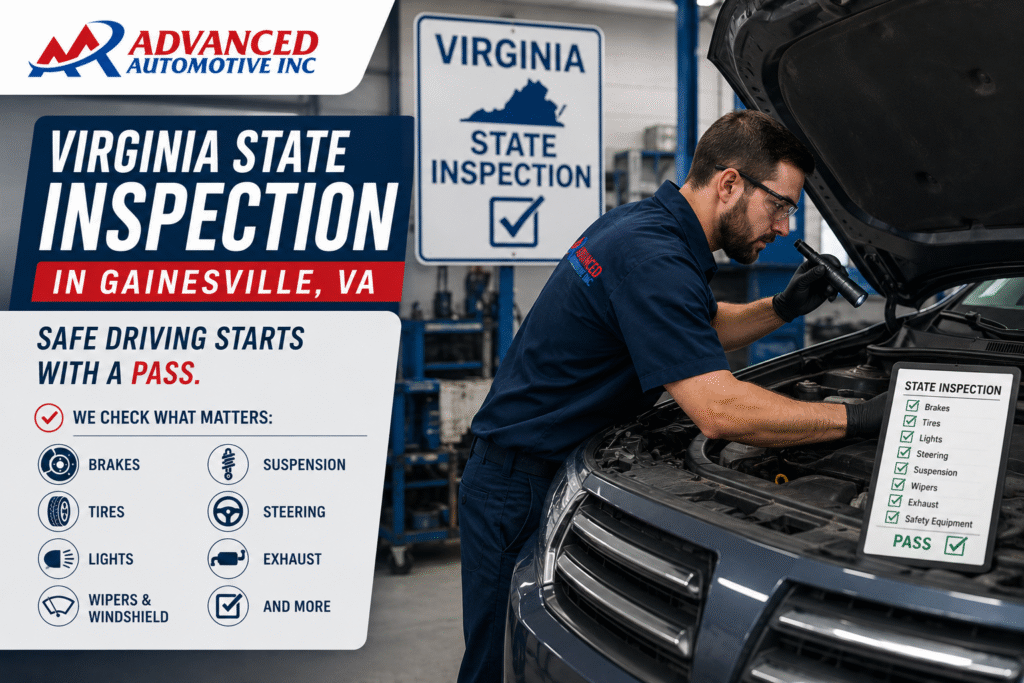
A Virginia State Inspection is designed to verify that important safety-related components meet required standards. At Advanced Automotive, our inspection process focuses on thoroughly checking the components required under Virginia regulations.
These areas can include:
- Brakes
- Tires
- Suspension
- Steering
- Lights
- Windshield
- Wipers
- Horn
- Mirrors
- Exhaust system
- Required safety equipment
If an issue is identified, it is important for drivers to understand exactly what failed and why.
At Advanced Automotive, we focus on transparency. When possible, we show customers the problem and explain whether it is a safety concern or an issue that needs to be addressed for inspection compliance.
Common Warning Signs Before Your Inspection
You don’t have to be an automotive expert to recognize signs that your vehicle may need attention before inspection day.
Squealing Brakes
A high-pitched squealing noise when braking can be a sign of worn brake pads. Ignoring brake noises may allow a relatively simple repair to develop into a more expensive brake problem.
Pulling to One Side
If your vehicle pulls left or right while driving, the cause could involve alignment, steering, or suspension components. These issues can also affect tire wear and handling.
Uneven Tire Wear
Check your tires periodically for uneven tread wear. Uneven wear can indicate alignment or suspension problems. Tires with insufficient tread can also create a safety concern and may result in inspection failure.
Dashboard Warning Lights
A check engine light or other warning light should not be ignored. Depending on the cause, it may indicate an issue that needs to be addressed before your vehicle can successfully complete required testing.
Dim or Faulty Lights
Headlights, brake lights, turn signals, and other required lights are important safety components. A burned-out bulb may seem like a minor problem, but it can contribute to an inspection failure.
Windshield Damage
Small windshield cracks can grow over time, especially with temperature changes and road vibration. Depending on the location and severity of the damage, a windshield problem may affect inspection results.
Excessive Vehicle Bouncing
If your vehicle continues bouncing after going over a bump, worn shocks or struts could be responsible. Suspension problems can affect handling, stability, and overall driving safety.
Wipers Leaving Streaks
Wiper blades that leave streaks or fail to clear water effectively can reduce visibility during rain. Replacing worn wipers before inspection can help prevent avoidable problems.
If your vehicle feels, sounds, or drives differently, it’s better to have the issue inspected before your scheduled Virginia State Inspection.
How Much Does a Virginia State Inspection Cost?
The inspection itself has state-regulated pricing, while repair costs depend on the reason a vehicle fails.
A simple light bulb replacement may be relatively inexpensive, while brake or suspension repairs can vary depending on the vehicle, parts required, and extent of wear.
Factors that can influence repair costs include:
- Vehicle make and model
- Parts availability
- Extent of component wear
- Type of replacement parts
- OEM or aftermarket options
At Advanced Automotive, we believe customers should understand the cost before repair work begins. We provide clear estimates and explain recommended repairs before moving forward.
If additional diagnostic work is necessary beyond the inspection requirements, we explain why it is needed and obtain approval first.
A Failed Inspection Doesn’t Always Mean a Major Repair
One of the most important things for drivers to understand is that failing a Virginia State Inspection does not automatically mean your vehicle has a major mechanical problem.
An inspection is designed to verify minimum safety requirements. It isn’t intended to identify every maintenance issue or predict every future mechanical failure.
For example, a vehicle could fail because of a worn tire, damaged light, windshield issue, or brake component while the engine and transmission remain in excellent condition.
Similarly, a vehicle that passes inspection may still benefit from routine maintenance. Passing an inspection doesn’t mean every component is in perfect condition.
The smartest approach is to treat your inspection as an opportunity to understand the current condition of your vehicle and address safety concerns early.
Why Choose Advanced Automotive in Gainesville?
Choosing an experienced local automotive shop can make the inspection process easier and more transparent.
At Advanced Automotive, we focus on education and straightforward communication. If your vehicle fails inspection, we’ll explain what failed, why it failed, and what repair options are available.
We don’t recommend unrelated repairs simply because a vehicle is already in the shop. Inspection-related repairs are explained separately from additional maintenance recommendations, allowing customers to make informed decisions.
Our ASE-certified technicians perform Virginia State Inspections and explain their findings in plain English.
If repairs are needed, qualifying repairs are backed by our 12-month/12,000-mile warranty. We also offer free towing with repair and free local pickup and delivery for many Gainesville and Warrenton customers.
As a family-owned automotive repair shop serving Northern Virginia drivers for more than 35 years, we understand the importance of honest service and long-term customer relationships.
Prepare Your Vehicle Before Inspection Day
The best way to avoid an unexpected Virginia State Inspection failure is to pay attention to your vehicle throughout the year.
Before your inspection, check for obvious warning signs such as unusual brake noises, uneven tire wear, broken lights, windshield cracks, worn wipers, dashboard warning lights, or unusual suspension behavior.
If you notice something isn’t right, don’t wait until your inspection sticker is about to expire. Getting the problem checked early can give you more time to make necessary repairs and may help prevent a small issue from becoming a larger and more expensive one.
Regular maintenance is also important. Keeping up with brake service, tire inspections, fluid checks, suspension inspections, and other recommended maintenance can help keep your vehicle safe and reliable.
Get Ready for Your Virginia State Inspection in Gainesville
A Virginia State Inspection doesn’t have to be stressful. Understanding the common reasons vehicles fail and recognizing warning signs early can help Gainesville drivers avoid unnecessary surprises.
Whether your vehicle needs an inspection, brake service, tire repair, suspension work, or another automotive service, Advanced Automotive is ready to help.
Our ASE-certified technicians provide clear explanations and straightforward recommendations without confusing jargon or pressure.
Visit Advanced Automotive at 13380 University Blvd, Gainesville, VA, or call (703) 665-1818. We serve drivers throughout Gainesville, Warrenton, Haymarket, Bristow, Manassas, and surrounding Northern Virginia communities.
With more than 35 years of experience, our goal is simple: help you understand your vehicle, make informed repair decisions, and stay safe on the road.
 Oil Change Gainesville
 Auto Brake Repair Gainesville, VA
  Towing Services Gainesville
  Fleet Services Gainesville
  Virginia Safety & Emissions Inspections
  Air Conditioning & Heating
  Wheel Alignment Warrenton
  Vehicle Diagnostic
  Auto Transmission Repair