

 Locations
 Hours
Hours Call Us Now
 Book Appointment


Your vehicle’s cooling system plays a critical role in protecting your engine from excessive heat. Yet, many drivers don’t think about it until they’re stuck on the side of the road with steam billowing from under the hood. At Advanced Automotive, we frequently help drivers from Gainesville, Haymarket, Bristow, Manassas, Warrenton, Centreville, Chantilly, and surrounding Northern Virginia communities prevent costly engine damage through regular cooling system maintenance.
As a family-owned auto repair shop serving the area for over 35 years, we know that preventative maintenance is always more affordable than repairing an overheated engine. A well-maintained cooling system not only keeps your engine running at the proper temperature but also improves performance, fuel efficiency, and long-term reliability.
In this guide, we’ll explain how your cooling system works, what causes engine overheating, the warning signs to watch for, and how regular maintenance can help you avoid expensive repairs.
Understanding Your Vehicle’s Cooling System
Every time your engine runs, it generates an enormous amount of heat. Without an effective cooling system, that heat would quickly damage essential engine components.
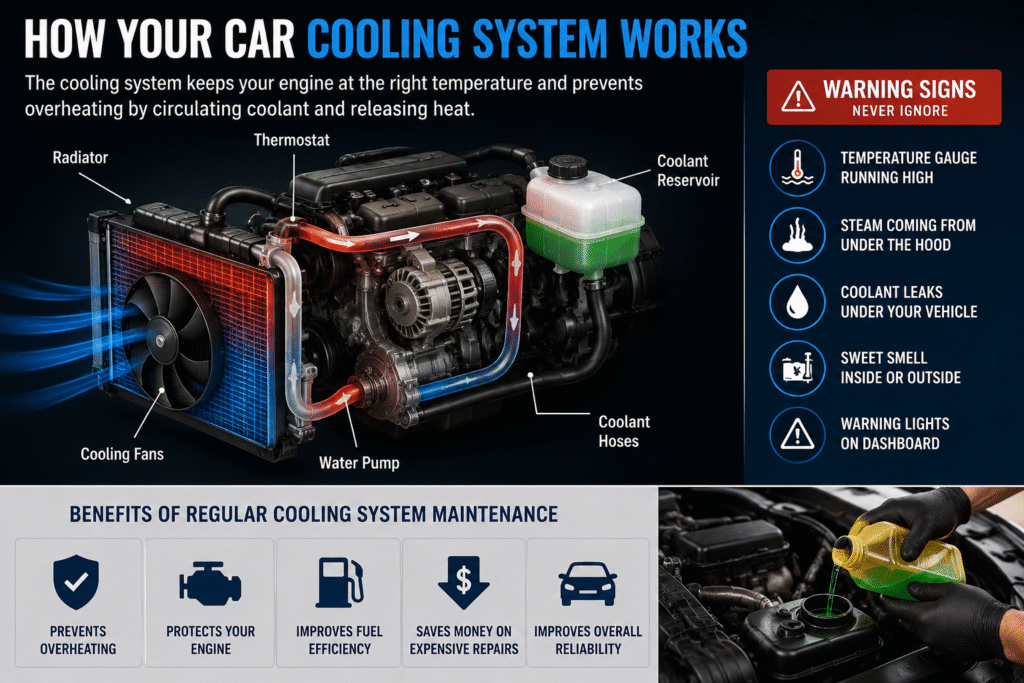
The cooling system works by circulating coolant (antifreeze) throughout the engine, absorbing heat, and transferring it to the radiator where it is released into the air. This process keeps your engine operating within its ideal temperature range.
Key Components of the Cooling System
A properly functioning cooling system includes:
- Radiator
- Coolant (Antifreeze)
- Water Pump
- Thermostat
- Radiator Hoses
- Cooling Fans
- Coolant Reservoir
Each of these components works together to regulate engine temperature. If even one part fails, the entire system can become compromised, leading to overheating.
Why Engine Overheating Is a Serious Problem
Ignoring an overheating engine can result in catastrophic damage. Continuing to drive while your temperature gauge is in the red zone can turn a relatively inexpensive repair into a complete engine replacement.
Engine overheating can cause:
- Blown head gaskets
- Cracked cylinder heads
- Warped engine components
- Damaged pistons
- Complete engine failure
Repairing these issues can cost thousands of dollars, making regular cooling system maintenance one of the smartest investments for any vehicle owner.
Common Causes of Engine Overheating
Understanding the most common causes of overheating can help you identify problems early before they become major repairs.
1. Low Coolant Levels
Low coolant is one of the leading causes of engine overheating. Over time, coolant naturally breaks down and may leak from various components.
Common sources of coolant leaks include:
- Radiator leaks
- Water pump leaks
- Cracked radiator hoses
- Heater core leaks
- Damaged coolant reservoir
If you notice that your coolant level keeps dropping, it’s important to have your vehicle inspected as soon as possible.
2. Faulty Thermostat
The thermostat controls the flow of coolant through the engine. If it becomes stuck in the closed position, coolant cannot circulate properly, causing temperatures to rise rapidly.
Signs of a failing thermostat include:
- Temperature gauge suddenly rising
- Heater producing little or no warm air
- Engine overheating shortly after starting
3. Damaged Radiator
The radiator cools the heated coolant before it returns to the engine. Over time, radiators can become clogged, corroded, or develop leaks.
Symptoms of radiator problems include:
- Coolant puddles beneath the vehicle
- Visible corrosion
- Steam coming from the front of the vehicle
- Frequent overheating
4. Water Pump Failure
The water pump keeps coolant circulating throughout the engine. When it fails, coolant flow is restricted, leading to rapid overheating.
Common warning signs include:
- Coolant leaking near the water pump
- Grinding or whining noises
- Engine running hotter than normal
- Steam from under the hood
5. Cooling Fan Problems
Cooling fans draw air through the radiator, especially when driving at low speeds or sitting in traffic.
Faulty cooling fans often cause overheating during:
- Stop-and-go traffic
- Long idle periods
- Hot summer days
Warning Signs Your Cooling System Needs Immediate Attention
Your vehicle usually provides early warning signs before serious damage occurs. Paying attention to these symptoms can save you from costly repairs.
Temperature Gauge Running Hot
Your dashboard temperature gauge should normally remain near the center. If it starts climbing toward the red zone, your cooling system may not be functioning properly.
Steam Coming from Under the Hood
Steam is one of the clearest indicators that your engine is overheating. If this happens, pull over safely, turn off the engine, and allow it to cool before seeking professional assistance.
Sweet Smell While Driving
Coolant has a distinctive sweet smell. If you notice this odor inside or outside your vehicle, it could indicate a coolant leak.
Coolant Leaks
Coolant may appear as:
- Green fluid
- Orange fluid
- Pink fluid
- Yellow fluid
Even small coolant leaks should never be ignored because they tend to worsen over time.
Dashboard Warning Lights
Modern vehicles may display warning indicators such as:
- Check Engine Light
- Temperature Warning Light
- Coolant Warning Light
Always have these warning lights diagnosed promptly.
How Often Should Cooling System Maintenance Be Performed?
Most manufacturers recommend inspecting the cooling system at least once a year and replacing coolant according to the maintenance schedule outlined in your owner’s manual.
Maintenance intervals vary depending on:
- Vehicle age
- Mileage
- Driving habits
- Climate
- Manufacturer recommendations
At Advanced Automotive, we inspect cooling system components during routine maintenance visits to identify potential issues before they become expensive repairs.
Our Cooling System Inspection Process
When you visit our Gainesville location, our experienced technicians perform a comprehensive inspection to ensure your cooling system is operating efficiently.
Step 1: Visual Inspection
We carefully inspect:
- Radiator
- Hoses
- Belts
- Coolant reservoir
- Water pump
Step 2: Leak Detection
Our technicians check for:
- External coolant leaks
- Pressure loss
- Hidden coolant seepage
Step 3: Coolant Condition Testing
We evaluate:
- Coolant concentration
- Contamination
- Corrosion protection
Step 4: Pressure Testing
Pressure testing allows us to identify leaks that may not be visible during a standard inspection.
Step 5: Performance Verification
Finally, we verify:
- Cooling fan operation
- Thermostat function
- Proper engine operating temperature
Benefits of Preventative Cooling System Maintenance
Many drivers ask whether routine cooling system service is really necessary. The answer is simple—yes. Preventative maintenance offers several important benefits.
Reduces the Risk of Breakdowns
Routine inspections help identify small problems before they leave you stranded on the roadside.
Extends Engine Life
Maintaining proper operating temperatures minimizes engine wear and prolongs the life of critical components.
Improves Fuel Efficiency
An engine operating at the correct temperature performs more efficiently and consumes less fuel.
Saves Money
Preventative maintenance costs significantly less than repairing major engine damage caused by overheating.
Provides Greater Reliability
Whether you’re commuting to work or taking a long road trip, a properly maintained cooling system provides added peace of mind.
Why Drivers Across Northern Virginia Choose Advanced Automotive
For more than three decades, Advanced Automotive has proudly served drivers throughout:
- Gainesville
- Haymarket
- Bristow
- Manassas
- Warrenton
- Nokesville
- Centreville
- Chantilly
- South Riding
- Aldie
- Sterling
- Leesburg
- Fairfax
- Marshall
- The Plains
- Middleburg
- Culpeper
Our ASE-certified technicians use advanced diagnostic equipment to accurately identify cooling system problems and recommend only the repairs your vehicle truly needs. We are committed to honest service, transparent communication, and quality workmanship.
Schedule Cooling System Service in Gainesville, VA
If your vehicle is showing signs of overheating or it’s been a while since your cooling system was inspected, don’t wait for a minor issue to become a major repair.
At Advanced Automotive, we provide professional:
- Cooling System Diagnostics
- Coolant Flush Services
- Radiator Repairs
- Water Pump Replacement
- Thermostat Replacement
- Preventative Cooling System Maintenance
Whether you’re in Gainesville, Haymarket, Bristow, Manassas, Warrenton, Centreville, Chantilly, South Riding, Aldie, Sterling, Leesburg, Fairfax, Marshall, The Plains, Middleburg, or Culpeper, our experienced team is ready to help keep your vehicle running safely and efficiently.
📞 Call us today: (703) 665-1818
📍 Visit us:
13380 University Blvd, Gainesville, VA
Protect your engine with professional cooling system maintenance from Advanced Automotive. Schedule your service today and drive with confidence all year long.
 Oil Change Gainesville
 Auto Brake Repair Gainesville, VA
  Towing Services Gainesville
  Fleet Services Gainesville
  Virginia Safety & Emissions Inspections
  Air Conditioning & Heating
  Wheel Alignment Warrenton
  Vehicle Diagnostic
  Auto Transmission Repair