

 Locations
 Hours
Hours Call Us Now
 Book Appointment


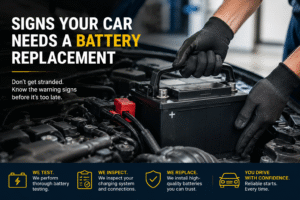
Your car’s battery is one of the most important components of your vehicle. It powers the engine during startup and supplies electricity to essential systems such as the ignition, lights, infotainment, power windows, and onboard computers. While batteries don’t last forever, they usually give several warning signs before they fail completely. Recognizing these early symptoms can help you avoid unexpected breakdowns, costly towing, and the inconvenience of being stranded.
If you drive in Gainesville, VA, or nearby areas like Haymarket, Bristow, Manassas, Warrenton, Centreville, or Chantilly, understanding when it’s time to replace your battery can save you both time and money.
What Does a Car Battery Do?
Many drivers believe the battery’s only job is to start the engine. In reality, it provides electrical power to several important systems, including:
- Starter motor
- Ignition system
- Dashboard electronics
- Interior and exterior lighting
- Power windows and door locks
- Infotainment system
- Vehicle safety and computer systems
A weak battery can affect the performance of all these systems long before it completely fails.
How Long Does a Car Battery Last?
Most vehicle batteries have an average lifespan of 3 to 5 years. However, battery life depends on several factors, including:
- Driving habits
- Weather conditions
- Vehicle type
- Electrical load
- Maintenance practices
Northern Virginia experiences both hot summers and cold winters, which can shorten battery life. High temperatures speed up battery fluid evaporation, while cold weather reduces battery performance and makes it harder to start the engine.
8 Warning Signs Your Car Battery Needs Replacement
1. Slow Engine Cranking
One of the earliest signs of a failing battery is a slow engine crank. If your vehicle takes longer than usual to start or the engine sounds sluggish when turning over, your battery may not be supplying enough power.
2. Battery Warning Light Is On
If the battery warning light appears on your dashboard, don’t ignore it. While it may indicate a weak battery, it can also point to charging system issues, alternator problems, or loose battery connections. A professional inspection can determine the exact cause.
3. Frequent Jump Starts
A healthy battery should reliably start your vehicle every time. If you find yourself needing frequent jump starts, your battery is likely nearing the end of its lifespan. Repeated jump-starts are only a temporary solution and shouldn’t replace proper battery replacement.
4. Electrical Components Are Acting Strange
Modern vehicles rely heavily on electronic systems. A weak battery may cause:
- Dim or flickering headlights
- Slow power windows
- Radio or infotainment issues
- Dashboard warning lights
- Delayed power lock operation
These symptoms often indicate insufficient battery power rather than major electrical failures.
5. Corrosion Around Battery Terminals
Inspect your battery terminals regularly. White, blue, or green powdery buildup is a sign of corrosion. Corroded terminals can interfere with electrical connections, reduce battery performance, and eventually prevent your vehicle from starting.
6. Swollen or Bulging Battery Case
A battery should always maintain its original shape. If the casing appears swollen or bulging, it may have suffered internal damage due to excessive heat, overcharging, or age. A swollen battery should be replaced immediately for safety reasons.
7. Rotten Egg Smell
A sulfur or rotten egg odor coming from under the hood often indicates battery leakage or internal damage. This is a serious warning sign and should be inspected by a professional as soon as possible.
8. Battery Is More Than 3–5 Years Old
Even if your battery appears to be working normally, age alone can make it unreliable. Batteries often fail without warning once they reach the end of their expected lifespan. Preventive testing after three years is recommended to avoid unexpected breakdowns.
What Happens During a Battery Inspection?
A professional battery inspection typically includes:
Visual Inspection
Technicians examine the battery for physical damage, corrosion, loose connections, and cable condition.
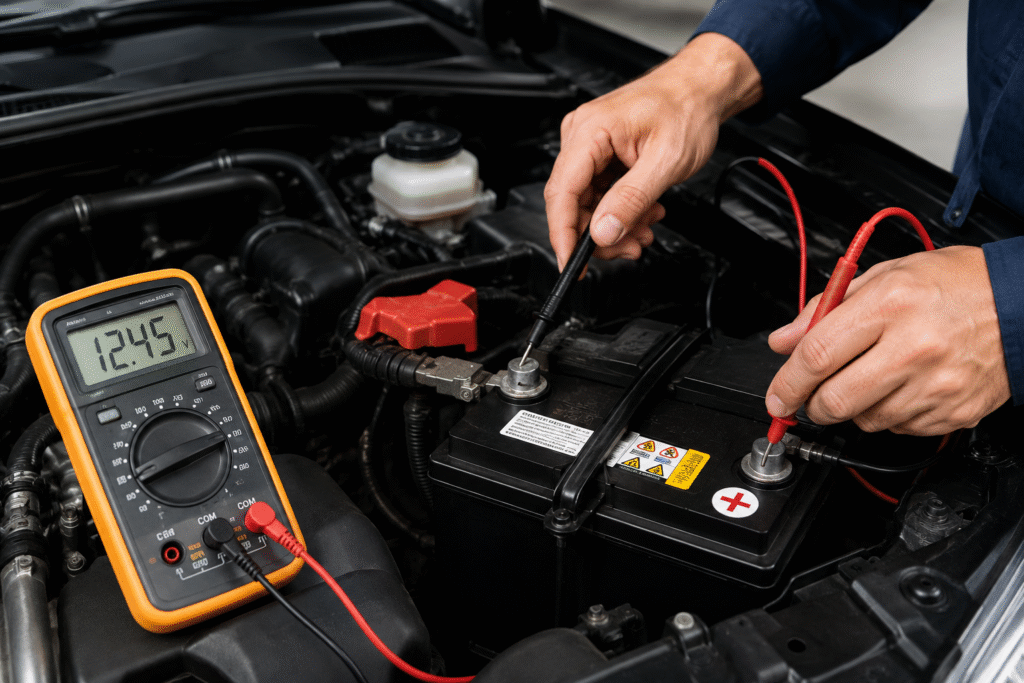
Voltage Testing
Battery voltage is measured to determine whether it can supply enough power during startup.
Load Testing
Load testing evaluates how well the battery performs under actual operating conditions.
Charging System Inspection
The alternator and charging system are checked to ensure they are properly charging the battery.
After testing, technicians can recommend whether the battery still has usable life or should be replaced.
Why You Shouldn’t Ignore Battery Problems
Delaying battery replacement can result in:
- Unexpected vehicle breakdowns
- Missed work or appointments
- Expensive towing charges
- Safety concerns
- Damage to other electrical components
Routine battery testing is a quick and affordable way to prevent these issues before they happen.
Tips to Extend Your Battery’s Life
You can maximize battery life by following these simple maintenance tips:
- Drive your vehicle regularly.
- Turn off lights and accessories before leaving the vehicle.
- Avoid frequent short trips.
- Keep battery terminals clean.
- Have your charging system inspected annually.
- Schedule regular vehicle maintenance.
- Replace aging batteries before they fail completely.
Why Choose Advanced Automotive?
For more than 35 years, Advanced Automotive has proudly served drivers throughout Gainesville and Northern Virginia with honest, professional automotive care. Whether you need battery testing, replacement, or a complete vehicle inspection, their experienced ASE-certified technicians provide reliable service backed by transparent recommendations and quality workmanship.
Frequently Asked Questions
How do I know if my battery or alternator is failing?
Both components can produce similar symptoms. Professional battery and charging system testing can accurately identify the problem.
How often should I replace my battery?
Most batteries should be replaced every 3 to 5 years, depending on usage and climate.
Can cold weather damage my battery?
Cold temperatures reduce battery performance and make existing battery weaknesses more noticeable, increasing the likelihood of failure.
Should I replace my battery before it fails?
Yes. Preventive replacement reduces the risk of roadside emergencies and costly towing.
How long does battery replacement take?
Most battery replacements can be completed within an hour, depending on the make and model of the vehicle.
Final Thoughts
Your vehicle’s battery plays a vital role in keeping your car dependable and safe. Paying attention to early warning signs like slow engine cranking, dashboard warning lights, electrical issues, or an aging battery can help you avoid inconvenient breakdowns and expensive repairs.
If you’re experiencing any of these symptoms, schedule a professional battery inspection before the problem leaves you stranded.
Advanced Automotive
13380 University Blvd, Gainesville, VA
Phone: (703) 665-1818
 Oil Change Gainesville
 Auto Brake Repair Gainesville, VA
  Towing Services Gainesville
  Fleet Services Gainesville
  Virginia Safety & Emissions Inspections
  Air Conditioning & Heating
  Wheel Alignment Warrenton
  Vehicle Diagnostic
  Auto Transmission Repair