

 Locations
 Hours
Hours Call Us Now
 Book Appointment


Every vehicle owner wants their car to deliver reliable performance, better fuel efficiency, and a longer lifespan. While regular maintenance plays an important role in keeping your vehicle healthy, many drivers overlook another major factor that affects vehicle longevity their daily driving habits.
The way you accelerate, brake, handle your vehicle, and respond to warning signs can significantly impact your engine, transmission, brakes, tires, suspension, and overall vehicle performance.
At Advanced Automotive, we have been helping drivers in Gainesville, VA, and surrounding Northern Virginia communities for more than 35 years. Throughout our experience, we have seen how responsible driving habits can help vehicles last beyond 200,000 miles, while poor driving behaviors can lead to premature wear and expensive repairs.
Understanding how your driving style affects your vehicle can help you save money, reduce repair costs, and keep your car running smoothly for many years.
Why Driving Habits Matter for Vehicle Longevity
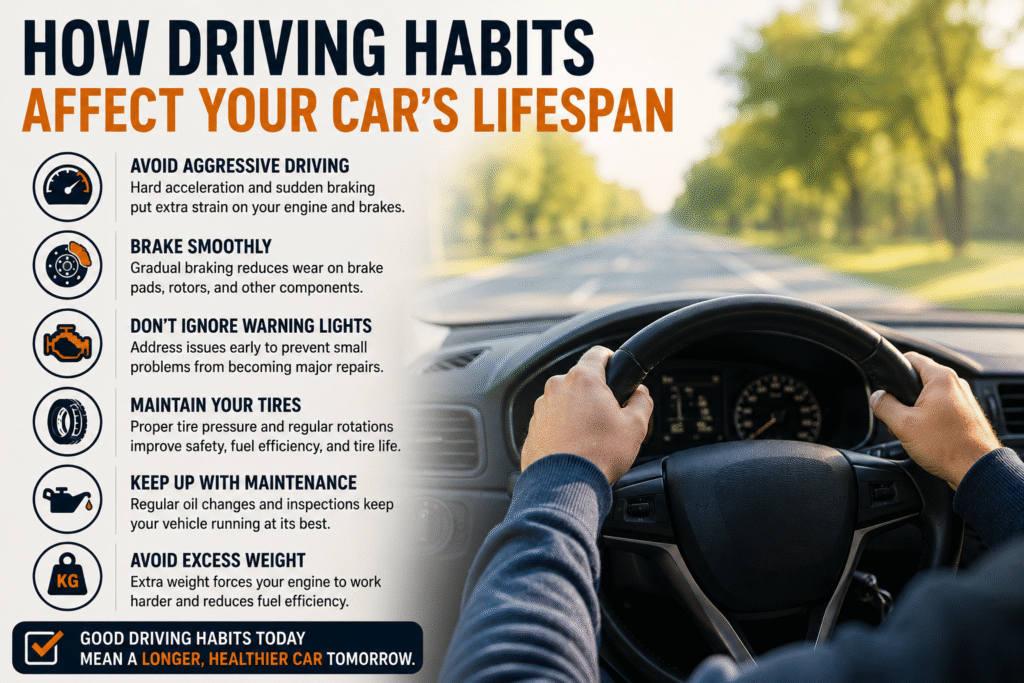
Many drivers believe that only the vehicle’s brand, model, or manufacturing quality determines how long a car will last. While those factors are important, the way you drive every day has a major impact on your vehicle’s lifespan.
Aggressive driving, sudden braking, speeding, and ignoring maintenance reminders can create unnecessary stress on important vehicle components.
Good driving habits can help:
- Extend engine life
- Improve transmission performance
- Reduce brake wear
- Increase tire lifespan
- Improve fuel efficiency
- Lower repair expenses
- Maintain vehicle value
Small changes in driving behavior can make a big difference in how your vehicle performs over time.
Aggressive Acceleration Can Damage Your Engine
Rapid acceleration may feel exciting, but frequently pressing the accelerator aggressively puts additional stress on your vehicle.
When you accelerate suddenly, your engine works harder and generates more heat. This increased pressure affects internal engine components and can contribute to faster wear.
Aggressive acceleration can lead to:
- Increased engine wear
- Higher fuel consumption
- Transmission stress
- Drivetrain damage
- Faster tire wear
Drivers who frequently accelerate aggressively on highways and busy roads may notice reduced fuel efficiency and increased maintenance needs.
A smoother approach is to gradually increase speed whenever possible. Gentle acceleration reduces strain on your engine and helps improve fuel economy.
Hard Braking Reduces Brake System Life
Your braking system is designed to provide safety and control, but aggressive braking habits can significantly reduce the lifespan of brake components.
Suddenly stopping at the last moment creates excessive heat and friction, which causes faster wear of:
- Brake pads
- Brake rotors
- Calipers
- Tires
- Suspension components
Signs that your brakes may need attention include:
- Squealing sounds
- Grinding noises
- Steering wheel vibration
- Longer stopping distance
- Brake warning lights
Maintaining a safe following distance and braking gradually can help your brake system last longer and improve driving safety.
Speeding Increases Vehicle Stress
Driving at excessive speeds does more than increase safety risks. It also places additional stress on several vehicle systems.
High-speed driving can affect:
- Engine performance
- Transmission operation
- Cooling system
- Tires
- Suspension
- Steering components
When your vehicle operates at higher speeds for extended periods, the engine produces more heat and tires experience increased wear.
Following speed limits and maintaining smooth driving habits can help reduce unnecessary stress on your vehicle.
Ignoring Warning Lights Can Lead to Expensive Repairs
Modern vehicles are equipped with warning systems designed to alert drivers before serious problems occur. However, many drivers ignore dashboard warning lights because their vehicle still appears to operate normally.
Common warning lights that should never be ignored include:
- Check Engine Light
- Oil Pressure Warning Light
- Battery Warning Light
- Temperature Warning Light
- Brake Warning Light
- Tire Pressure Monitoring Light
Ignoring these warnings can allow a small issue to become a major repair.
Professional vehicle diagnostics can identify the cause of warning lights and help prevent expensive damage.
Short Trips Can Affect Engine Performance
Many drivers assume short trips are easier on their vehicles. However, frequent short-distance driving can actually create additional stress on the engine.
Your engine performs best after reaching its normal operating temperature. When you only drive a few miles at a time:
- Engine oil may not circulate properly
- Moisture can build inside the engine
- Carbon deposits may increase
- Fuel efficiency can decrease
If possible, combining multiple errands into one longer trip allows your engine to operate more efficiently and reduces unnecessary wear.
Carrying Excess Weight Can Reduce Vehicle Efficiency
Many drivers carry unnecessary items in their vehicles for months without realizing the impact.
Extra weight forces your vehicle to work harder, affecting:
- Engine performance
- Fuel economy
- Suspension components
- Brake system
- Tires
Removing unnecessary items from your vehicle can improve efficiency and reduce stress on important components.
Poor Tire Maintenance Affects More Than Tires
Your tires are the only part of your vehicle that directly contacts the road. Their condition affects safety, handling, fuel efficiency, and vehicle performance.
Driving with worn or improperly inflated tires can cause:
- Reduced fuel economy
- Uneven tire wear
- Alignment problems
- Suspension damage
- Increased stopping distance
Regular tire rotations, inspections, balancing, and professional wheel alignment services help maximize tire life and protect other vehicle components.
Skipping Routine Maintenance Speeds Up Vehicle Wear
Even the best driving habits cannot replace regular maintenance. Your vehicle requires routine service to continue operating efficiently.
Important maintenance services include:
- Oil changes
- Tire rotations
- Brake inspections
- Wheel alignments
- Transmission service
- Coolant service
- Battery testing
- Vehicle inspections
Following your manufacturer’s recommended maintenance schedule helps prevent major failures and extends vehicle lifespan.
Best Driving Habits to Make Your Car Last Longer
If you want your vehicle to remain reliable for many years, developing better driving habits is essential.
Simple habits that improve vehicle longevity include:
- Accelerate smoothly
- Brake gradually
- Avoid unnecessary speeding
- Respond quickly to warning lights
- Maintain proper tire pressure
- Follow regular maintenance schedules
- Avoid carrying extra weight
- Schedule routine inspections
- Repair small issues early
These small changes can help reduce repair expenses and keep your vehicle performing efficiently.
Why Drivers Trust Advanced Automotive in Gainesville, VA
For more than three decades, Advanced Automotive has provided trusted automotive services for drivers throughout Northern Virginia.
Our ASE-certified technicians help customers with preventive maintenance, vehicle diagnostics, brake services, tire services, inspections, and general auto repairs.
Drivers from Gainesville, Haymarket, Bristow, Manassas, Centreville, Chantilly, Fairfax, and surrounding areas choose Advanced Automotive because of our commitment to quality service, honest recommendations, and reliable repairs.
Whether your vehicle needs routine maintenance or a complex repair, our experienced team is ready to help.
Conclusion
Your driving habits have a direct impact on your vehicle’s performance, reliability, and lifespan. Aggressive acceleration, sudden braking, ignoring warning signs, and skipping regular maintenance can increase wear and lead to expensive repairs.
By following responsible driving practices and maintaining your vehicle regularly, you can improve fuel efficiency, reduce repair costs, and help your car stay reliable for many years.
If you are looking for trusted auto repair in Gainesville, VA, Advanced Automotive is here to provide professional maintenance and repair services, including vehicle diagnostics, brake service, oil changes, tire services, wheel alignments, and inspections.
Call Advanced Automotive today at (703) 665-1818 to schedule your vehicle service.
Visit us at:
Advanced Automotive
13380 University Blvd
Gainesville, VA
Our experienced team is committed to helping drivers in Gainesville and surrounding Northern Virginia areas keep their vehicles safe, efficient, and running longer.
 Oil Change Gainesville
 Auto Brake Repair Gainesville, VA
  Towing Services Gainesville
  Fleet Services Gainesville
  Virginia Safety & Emissions Inspections
  Air Conditioning & Heating
  Wheel Alignment Warrenton
  Vehicle Diagnostic
  Auto Transmission Repair